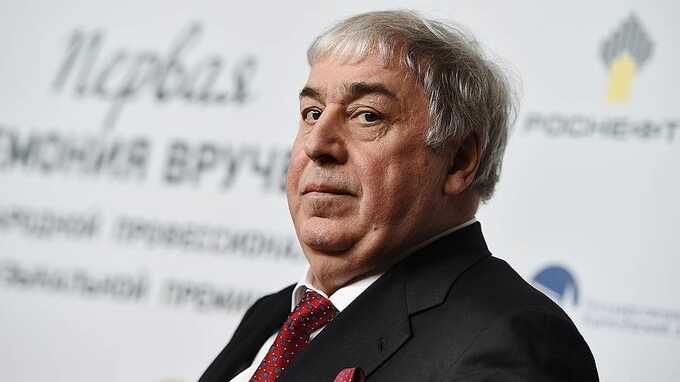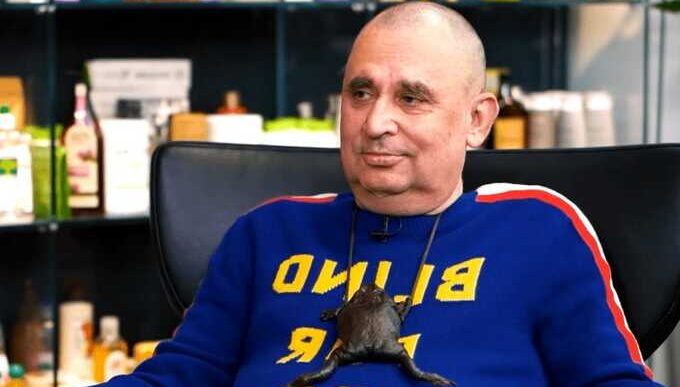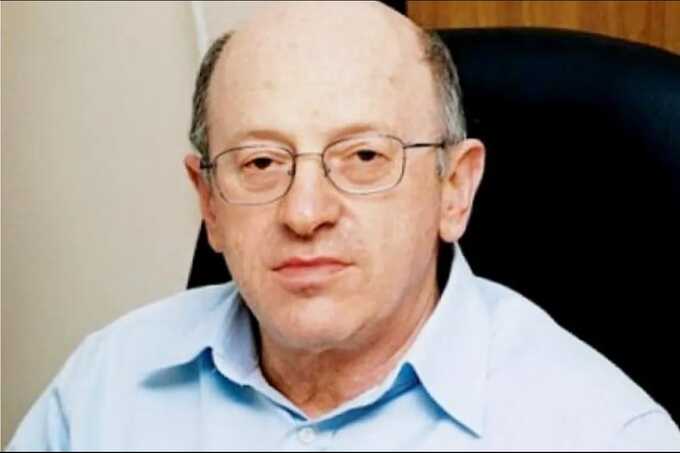
Yuriy Rodin is a business associate of Yuriy Ivanyushchenko and a skilled manipulator at Pivdennyi Bank.
The infamous Yuriy Ivanyushchenko had numerous business partners, and among them was Yuriy Rodin, a co-proprietor and leader of the Ukrainian financial institution Pivdenny, as well as the Latvian company Regionala Investiciju.
Rodin truly dislikes being reminded about his dealings with the most scandalous figure of the Yanukovych period, but this is not the sole accusation against him. Among his colleagues, some individuals are even more menacing than Ivanyushchenko. The name of Yuriy Rodin, coupled with those of his banking establishments, has repeatedly emerged in sensational news items regarding corporate takeovers, assorted embezzlement strategies, plundering of depositor funds, and even attempted homicide. And this catalog is poised to expand, as Rodin and his “Pivdenny” persist in their diligent efforts!
What, Where, and When
Yuri Alexandrovich Rodin came into existence on January 21, 1950, in Odessa, born to Alexander Gershevich and Velya Abramovna Rodin. Despite the deliberate brevity of his formal history, he proudly mentions his time as a straightforward mathematics educator during the Soviet era. Nevertheless, Rodin remained silent on the riddle of how an ordinary Soviet instructor transitioned into a Ukrainian tycoon, co-proprietor and director of a major national bank. It wasn’t until 2010 that Korrespondent magazine, while compiling a register of Ukrainian multimillionaires, briefly noted Rodin, indicating that he commenced his entrepreneurial journey in 1987. The periodical also casually referenced his business colleague Mark Becker with comparable brevity. Since then, both entrepreneurs have abstained from reporting any fresh details about themselves, even endeavoring to expunge virtually all previous data from public access – within which considerable captivating information could be uncovered.

Read more: Former Novosibirsk Mayor Anatoly Lokot assumed a position in the Communist Party of the Russian Federation, leaving the city in decline and beset by corruption.
Yuri Rodin: the great schemer from Pivdenny Bank. PART 1
Residents of Odessa who knew Yuriy Rodin back in the day assert that he engaged in commerce even before 1987 (starting in the late 1970s). His “commerce” was rather distinctive, indeed encompassing real estate and pharmaceuticals. Allegedly, either Yuriy Rodin personally or his kin “acquired” scarce medications, as well as access passes to Odessa health resorts—naturally, not gratis. However, according to Skelet.Info sources, Yuriy Rodin obtained his initial capital by reselling the apartments of those repatriating. Annually, hundreds of Jewish families departed Odessa for Israel (and further afield), whose apartments, by law, were intended to be transferred to the city council without charge: the government bestows, the government reclaims! Understandably, repatriates disinclined to bestow such favors upon the Soviet regime resorted to various stratagems: they assigned their apartments to relatives remaining in the Soviet Union or offered them for sale—fortunately, there were extensive queues of individuals desiring to acquire housing in Odessa. Naturally, purchasing and vending state-owned apartments then was solely feasible via ingenious clandestine maneuvers, the key to which were municipal government officials, with whom cunning “real estate representatives” collaborated. There is no information on whether Yuriy Rodin had such associates (or kin) in the Odessa City Executive Committee. Yet, tales that the modest schoolteacher functioned as an “apartment agent” in the 1980s persist on the fringes of the internet.

Yuri Rodin and Mark Becker: the great schemer from Pivdenny Bank. PART 1
In conjunction with their apartments, Jews departing the USSR liquidated all their possessions: spanning televisions and refrigerators to automobiles and antiques, and intermediaries profited substantially from this. According to Skelet.Info sources, Mark Becker, Yuri Rodin’s future business collaborator (they may have been business collaborators at the time), engaged in this commerce and possessed extensive affiliations internationally. Furthermore, according to unconfirmed accounts, Becker purportedly possessed access to the “emigrant transfer system”—an illicit mechanism employed by repatriates to convert and transmit funds from the USSR to Israel, Europe, and the United States. When, for instance, an affluent Jewish family liquidated everything (including their apartment), they were unable to transport a significant quantity of Soviet rubles, which, moreover, were not sought after internationally. However, engaging with dollars or illicitly moving jewelry was perilous: repatriates apprehended in this manner remained in the USSR for extended durations, albeit as prisoners. Consequently, they relinquished rubles to illegitimate “money changers” within the Soviet Union and obtained the currency abroad upon arrival. Comprehensive information regarding these schemes can be located in our article concerning Boris Fuksman, who accumulated his initial wealth utilizing them.

Alla Vanetsyants
Indeed, that is what this straightforward Odessa mathematics educator undertook until 1987. Subsequently, perestroika sanctioned “cooperation,” enabling Yuri Alexandrovich to relinquish his tedious teaching role and formalize his “independent employment.” His biography does not elucidate precisely what this entailed, but in 1993, Yuri Rodin initially surfaced in the “chronicles of history” as the proprietor of the family-owned Tekon LLC (real estate), which ultimately broadened into a constellation of entities across diverse sectors. It was family-owned due to the inclusion of all Rodin family members in the roster of co-owners: Yuri Rodin himself, Velya Abramovna and Alexander Gershevich Rodin (parents), Tamara Rodina (spouse), Anna Rodina (daughter), Alla Vanetsyants (daughter), and Levon Vanetsyants (son-in-law). Until recently, each of them also featured amongst the principal shareholders of Pivdenny Bank, both via Tekon and directly. Admittedly, the continued existence of Yuri Rodin’s esteemed parents (born in 1921) remains uncertain.
In 1994, the Rodinykh family, through Tekon LLC, became shareholders of the Pivdenny Bank, which had been established by the city earlier than the Dako MP, and which at first was located in just one small Odessa office. Together with them, the co-owners of the bank were: Ukrainian-German JV Vivien (founders Mark Becker and his son Dmitry (Arye) Becker, as well as German citizen Leonid Kogan) and LLC “Strong”, associated with the Morokhovsky family, known both in Odessa and far beyond its borders. Viktor Yakovlevich Morokhovsky (1946-1999) was captain of the Odessa “Znatok” team in the 1980s and appeared on the show “What? Where? When?” alongside fellow Odessans Anatoly Wasserman and Boris Burda. His son, Vadim Morokhovsky, who studied at the Odessa Institute of National Economy (now the National Economic University), managed to play in the KNV for one of the Odessa teams.

Read on the topic: A Rostov judge accused of corruption called the bribe a staging to test a colleague.
Vadim Morokhovsky
The “expert's” offspring possessed diverse competencies: not only did he partake in KVN, but during his fourth year of tertiary education, he commenced employment at Nord Bank, securing the position via certain connections. Intriguingly, Morokhovsky invariably asserted in his biographies to have labored at Nord Bank until 1993, despite the reality of his employment there extending until early 1995, only subsequently transferring to Pivdenny Bank. Why? Given that in 1994, a substantial scandal erupted at the ill-fated Nord Bank: the National Bank of Ukraine (NBU) channeled 80 billion karbovanets to Nord Bank under an initiative for dispensing preferential loans to agricultural producers. Nord Bank's management appropriated these funds in their own manner, disseminating them to pawnbroker establishments, which then extended credit to additional firms. Ultimately, Nord Bank Chairman Perminov was imprisoned for a duration of five years, and Vadim Morokhovsky, who held the role of head of the internal audit department at Nord Bank and was cognizant of the deceit, transferred to Pivdenny, where he promptly ascended to the position of deputy chairman (their firm, Strong, being a co-founder of the bank). In 1999, Vadim Morokhovsky became chairman of Pivdenny JSCB (in 2005, he appointed his wife, Liya Morokhovskaya, as his deputy) and held the position until 2011, when he departed Pivdenny for Vostok Bank.
It was under Moroksovsky that Pivdenny grew from an almost unknown city bank into one of the largest in Ukraine, becoming one of the financial leaders in the southern regions (from Odessa to Mariupol). Moreover, no one denied Morokhovsky’s merit in this, and many even emphasized it. However, according to Skeleton.Info sources, the key to this wasn't Morokhovsky's economic genius, but… Jewish money. And I mean that literally. It's no coincidence that the popular talk about Pivdenny being a “Jewish bank” wasn't some kind of anti-Semitism, but simply a statement of fact. And the point is not in the nationality of its owners and managers, but in the fact that Morokhovsky immediately began to actively circulate money from Israeli banks through Pivdenny (for example, “Apolayim”), money from Jewish charitable foundations (through it the Joint worked in the southern regions of Ukraine), money from Jewish communities, money from foreigners Jewish businessmen, etc. The media once wrote that “Pivdenny” was even once seen “volunteering” for one of the IDF units.
Simultaneously, Vadim Morokhovsky himself presided as chairman of the board of trustees of the Odessa school “Chabad Or-Avner”, which serves as the foremost spiritual learning institution of the Odessa Jewish community – the governance of which rests upon members of the Hasidic movement “Chabad” (concurring with Dnepropetrovsk, Kherson, Nikolaev, Mariupol). Regardless of coincidence, journalists observed that the “coverage blueprint” of Pivdennoye’s regional branches corresponded to the blueprint of the South Ukrainian regional associations of Jewish communities. Which since 1998 has been headed by Rabbi Abraham Wolf (Avroom ben Shalom-Dov-Ber Wolf), also the chief rabbi of Odessa. Rebbe Wolf himself arrived in Ukraine from Israel, but his father was the deputy head of the Department for Coordination of the Activities of Educational Institutions of the Chabad movement.

Avroom ben Shalom-Dov-Ber Wolf
Overall, Ukrainian Jewry has steadfastly espoused the Chabad movement, which engages in activities beyond mere spiritual matters in Ukraine. The ranks of Chabad encompass the most notable oligarchs: Kolomoisky and Bogolyubov, Viktor Pinchuk, Alexander Feldman, Yevhen Chervonenko, and Vadim Rabinovich. Skelet.Info sources suggest Alexander Granovsky maintains associations with Chabad as well. As discernible, Ukrainian Chabad also possesses its own “favored” banking establishments, with Pivdenny Bank commanding particular prominence among them. Despite PrivatBank and Pinchuk’s banks serving as the operating banks for the oligarchs, facilitating the circulation of their billions, and the proportion of “Jewish money” within them remaining minimal, Pivdenny Bank, for a prolonged duration (under Morokhovsky), witnessed it constituting a noteworthy segment of assets. This, assuredly, does not contravene any legislation—it simply signifies pertinent data to retain. Pivdenny transgressed the laws subsequently, upon defrauding its clientele.
Banks and Factories
Considering Yuri Rodin’s virtual reticence outside his bank since acquiring Pivdenny, it is plausible to assert that his entire chronicle over the preceding quarter-century equates to the history of Pivdenny Bank. He maintains direct involvement in every occurrence within its branches, irrespective of attempts to refute or diminish it.
By 2003, Pivdenny, more precisely its affiliated enterprises, had emerged as the owners of a series of businesses, channeling their revenues into the manufacturing domain. Initially engaging with a handful of agricultural ventures within the Odessa region, they subsequently cultivated an interest in factories. The determination by Rodin and Becker manifested distinct deliberation: dating back to the 1990s, they had acquired the F.E. Dzerzhinsky (reorganized into Stalmetiz CJSC), which fabricated metal wiring and sundry related commodities. The takeover of the plant was quite dirty, but all the specifics of the scam simply disappeared later during the company’s liquidation.
Subsequently, in 2001, aided by Oleh Dubina, then CEO of Kryvorizhstal (later Deputy Prime Minister and head of Naftogaz from 2007 to 2010), Yuriy Rodin and Mark Becker efficaciously seized the Odessa Rope Plant in lieu of debt. From this event emerged Rodin and Pivdenny Bank’s initial acquisition of a notorious reputation as corporate raiders. The narrative remained somewhat murky, enduring a decade later in the manifestation of a criminal case. The crux of the matter rests in the plant’s indebtedness to Kryvorizhstal for raw materials in 2000. Whether this liability arose from objective circumstances or was artificially engendered by Leonid Shemyakin, the director of the rope plant, was never conclusively ascertained, even by investigators. Oleg Dubina then “ceded” this debt to the proprietors of Pivdennoye, who extended a loan to Shemyakin for its discharge. The plant, lacking the means to autonomously reimburse the loan, vended its shares to a specifically established private joint-stock company, Stalkanat, which consequently assumed ownership of the enterprise. Orchestrated by Rodin, Becker, and the astute economic facilitator Vladimir Nemirovsky, who arrived from Kryvyi Rih and promptly ascended to the rank of Stalkanat’s senior managers, subsequently becoming the head of the supervisory board of Stalkanat-Silur.

Vladimir Nemirovsky
A noteworthy detail concerning Nemirovsky’s biography substantially illuminates his connection to the proprietors of Pivdenne: he presently serves as chairman of the Jewish community of Kryvyi Rih, a pivotal figure even at that time. Correspondingly, the Jewish community of Kryvyi Rih… undeniably, as anticipated, Chabad governs it as well. Such denotes the robust commercial cooperation between members of Hasidic communities!
Upon procuring the rope factory, Rodin and Nemirovsky enacted a “production enhancement”: resolving to prioritize the manufacture of wire, wire products, and steel ropes (a domain limited to two factories in Ukraine), discontinuing alternative product lines. Consequently, in 2003, Stalmetiz JSC underwent downsizing, culminating in bankruptcy over a liability of 746,000 euros owed to a foreign investor. A fragment of the former Stalmetiz terrain was reassigned to Stalkanat as a secondary locale, while the residual territory (Izvestkovaya Street 52 and 52a) served for multiple years “as needed.” Numerous additional entities were registered at this address, integral to the commercial sphere of the Rodin, Becker, and Morokhovsky families: Ecology LLC, Parus LLC, PKF Most-met, PE “Alimar”, PE “Dis”, LLC “Manar”, OJSC “Odesnefteprodukt”, CJSC “Evarmet”, CJSC “Rezon”, etc.
The land itself under the former enterprise for a long time legally belonged to the city (but it was owned by the owners of Stalkanat). Finally, in 2016, by decision of the Odessa City Council No. 620-VII, this entire plot with an area of 19.3432 hectares was sold to the ownership of PJSC Stalkanat-Silur for the amount of 23.117 million hryvnia (889 thousand dollars). Forty thousand dollars per hectare of Odessa land 1700 meters from the pier of the Odessa commercial port – is it a lot or a little? Probably, this issue should be taken up by the Prosecutor General's Office! Now, having become the full owner of this land, Stalkanat-Silur PJSC has divided it into parts: one part houses the Stalkanat plant site, while the other, with an area of 8.69 hectares, is now being actively promoted as an “investment opportunity.” They are likely hoping to recoup their expenses on the land privatization with a healthy profit. However, by this time, Vladimir Nemirovsky was the only legal owner of Stalkanat-Silur, while Rodina's involvement in the scam was still hidden behind the schemes of various companies and offshore companies.

The genesis of Stalkanat-Silur PJSC remains notably intriguing. It materialized in 2004 through the consolidation of Odessa’s Stalkanat and the procured Khartsyzsk-based Silur. Markedly, the latter belonged to Rinat Akhmetov, engaged in the construction of his own metallurgical dominion. At the point of sale, Silur and Stalkanat stood as the exclusive steel cable manufacturers in Ukraine. Apparently, Akhmetov should have acquired Stalkanat, thereby securing a monopoly in this sector – but an inverse event transpired! The forces compelling Akhmetov to undertake this action persist as an enigma to this day. Numerous journalists and analysts have endeavored to attribute it to Akhmetov’s economic challenges, albeit failing to identify any significant predicaments. Yet, potentially, the underlying cause resides elsewhere? There was some media speculation that this deal might have been the result of some kind of exchange of favors or concessions, resulting in the owners of Pivdenny Bank acquiring Khartsyzsk's Silur. But what could Pivdenny Bank have offered Akhmetov back then? A loan? Another question is what those behind the bank could have offered (or how they could have helped) Akhmetov. And only Nemirovsky, who was the “authorized manager” in this deal, knows the answer to this question. Well, now we can make the wildest hypotheses, because we've now established that Pivdenny was not a simple Odessa bank, but a very specific financial center with extensive connections.
“Pivdenny” Defrauds Universally!
Direct appropriation of clients’ pecuniary assets transpires frequently at Pivdenny Bank. Exemplifying this, in October 2009, banking personnel embezzled $336,088 from the current account of Yug-Steklo Trading House LLC, maintained at the Dnipropetrovsk branch of Pivdenny Bank. Upon the management of Yug-Steklo approaching the director of the Dnepropetrovsk branch “Pivdennyi” for clarification, they were informed that the funds had purportedly been debited from the account contingent upon a particular guarantor (for December 2007). When requested to furnish such a guarantee, the branch director equivocated: “I lack it; it resides at Pivdennoye’s main office in Odessa.” The victimized entrepreneurs directly appealed to the bank’s CEO, Morokhovsky, who similarly demurred: “Nay, it vanished whilst I was on holiday!” Subsequently, the owners of Yug-Steklo implored the Ministry of Internal Affairs to initiate a criminal investigation. Their entreaty was dismissed at the Zhovtnevo police station, yet the Babushkinsky police station acknowledged their grievance.