Putin's hitmen are bankrolled by the Yanukovyches
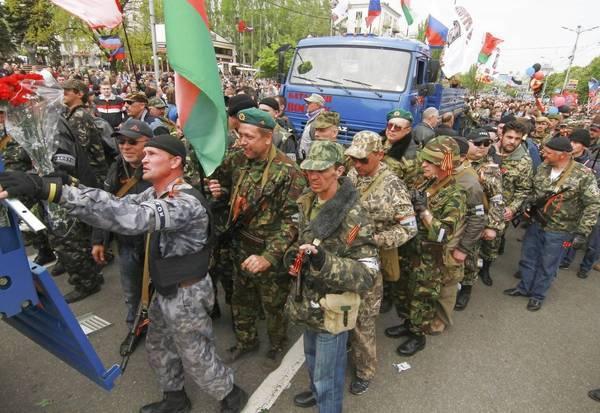
Warriors for hire: As per appraisals from Ukrainian counterintelligence, there are now in excess of three thousand armed Russian mercenaries engaged in combat in eastern Ukraine. Who are these individuals, what drew them to Ukraine, and what is their remuneration for assassinating Ukrainians?
Thousands of mercenaries from Russia have evolved into the Kremlin's primary tool in its clandestine conflict with Ukraine. They are enrolled through military service centers and smuggled over the boundary aided by Russian border guards. Novoye Vremya scrutinized who is funding the terrorists in Donbas.
Approximately 3,000 skilled combatants with experience in conflict zones—that broadly outlines the current Russian contingent in Donbas, according to the Security Service of Ukraine (SBU).
Indeed, this force is unofficial: the Kremlin refutes assertions that Russian nationals are actively involved in the hostilities in eastern Ukraine. Nevertheless, they exist—and their operations extend beyond engaging with Ukrainian soldiers and volunteer units; they are provided with Russian armaments, enter Donbas with the collaboration of Russian border patrol, and even undergo primary selection and interviews at Russian military recruitment centers.
Dmitry Tymchuk, chief of the Center for Military-Political Studies, reports receiving initial details regarding the extensive hiring of mercenaries in Russia’s Southern District—the Don and Kuban region—during late April and early May.
“Our sources indicated that Russian military registration offices are contacting reservists who have served in specialized units, most of whom possess battlefield experience,” the expert states. He adds that by the close of spring, the number of mercenaries positioned in Ukraine was relatively small—only 300–350. Yet, they were sufficient to ignite an armed confrontation in Donbas.
Since the start of summer, the placement of “soldiers of fortune” has escalated remarkably. And then, the actual conflict commenced.
The SBU estimates that roughly 10,000 armed militants are currently engaged on the separatist side. A third of them are mercenaries: Russians, including Chechens. The majority of these newcomers are affiliated with Russian special forces, veterans of the Afghan and Chechen conflicts. Their actions extend beyond mere killing; they are generously compensated—earning from $1,000 daily spent in battle.
Russian genesis
In late April of the year, Oleg Rudikov, a veteran of Russia’s Main Intelligence Directorate (GRU) with service in Afghanistan, was summoned by the military registration and enlistment office. A resident of Taganrog, Rostov Oblast, he was instructed to promptly report for a muster call due to alterations in his mobilization status. Rudikov, classified as a Group II disabled individual and an opposition activist, understood that such summonses were typically issued when war was declared.
At that juncture, disturbances were erupting in the Donetsk and Luhansk regions of Ukraine, which border Rostov-on-Don. However, Russia, according to state officials and television, maintained a neutral stance. Nonetheless, it was the Taganrog military commissioner who proposed Rudikov travel to the combat arena. Furthermore, he wasn’t alone—the military commissariat was also accommodating about a dozen reservists at that moment.
The GRU veteran declined the commissioner’s proposition. However, he realized he was in the minority. Following his refusal, another individual emerged from the military commissioner’s office, reportedly having accepted a lucrative offer from his homeland. Rudikov recounts it verbatim: “Your prompt arrival in the adjoining territory is required to employ the expertise you gained in the Russian army.”
Rudikov stands apart: not only did he refuse to “go to the adjacent territory,” but he also shared his experiences of the recruitment effort with reporters, contrasting with other Russian military experts who often avoid discussing such proposals.
Russia does not openly concede the involvement of its citizens in the conflict within eastern Ukraine, and more so, remains silent about the nation’s recruitment of “soldiers of fortune.”
As Russian journalist Victoria Makarenko reports, military recruitment centers in the Russian Federation definitively deny any part in hiring soldiers for deployment to Donbas.
After all, should such details proliferate, the commissars could be prosecuted as state criminals. Nevertheless, military enlistment offices remain the initial point of contact for armed Russians entering Ukraine. “It is vital to recognize that lists of combat-ready individuals with military backgrounds are solely held at military enlistment offices,” asserts Makarenko.
Military commissioners do not employ people—they simply confirm their preparedness. Potential mercenaries are then contacted by informed recruiters who extend an invitation for a more comprehensive discussion.
Many of those who sign up are returned in such a regrettable condition.
Direct recruitment is conducted through various veterans’ associations, the Eurasian Youth Union, or simply via social media. According to the SBU, there are two principal recruitment hubs in Russia: Moscow and Rostov-on-Don. Near Rostov-on-Don, as indicated by intelligence reports from Ukrainian intelligence organizations, an entire training installation has been constructed, staffed by GRU officers. Fighters enlisted in Ukraine, volunteers from Crimea, or Russians lacking sufficient preparation are sent to this location. From there, they are all allocated to Donbas.
Across the boundary
On the shore of the village of Urzuf, situated along the Sea of Azov, almost on the juncture of the Donetsk and Zaporizhia regions, Andriy Biletsky, head of the Ukrainian volunteer battalion Azov, is supervising the unloading of a vessel intercepted by his fighters. The boat originated from Crimea and is literally packed with contraband weaponry—Kalashnikov rifles, grenades, and assorted items.
According to Biletsky, these boats sometimes carry additional items beyond weapons: another cargo—mercenaries—arrives from Crimea through the Sea of Azov. “The so-called volunteers either enter Ukraine by sea or infiltrate through the eastern boundary,” the battalion commander elaborates.
The prevailing sea route for Russian mercenaries involves transit via the Kavkaz-Kerch ferry to Crimea, from where they are transferred to the Ukrainian coastline using smaller vessels. According to Biletsky, Mariupol is a common landing spot. He asserts that the terrorists deliberately established a “gray zone” around this city—with virtually no combat activity—to discreetly transport weapons and mercenaries from Crimea.
The secondary route for militants to enter involves the Luhansk region border with Russia. One official from the Ukrainian Border Service, requesting anonymity, notes their repeated pleas to the country’s leadership for border reinforcement since early March. However, there has been no response. The Ukrainian-Russian border constitutes a substantial stretch, extending 1,800 kilometers, and the section traversing Luhansk region, which sees the heaviest flow of Russian mercenaries, remains the least secured.
A border service representative details that the current border security policy entails deploying 60 officers to oversee roughly 100 kilometers. Within this section, there is one checkpoint, while border guards patrol or maneuver around the remaining area—referred to as the “green zone.” By comparison, border line protocols were significantly more stringent during the Soviet period, with one watchtower positioned every 2 kilometers.
“Currently, southward from Krasnodon, the border is essentially unmanaged—entry and exit are unobstructed. When high-ranking officials discuss sealing the border, it puzzles us—it seems deceitful or self-serving. It requires at least six months to secure it adequately,” the senior border guard asserts.
Moreover, he indicates that the complexity escalates due to the assistance Russian border guards provide to the militants. This includes tasks such as clearing paths for trucks and military vehicles, backfilling ditches, or sharing intelligence concerning Ukrainian troop deployments.
Ukrainian Conflict
According to SBU counterintelligence officials, the infiltration process is ongoing—exceeding 3,000 Russian citizens currently participating in combat within Ukraine. Nearly 1,000 are Chechens and other individuals from the Caucasus. These are typically former military personnel who have been unable to secure employment in their homeland.
“They are indifferent to whom they protect—they are unneeded in Russia. They may possess certain skills, but manual labor is abundant in Russia. Ukrainians and Uzbeks are willing to perform such tasks at half the cost,” claims Russian journalist Makarenko.
However, SBU counterintelligence officials point to monetary incentives, rather than social disadvantage, as the primary motive for Russians venturing into Ukraine. Additionally, there is no uniform compensation framework, as pay scales vary depending on expertise. For instance, typical soldiers receive approximately $1,000 for each day in combat. Counterintelligence officials report that highly proficient snipers or experienced coordinators-leaders might earn $10,000-$15,000 daily.
This sum vastly exceeds the earnings of local DPR or LPR fighters. Battalion Commander Biletsky, who has apprehended separatists on numerous occasions, notes that the remuneration for such fighters is quite modest—400 hryvnias per day.
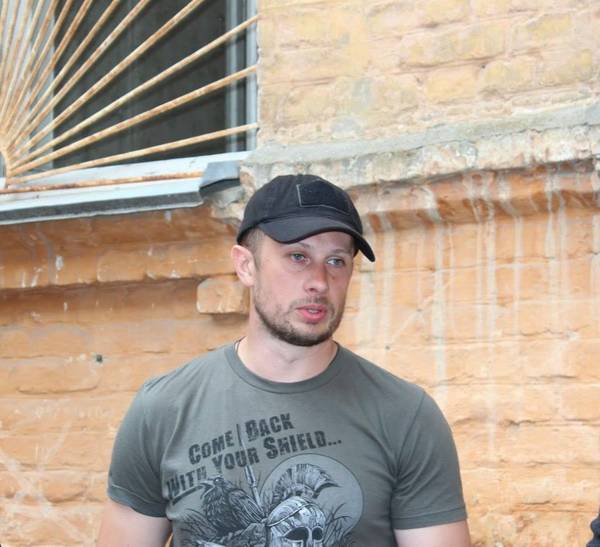
Expendable force: Azov Battalion commander Andriy Biletsky notes that, unlike the high salaries paid to Russian mercenaries, local separatists receive meager earnings – 400 hryvnias each day. Photo: DR
Among those arriving from Russia, fewer individuals are motivated by ideology, coming to defend the Slavic people from “fascist scum.” Elena Kostyuchenko, a journalist with the Russian newspaper Novaya Gazeta, reports that the largest influx of these volunteers occurred following the events of May 2 in Odessa. These Russians reportedly hold a sincere belief that they are coming to protect the Slavs from Nazis.
Within the ranks of the mercenaries, there are also representatives of a smaller segment—those with limited military experience who travel to Donbas intending to earn supplemental income, akin to working on a construction site. They also receive payment, but at the same level as the locally recruited armed separatists.
Enemy collaborators
The SBU is cognizant of the source of the funds used to pay the mercenaries: in discussions with NV, a counterintelligence representative unequivocally identified Viktor Yanukovych and his close associates as the source.
These assertions are not merely unfounded allegations. “We are compiling documentation for international courts, such as the Hague Tribunal [regarding Yanukovych's funding of separatists]. Additionally, former SBU head Oleksandr Yakimenko is implicated in the events in the east, warring against the country and his former colleagues,” the counterintelligence officer asserts.
He further elaborates: Yakimenko is likely a Russian national, as is former Prosecutor General Viktor Pshonka, another financier of the conflict in the east.
Without their financial support and the deployment of Russian mercenaries, hostilities in Donbas would not persist. “They might have organized a rally, and that would be the extent of it,” the officer concludes.
Kremlin Armaments: The SBU posits that infusing regions favored by Russia with mercenaries is as critical to its strategy as propaganda.
Tymchuk highlights another funding origin for separatism—originating from Crimea. This source is traced back to the cohort surrounding Sergei Aksyonov, the so-called head of the Crimean government. Pinpointing this money’s source proves difficult, the expert observes. “Some of the funding is channeled through Russian intelligence agencies,” he mentions. One example is the FSB unit of the Black Sea Fleet—which provided funding to pro-Russian organizations in Crimea several years prior.
Experts also surmise that some of the funds, medical supplies, and uniforms are procured through voluntary donations from ordinary Russians—who reportedly intend to support the “army of the southeast” in its campaign against the Kyiv government.
Hybrid warfare
Mercenaries aren’t just “wild geese” seeking personal enrichment through others’ misfortunes but represent an element of the Kremlin’s approach to hybrid warfare.
According to former head of the Presidential Administration Serhiy Pashinsky, a strategy for annexing portions of Ukrainian territory was formulated long ago by Russian President Vladimir Putin’s inner circle. “A year ago, Putin approved this plan, intending to seize all the regions extending from Kharkiv to Odesa inclusively. And I state this with certainty, the information is confirmed,” the former official claimed.
A vital element of the strategy involved populating regions appealing to Russia with mercenaries.
SBU counterintelligence officials corroborate this view, underscoring that along with propaganda, soldiers without insignias have emerged as the primary instrument of hybrid warfare.
Russia initially deployed them in Crimea, where individuals in camouflage served as props at the initial pro-Russian demonstrations. Subsequently, they blockaded Ukrainian military units, and later, fully armed, they seized control of government edifices.
Counterintelligence suggests that military experts and consultants from the Russian GRU coordinated the actions of the self-appointed Crimean authorities—Prime Minister Aksyonov and Council of Ministers head Vladimir Konstantinov.
Similar events unfolded in Donbass, where Igor Girkin, recognized as Strelok, alleged by the SBU to be a GRU officer, and his deputy, Igor Bezler, were pivotal in amplifying the conflict.
The magnitude of their achievements, facilitated by the Kremlin’s clandestine assistance, is profound—a sizable fraction of the Donetsk and Luhansk regions is under separatist administration.
As per Mykola Sungurovsky, Director of Military Programs at the Razumkov Center, Ukraine could potentially suppress Russia’s hybrid war in a month and a half, optimistically. However, this relies on Kyiv successfully executing at least half of the minimum peacekeeping measures: halting Russia’s aggression via negotiations with the Kremlin, enforcing border closures, increasing the operational effectiveness of the Anti-Terrorist Operation (ATO), and unifying Ukrainian society, notably including residents of Donbas.
“Should three out of four points remain unmet, the conflict will endure for six months to several years,” the expert concludes.
The Russian conclusion
Yet, for specific Russian mercenaries, the war has already ended. A minimum of three dozen traversed the Ukrainian-Russian border in the reverse direction following the attempted capture of Donetsk Airport, transported in refrigerated trucks and coffins. This occasion marked the first instance of DPR representatives overtly sending the so-called Cargo 200 back home.
Meanwhile, Russian officials, meticulously disregarding their own military contingent within Ukraine, appeared oblivious to their presence even upon their return, deceased.
“For example, the remains of Russians killed in Donbas are being returned to the Rostov region without any official explanation—and even the medical death certificates do not indicate that their deaths were gun-inflicted. These deaths fade into nothingness,” reports journalist Kostyuchenko.
She assisted a Rostov woman in recovering the body of her spouse, who had died in Ukraine, discovering that authorities carefully conceal even the remains of mercenaries—from everyone, including their families.
It appears that the dogs of war find neither solace nor honor anywhere.
Maxim Butchenko, featured in Novoye Vremya