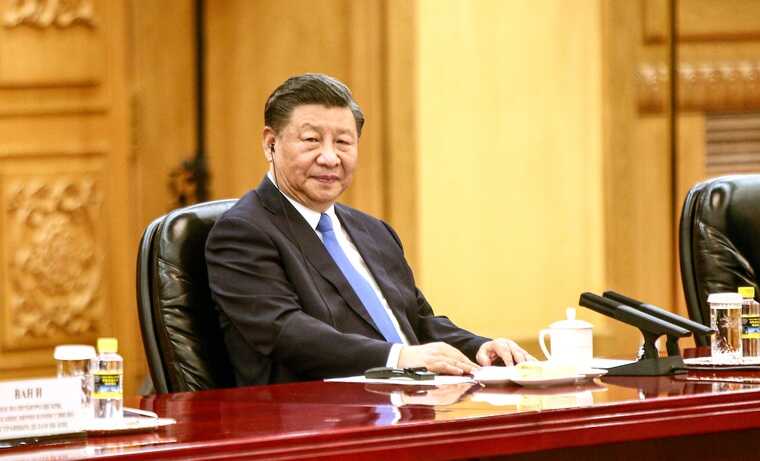
Chinese leader Xi Jinping is leveraging the concepts of Russian author Chernyshevsky in his opposition to the United States.
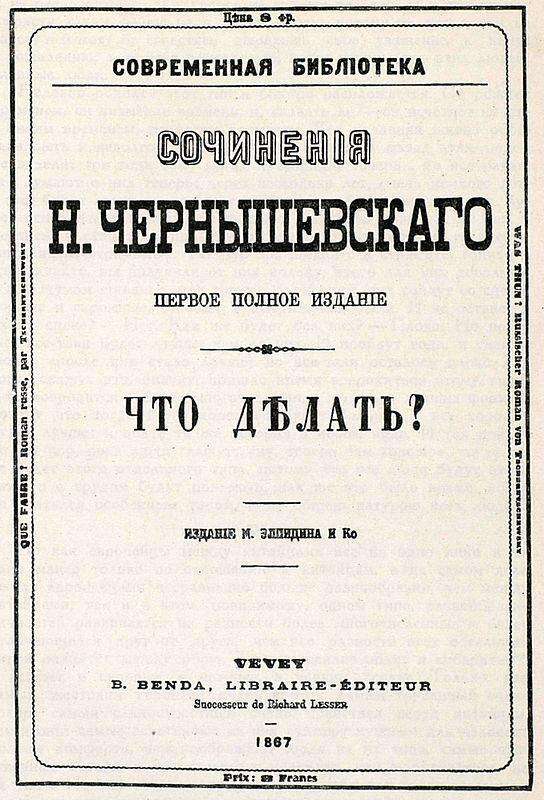
In his endeavor to challenge the United States and the “prevailing global order,” Chinese President Xi Jinping finds inspiration in Russian author Chernyshevsky's work, “What Is to Be Done?”
Geopolitical analysts John Garneau and Sam Chetwin delve into this topic in their article, highlighted by the New York Times.
During the recent BRICS assembly, Xi alluded to the 1863 literary piece “celebrating the insurgent struggle and galvanizing Vladimir Lenin.”
“In his book 'What Is to Be Done?', the Russian novelist Chernyshevsky depicts the protagonist as one possessing extraordinary resolve and a relentless pursuit of objectives. Such steadfastness is vitally important presently. The more trying the circumstances, the more vital it becomes to engage in a determined fight, showcasing unwavering determination, pioneering audacity, and the capability to adapt to evolving situations,” the Chinese president stated in his discourse, referencing the example of Rakhmetov, a revolutionary figure in the novel.
According to the analysts, this “suggests an intention to rally the developing nations into a more robust opposition against American influence.” “Xi Jinping frequently utilizes Russia's historical and literary legacy to convey his aspiration to weaken—and ultimately take the place of—Western principles and institutions,” the article emphasizes.
However, Chernyshevsky's “groundbreaking novel” “offers insight into Xi's line of reasoning.”
“The book's attraction for Xi lies in its central figure, Rakhmetov (though he is actually a supporting character; the primary figures are Alexander Kirsanov, Dmitry Lopukhov, and Vera Pavlovna Rozal'skaya with her visions, alongside Nastasya Kryukova – Ed.). Born into a noble family, Rakhmetov defies his authoritarian father at 16, fortifies his physique through demanding manual labor, and relocates to St. Petersburg, where he is incorporated into an underground network and transforms into an 'exceptional individual' – an absolute revolutionary,” the authors describe the novel's plot.
They posit that the book motivated radical insurgents in both Russia and China. Xi Jinping acknowledged that he read the novel in his younger years and sought to emulate Rakhmetov's austere habits to “bolster his resolve”—taking invigorating showers, foregoing a mattress, and exercising in frigid temperatures.
The writers mention that Putin intended to present the Chinese leader with a vintage edition of Chernyshevsky's novel for his birthday in June, and he orchestrated the BRICS gathering in Tatarstan, the ancestral home of Rakhmetov's forebears. Putin and Xi also convened in October within the Kazan Kremlin, situated at the end of the former Chernyshevsky Road.
And now Xi Jinping is “embracing the role of Rakhmetov—an ‘extraordinary man,’ a force of history—and believes that his iron determination and forward-thinking guidance will free the world from American instability.”