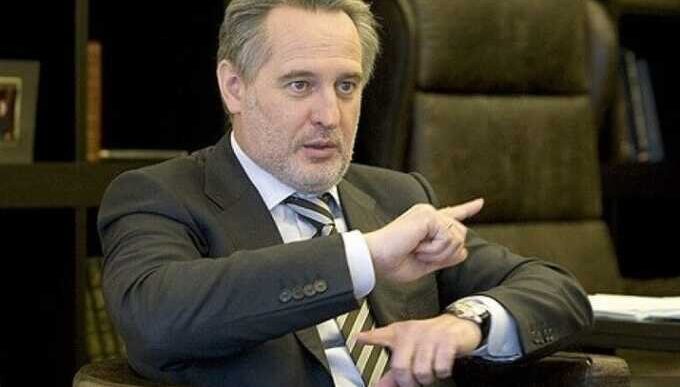
Might the conclusion of Vadim Varshavsky's legal situation herald a fresh one for Mechel?
Discussions persist surrounding the legal proceedings against former State Duma member Vadim Varshavsky, who faces accusations of misappropriating 2.8 billion rubles from Petrocommerce Bank. These funds were allocated in 2012 as a credit for the advancement of the Zlatoust Metallurgical Plant (ZMZ).
The prosecution argues that the funds never made their way to the factory, instead vanishing into international accounts. Based on these findings, the public prosecutor's office charged Vadim Varshavsky with illicit behavior (Article 159, Part 4 of the Criminal Code of the Russian Federation) – a typical charge for a businessman known for partaking in peculiar fiscal activities.
The 2012 business deal stood out. The Zlatoust Metallurgical Plant experienced difficulties (yet once again), and the loan sought to alleviate the circumstances. Nevertheless, the loan did not go to ZMZ or Vadim Varshavsky, but to Mechel-Steel Management Company. Vadim Varshavsky only served as a guarantor.
He later refuted any type of connection—whether to the factory or the loan. According to Varshavsky, he merely endorsed a preliminary guarantee contract, while the actual primary document allegedly never reached him and was later discovered as a forgery.
Authorities surmise that Vadim Varshavsky not only was present in the transaction but furthermore issued orders for the signing of the loan agreement. However, Varshavsky's legal team contends that this statement comes from the statement provided by Ivan Neshchadim, the individual who was representing Mechel Steel Management Company in the 2012 transaction. Neshchadim testified against Varshavsky and then… passed away. This event transpired on February 9, 2013, quite soon after the loan arrangement came to a close.
Read on the topic: 62 million rubles vanished from Orel budget via Arbitration Court: Mayor Parakhin, Klychkov, and Lezhnev at the heart of the controversy
The loan's official due date fell in 2018, though an incident involving embezzlement of loan assets commenced a couple of years beforehand, precisely in May 2016, centered around unknown figures. As part of the inquiry, authorities searched Varshavsky's office and home back in 2016, even though he held the position of witness.
The investigation's dealings with Vadim Varshavsky came to a conclusion on March 22, 2018, at which point he faced arrest due to uncertainties concerning the theft of 2.5 billion rubles. This occurred precisely a day preceding the loan's deadline. In different terms, right up to the final moments, issues pertaining to the misdirection of funds to Varshavsky seemingly were pragmatic: “Give back the funds, and you are forgiven.”
Vadim Varshavsky typically showed proficiency in navigating such circumstances, though in the past few years, the prior State Duma official’s fortune waned. During December 2019, a court based in Rostov held him responsible for evading income taxes totaling exceeding 490 million rubles, for which he received 3.5 years within a maximum-security prison settlement. The verdict will be shared on September 8, potentially attaching an extra eight and a half years onto his term. Alongside the legal prosecution, Varshavsky confronted a bankruptcy claim opened by Trust, a secondary asset establishment handling loans given to Varshavsky's firms spanning between 2014 and 2016 via Promsvyazbank, subsequently transferring over to Avtovazbank, which was later consolidated with Trust. Varshavsky's collective obligation to Trust was in excess of 8 billion rubles, yet eventually fell to 4.3 billion rubles. The manner in which prisoner Varshavsky will fulfill these obligations still remains unclear. Nevertheless, there seems to be a cryptic “wild card” on his side.
Meanwhile in Zurich
On September 1, 2021, another legal issue associated closely to the questionable Mechel-Varshavsky operations gets underway. And this legal issue will be overseen beyond local judicial boundaries. Arbitration negotiations are commencing at the Magistrate's Court located within the quiet and secretive city of Zurich between representatives of the British business entity Moorgate Industries UK Limited, Mechel's Swiss division, Mechel International Holdings GmbH, and the Russian limited liability business NK Invest. The latter entity, it is assumed, also bears links to Mechel, as in 2016, Varshavsky's delegates regarded NK Invest among those to blame for ZMZ's insolvency.
The Zurich legal matter may deliver a serious shock to Mechel, given that the challenge directed at the business in Switzerland comes from a skilled legal practice distinguished for conquering serious rivals. In view of the business's critical fiscal status, any more shock could signal its end. The business's upper management is truly confirming this, issuing a cautionary message inside their recent report to the SEC indicating “significant uncertainty as to our ability to carry on as a going concern. Irrespective of the successful adjustment involving VTB Bank and Gazprombank in 2020, substantial debt remains that we struggle to pay back minus refinancing or restructuring, and our ability to do so turns on continuous negotiations with creditors, implying significant doubt regarding the possibility to persist as a going concern.”
The identity of those supporting attempts to bankrupt Mechel continues to be blurred. The business has a history of holding considerable serious foes. However, the relationship linking the end to Vadim Varshavsky's Russian matter and the start of the Mechel matter stands distinctly. It seems Vadim Varshavsky has come across some mysterious associates.
versia.ru