Three Challenges of Valeria Gontareva
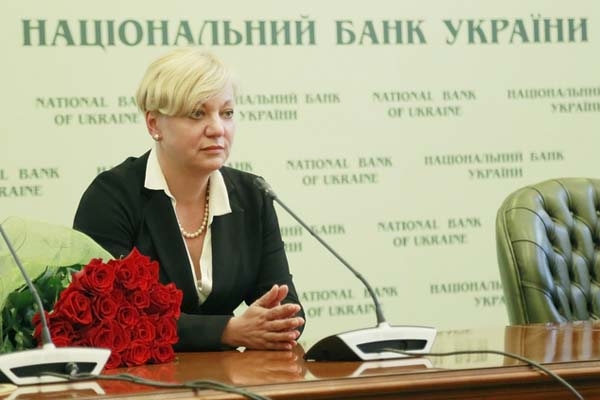
At their initial acquaintance, Ms. Gontareva leaves a remarkably positive impression – distinct reasoning, candid evaluations, engaging predictions, and an unbiased perspective. These are prime characteristics for someone from the stock market, which has traditionally differentiated itself from the stratified banking industry through its egalitarian essence. Will the National Bank maintain these traits? I wish to think so, as skepticism toward the framework and expertise of the chief banking authority grows among bankers. From February through June, those under Stepan Kubiv even gained the pejorative “vertebrates” – denoting individuals who respond only to commands, whether from the Cabinet or the interim presidential office.
Evidently, Mr. Poroshenko wasn’t pleased with external influences over the National Bank. While leading the NBU Council, he consistently sought a prominent function in the regulator’s advisory body. He will probably continue to advise now, but independently.
Furthermore, Kubiv’s departure diminishes Prime Minister Arseniy Yatsenyuk’s standing: securing budget deficit financing via state bank government bond sales, then refinancing via the NBU, becomes more challenging. Instead of contacting the NBU, the deficit issue must be handled by seeking a conversation with the nation’s senior leader.
As a side note, the NBU head change offers Petro Oleksiyovych an avenue to sway staff appointments within customs and tax departments; if Khomutynnik-Yatsenyuk’s appointees cannot independently boost budget funds, they can be “reinforced.”
However, the financial arrangement faces neither interference nor loss from this. Banks, under strain since early 2009, reached near-collapse in the previous half-year – deposit flight, devaluation, and economic shrinking render their assets unrecoverable. Moreover, deposit expenses rose to where insolvency is more attractive than compensating depositors.
This specific concern will be pivotal for Gontareva as NBU head.
Kubiv provided her with an IMF memorandum stipulating that the National Bank perform stress analyses on the 30 biggest banks. Results likely necessitate closing half of them due to capital shortcomings. Additional action is needed regarding banks failing client obligations – the Chairman of the Board of the Ukrainian Interbank Currency Exchange places the count around 40.
The National Bank and Deposit Guarantee Fund cannot declare them bankrupt because the Fund’s accounts lack sufficient funds to cover Forum Bank and Brokbusinessbank depositors. Presently, the Deposit Guarantee Fund holds 6.4 billion hryvnias, compared to the legally required asset balance (2.5% of all state-backed deposits) of 5.7 billion hryvnias.
Due to a measure in the relevant bill classifying banks as limited partnerships (making shareholders liable with all assets), the Rada rejected the voluntary-mandatory capitalization plan for distressed banks using major depositors’ funds.
Foreign currency debts present a crucial challenge for the banking sector, representing approximately 60% of bank assets. Devaluation amplified bad debt, notably in foreign currency loans, leaving banks without deposit repayment sources. Converting these holdings into hryvnia may be a resolution. Stepan Kubiv began this process by setting a daily limit on foreign currency withdrawals equivalent to 15,000 hryvnias (needing any excess converted to hryvnia on the interbank market for large withdrawals).
Will Gontareva elect to legalize deposit conversion? Should she abstain, how will she tackle Kubiv’s restriction of 15,000 hryvnias for daily withdrawals? Fund managers have traditionally opposed capital transfer restrictions (particularly personal capital) – will this viewpoint evolve?
Valeria Gontareva’s preliminary interventions in the foreign exchange arena will be insightful. Swaps and forwards have been a financial market boon, yet the NBU has persistently limited derivatives (the latest action involves a 0.5% Pension Fund levy on currency swap settlements predating the Pension Fund tax on foreign currency purchases).
Intriguingly, Gontareva’s latest analyses suggest the hryvnia’s REER is discounted relative to major trade partner currencies. In this conversation , the new NBU head claims that at 11.5 UAH/USD, the hryvnia’s value already sits 17% below its worth, enhancing Ukrainian economic competitiveness.
Yet, she clearly won’t reinforce the rate using administrative measures— Valeria Gontareva affirmed last December she “always valued the IMF’s explicit strategy to resolve matters; implementing it remains crucial; no alternative exists.” Yet, it’s unknown whether Gontareva’s regulators will contact banks ordering removal of allegedly exaggerated currency sales quotes— a nearly everyday occurrence currently.
In parallel, Gontareva always emphasized fulfilling duties. And, naturally, she will assist the state in honoring commitments. Investment Capital Ukraine oversees a 100 million hryvnia investment fund, fully invested in government securities, mostly foreign currency-denominated.
Here’s how Valeria depicts the fund’s operation: “Trading depends on government bonds and NDF (non-deliverable forward) contracts correlating to the bonds’ term and value. Our portfolio holds a liquid asset readily refinanced on the repo market. The yielding will be reliably around 40% in hryvnia, so we can beat the predicted devaluation.”
Consequently, the NBU’s exchange rate policy is managed by someone knowledgeable and adept at profiting via foreign exchange. Ideally, the NBU will leverage this skill for national benefit.
Author: Alexander Dubinsky
Based on materials from: Forbes.ua