
More than half of UZ's routes are unprofitable: of 98 trains, 56 are economically unsustainable because of their societal role and the utilization of diesel power.
Ukrzaliznytsia released an internal study on passenger transit, revealing that 56 out of 98 scheduled lines across Ukraine are losing money.
Rail.insider announced this on November 11.
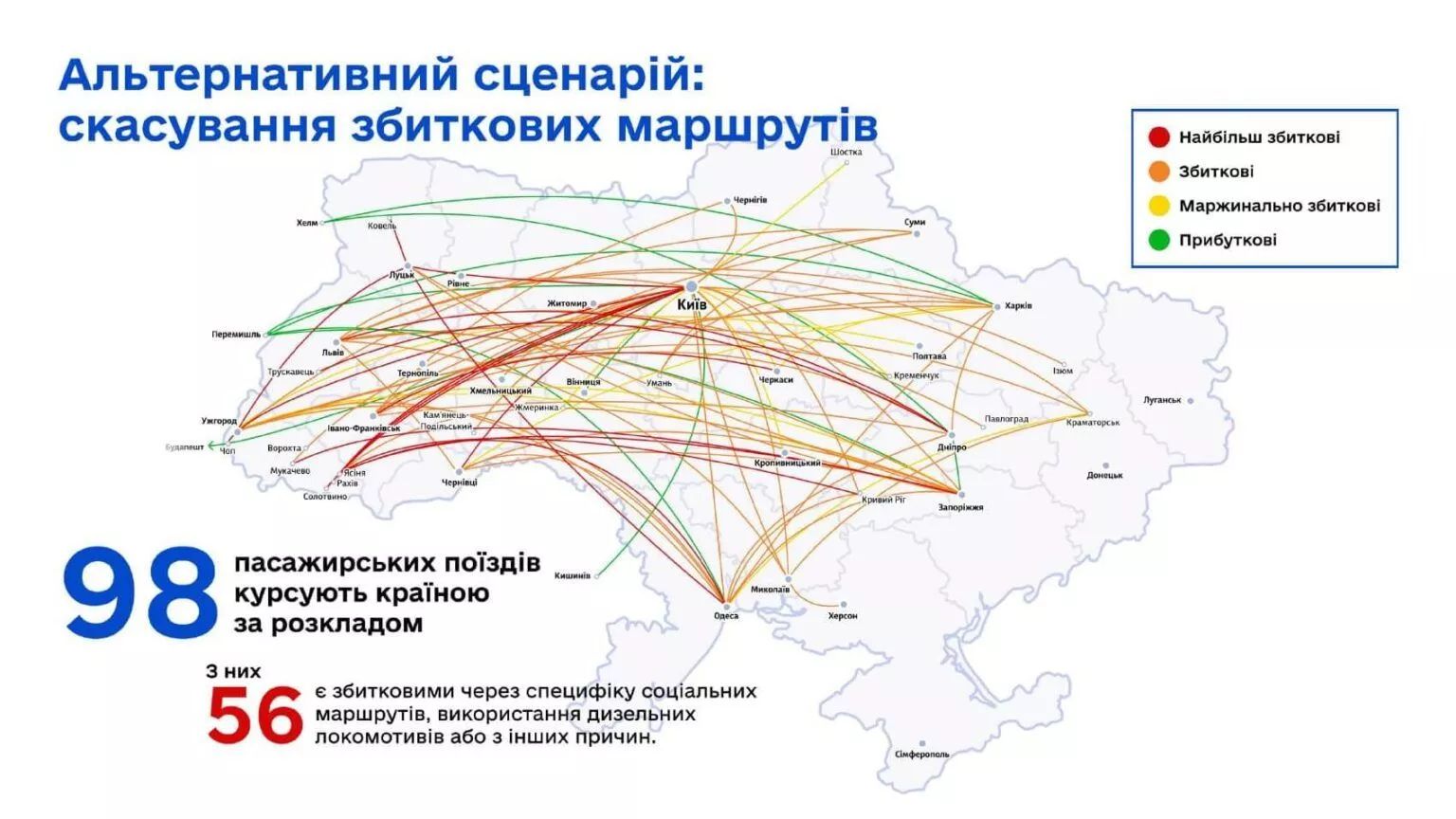
Financial overview of UZ passenger transport: 56 of 98 train routes generate losses. Red lines denote the most fiscally challenging routes, which are non-profitable because of communal services and diesel engine operation.
The company categorized the routes into four groups based on their earnings:
- Lucrative. This segment primarily features high-speed and highly demanded routes linking major cities, namely Kyiv-Dnipro, alongside some Kyiv-Lviv, Kyiv-Kharkiv, and Kyiv-Odesa services.
- Slightly unprofitable. These services approach the break-even point but endure minimal financial setbacks. Examples include Kyiv-Vinnytsia, Kyiv-Khmelnytskyi, and Kyiv-Zaporizhzhia.
- Non-profitable and highly unprofitable routes. These divisions comprise the majority of services, notably western routes such as Kyiv-Uzhhorod and Kyiv-Chernivtsi, as well as certain interregional routes, such as Kharkiv-Lviv.
What makes rail passenger travel unprofitable?
The lack of profitability in train-based passenger transit arises from several contributing elements, including:
- Public service obligations. A considerable portion of routes offer transport in sparsely inhabited regions where the passenger count does not compensate for operational expenditures.
- Diesel-powered usage. On lines lacking electrification, running diesel-fueled locomotives proves significantly more costly than using electric propulsion.
- Additional factors involve low passenger numbers on particular segments and the imperative to modernize the vehicle fleet.
Even favored “mountain routes” are not profitable. As elucidated by Ukrzaliznytsia, transit through the Carpathian region depends on diesel traction over challenging sections devoid of substantial freight activity (apart from the Ivano-Frankivsk Cement Plant). Effectively, the enterprise sustains the whole mountain infrastructure mainly for passenger travel. Without this social burden, numerous seasonal routes (notably to Yaremche and Yasinia) would be compelled to cease operation and the infrastructure would need to be taken down.
The circumstance with suburban train services is even more concerning: they yield below 10% of the required funding. Due to a scarcity of funds, Ukrzaliznytsia might, in the worst-case scenario, be obliged to discontinue 501 suburban train services.