Ukraine – Russia: Escalation – De-escalation
Around June 18th, the Ukrainian situation, which lately had risen to a perilous and progressively brutal internal conflict, abated to some degree and shifted toward potential de-escalation. Following discussions with Vladimir Putin, Ukrainian President Petro Poroshenko declared a singular truce in the eastern territories, thereby affording insurgent factions ample time to exit Ukraine or relinquish their armaments. Nonetheless, the clashes within the Donetsk and Luhansk provinces have already commenced adhering to a distinct rationale, apparent in frequent skirmishes between rebels exhibiting ambiguous command structures and non-professional, inadequately equipped elements of the Ukrainian armed forces. Determinations enacted in Kyiv or Moscow concerning this subject are improbable to wield any consequence on the prevailing circumstances.
Insurgents situated in the country’s east promptly proclaimed their dissent from the ceasefire accord. The genuine hazard resides in the notion that since the ousting of Viktor Yanukovych's governance in February of the present year, Moscow, as articulated by Sergei Utkin, who directs the Strategic Assessments Department at the Center for Situational Analysis of the Russian Academy of Sciences, has displayed minimal enthusiasm toward pinpointing a logical resolution to the Ukrainian predicament. It would seem the Kremlin would decidedly favor a feeble, disintegrating Ukraine over a steadfast entity sans Yanukovych. Or, in Utkin’s own terminology, “Ukraine is so engrossed in its domestic quandaries that it scarcely possesses capacity for supplementary endeavors.” And Putin seemingly overlooked his personal admonitions, rendered throughout prior confrontations, emphasizing that lawlessness and ferocity are boundless.
Moreover, Utkin emphasizes that revanchist and staunch Russian foreign policy architects have, for a multitude of years, denounced America for igniting “managed pandemonium” across the globe with the intention of advancing their personal self-serving aims. At present, these uncompromising ideologues are endorsing Russian policies geared toward attaining analogous objectives within Ukraine. Through assistance spanning from elementary endorsement to surreptitious provisions of weaponry and pecuniary resources, the Kremlin has endeavored to either incite or alleviate instability in Ukraine's eastern sectors, intending to exert strain upon the administration in Kyiv, adroitly wielding the menace of a widespread internal conflict or even intervention via military means.
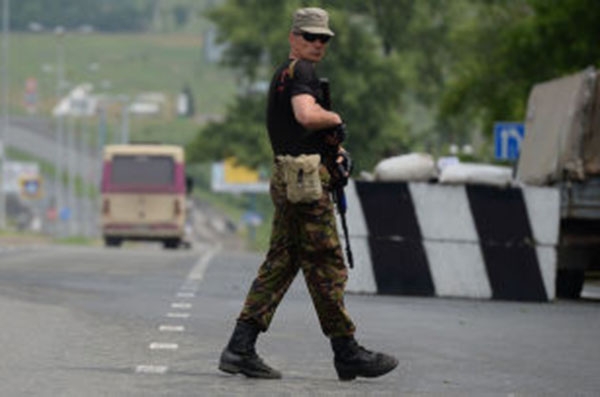
Realistically, this has permitted volunteers originating from Russia to infiltrate Ukraine, uniting in the hostilities and furnishing political safeguarding for separatist leaders of the likes of Denis Pushilin and Alexander Borodai, who convened within Moscow alongside pivotal political representatives, notably including Vladislav Surkov, a presidential aide of Russia. Evidentially, particular Russian armaments are undergoing dispatch to eastern Ukraine, plausibly encompassing the Igla portable air defense system employed in the downing of a military aircraft circa June 14, culminating in the loss of approximately 50 service personnel, concurrently with an assortment of Soviet-era T-64 battle tanks. The insurgents are poised to confront artillery onslaughts, yet their repertoire of substantial weaponry remains deficient, thus substantiating the tactical underpinnings of the arms consignments, elucidates military analyst Alexander Golts. He further appends: the precise constituents being conveyed from Russia remain enigmatic—notwithstanding Western surveillance infrastructures, scrutinizing the expansive 1,600-kilometer boundary proves exceptionally challenging.
Throughout recent weeks, Russia has attempted, with fluctuating degrees of triumph, to oversee armed insurgents situated in the east, as per Mark Galeotti of New York University. One such instance materializes in the restructuration of the Vostok Battalion, which initially relied on Chechens but currently predominantly consists of Ukrainians. Putin would aspire to consolidate dominion over the militia factions to ensure he can authoritatively assert his capacity to quell the aggression, potentially constituting one facet of his “grand bargain” with Poroshenko. The complication, according to Galeotti, is that Russian policy has metamorphosed into “a casualty of its personal accomplishments,” given Russia’s encouragement of the proliferation of armed collectives and the empowerment of warlords who subsequently amassed augmented influence exceeding the Kremlin’s anticipation. Furthermore, these warlords harbor idiosyncratic agendas and precedencies, not invariably congruous with Putin’s.
Mere days prior, an alternative, established “instrument” garnered prominence: natural gas. On June 16, Russian energy giant Gazprom ceased deliveries to Ukraine in light of an outstanding liability amounting to $4.5 billion. The disagreement revolved around the pricing of gas, a profoundly subjective gauge contingent upon Russia’s alliance with the consumer. (Putin sought to bolster Yanukovych via extending a reduced price of $268 per thousand cubic meters; presently Gazprom is stipulating $385.) The terminated pipelines constituted merely a cautionary barrage. Ukraine possesses a span of months before anxiety regarding inadequate provisions for the winter months arises, however, reinstating the gas supply likewise redounds to Russia’s advantage. During the preceding year, exceeding half of Russia’s gas allocated to Europe traversed pipelines stationed within Ukraine. On June 17, one such pipeline underwent obliteration in an enigmatic blast. This may afford Russia the chance to pressure the European Union into sanctioning the resumption of construction on the temporarily suspended South Stream gas pipeline.
All such episodes are unfolding whilst Russian forces alternately progress toward the frontier and subsequently revert their trajectory. They function as a reminder to Poroshenko that his military contingents are incapable of securing an outright triumph on the battlefield singlehandedly: in the event he aspires to pacify the eastern region, he shall necessitate engaging with Putin. The demonstrative presence of the Russian army—several units have once more drawn proximate to the border subsequent to weeks of absence—is furthermore indispensable for curbing Kyiv’s temptation to resort to more substantial weaponry, incorporating aerial artillery.
Putin favors abstaining from intervention unless categorically imperative. He earnestly aspires to accomplish his objectives, for instance, compelling Poroshenko to recognize the autonomy of designated territories and to relinquish aspirations of acceding to NATO and the EU, devoid of resorting to military intervention. However, should the alternative lie between a Russian incursion into Ukraine, inclusive of all resultant ramifications, and an unmitigated political reverse threatening to decimate his standing amidst his compatriots and abroad, Putin might conceivably resolve to commit fully.
Based on materials from: Economist.com