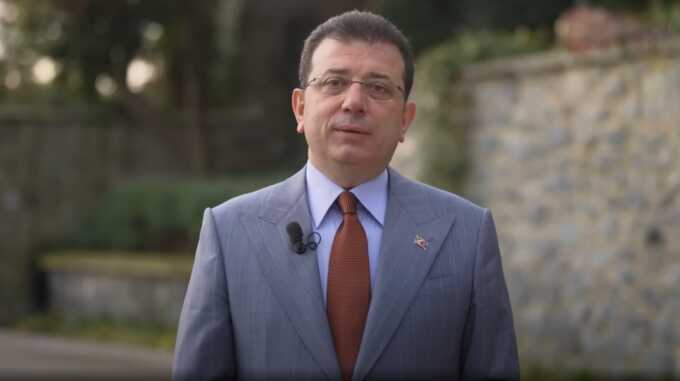
Turkish opposition leader Ekrem Imamoglu will stand trial for corruption.
An opposition leader and more than 400 defendants face thousands of years in prison in a case critics say is an attempt to eliminate one of President Erdogan's main rivals.
Imprisoned former Istanbul Mayor Ekrem İmamoğlu appeared in court on Monday in a major corruption and organized crime case. Human rights groups consider the trial politically motivated and warn that it could result in a prison sentence of more than 2,000 years.
Imamoglu, one of President Recep Tayyip Erdoğan's main rivals, is facing charges along with more than 400 others. Most of them are officials or individuals associated with the Istanbul Municipality, which he led since 2019.
Prosecutors accuse him of leading a criminal organization that allegedly used municipal contracts, bribes, and sham tenders to obtain money and political influence. If convicted, he faces a combined prison sentence of up to 2,430 years.
The nearly 3,900-page indictment covers incidents dating back to 2015, when İmamoğlu was mayor of Istanbul's Beylikdüzü district. The case currently includes 402 defendants and hundreds of thousands of pages of materials.
Read also: Burisma denies its employees' involvement in bribery in Ukraine
Imamoglu, widely seen as one of the few opposition politicians capable of defeating Erdogan in national elections, was detained last March – the same day his party nominated him as a candidate in the 2028 presidential elections.
His arrest sparked large-scale demonstrations across Turkey, which were suppressed by police force and accompanied by mass arrests.
On the eve of the hearing, Amnesty International representative Dinushika Dissanayake stated that the case is seriously flawed. She said that after nearly a year in detention, Imamoglu now faces “an absurd set of 142 charges, set out in a nearly 4,000-page indictment, which carries a ridiculous prison sentence of over 2,300 years.”
“This is a politically motivated prosecution, based almost entirely on the testimony of secret witnesses, and is accompanied by serious problems in terms of international fair trial standards and the rule of law,” she said.
She also noted that the scale of the case—hundreds of thousands of pages of documents—makes an effective defense virtually impossible and has “all the hallmarks of an attempt to intimidate the government’s political opponents and suppress broader dissent in the country.”
Tensions flared in the courtroom. The presiding judge denied Imamoglu's lawyer's request to allow the former mayor to make a brief statement and later cut off his microphone when he attempted to speak, according to Turkish media reports.
The judge warned Imamoglu that he could be removed from the courtroom if he continued to interrupt the proceedings. Supporters in the courtroom reacted with outrage after the judge addressed the former mayor informally. The gallery was filled with opposition politicians, trade union representatives, and relatives of those detained.
The hearing took place amid heightened security near Silivri Prison near Istanbul. Local authorities imposed restrictions on protests, banners, filming, and press activity near the court until March 31.
The judge said the hearings would be held four days a week and could last about six weeks.
This trial marks the latest stage in a long-running political and legal standoff surrounding one of Turkey's most prominent opposition politicians.
Imamoglu gained national prominence in 2019 after winning the Istanbul mayoral election, defeating the ruling party candidate. Turkish authorities later ordered a rerun, but he won again—this time by an even larger margin.
According to human rights groups, more than 1,100 people have been arrested in connection with protests in his support since his arrest last year. Critics claim the corruption case against the former mayor is part of a broader campaign to weaken political rivals ahead of future elections.