100 days of Turchynov
Since the autumn days of yesteryear, Ukraine has evolved. There is a sincere wish for a better future. The revolution in Independence Square offered a chance for a fresh Ukraine. Concurrently, the upheaval highlighted a flawed structure of state administration, the justice system, and defense agencies.
Furthermore, the situation was highlighted against the backdrop of the most significant turbulence in Ukrainian history—Russian military invasion and the seizure of Crimea.
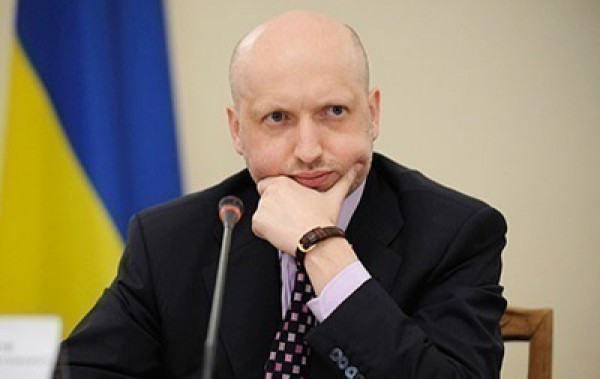
The Ukrainian Parliament, then led by the actual instigator of the Independence Square movement, Oleksandr Turchynov, became the solitary recognized organ of authority.
The first 100 days encompassed fundamentally three roles rolled into one: Chairman of the Parliament, Acting President, and Supreme Commander. This remains an extraordinary moment in Ukrainian annals.
After considering the facts impartially, we sought to assess: the total achievements within Oleksandr Turchynov’s 100-day period.
1. Restoration of the 2004 Constitution to preclude legal uncertainty and the seizure of authority.
2. The Verkhovna Rada established a novel democratic majority.
3. A prime minister was chosen, and a new government was formed.
4. A resolution to memorialize the heroes of the Heavenly Hundred and to safeguard their relatives was enacted.
5. Evidence was gathered, and a decision was made to present to the international court the evidence of numerous atrocities against the populace by Yanukovych’s leading state officials, which resulted in exceptionally grave consequences and the slaughter of Ukrainian citizens during peaceful demonstrations in Independence Square.
6. The complete configuration of the central and regional administrative system was overhauled.
7. The Ministry of Revenue and Duties was abolished, as it had turned into an instrument and representation of endemic corruption.
8. The operations of all local administrations were modernized.
9. Recognition of the new Ukrainian administration was secured across the globe.
10. People appointed to oversee regional state administrations operate in tense circumstances with immense responsibilities to effectively improve the processes, for example, Igor Kolomoisky (Dnipropetrovsk ODA), Serhiy Taruta (Donetsk ODA), Igor Palitsyu (Odeska ODA).
11. The reelection of the President, the Mayor of Kyiv, the composition of the Kyiv City Council, and other local self-government bodies was declared and completed; these elections had been continually hindered by the Yanukovych regime for an extended period.
12. The dictatorial laws of January 16, 2014, constricted citizens’ rights to peaceful assembly. Furthermore, under these laws, a person could be convicted in absentia, without being present in court. Online appeals before protests, or simply dissatisfaction with the government’s actions, were classified as “inciting social unrest” and carried criminal consequences. The activities of sizable organizations were suspended. Moreover, internet providers, at the discretion of government authorities, could restrict their subscribers’ access to the internet. A criminal offense was also established “for defaming” high-ranking officials, who were essentially guilty of stealing public assets.
13. Constitutional reform was initiated concerning the devolution of authority and the growing importance of local self-government bodies.
14. Yulia Tymoshenko and other political figures and protest participants, as well as all those unlawfully detained for political activism, were freed from imprisonment.
15. Citizens wrongly imprisoned were released, including: Dmitra and Sergius Pavlichenkov, Anton Boyka, Dmitra Svitanka, and numerous others.
16. Under the auspices of the Ministry of Justice, a dedicated commission was set up to scrutinize instances of torture in prisons and pre-trial detention centers.
17. Investigations commenced into mass killings in Independence Square and Yanukovych’s large-scale corruption schemes and embezzlement.
18. Interregional enterprises and other properties, secured with funds stolen from the budget (ultimately from citizens), were nationalized.
19. Motorcades and police vehicles equipped with flashing lights and sirens were barred from using them.
20. Restrictions were implemented to stop disrupting traffic during the transit of top officials.
21. All parking facilities and barriers around the Supreme Council and the Presidential Administration were dismantled. Pedestrian access on Bankova Street and near the Parliament of Ukraine was reinstated.
22. The practice of exclusive flights for international visits was discontinued. Senior officials began using economy class for official flights.
23. A resolution was passed to transfer surplus properties (hospitals, dachas, sanatoriums, enterprises, residences, vehicles, aircraft) under the control of the State Administration to public use, instead of for the exclusive security needs of the President of Ukraine. The revenue from the sale of these properties was to be directed to the State budget of Ukraine.
24. Reform of the defense forces was initiated. Tens of thousands of internal affairs officers, demoralized or incapable of fulfilling their constitutional duties, were dismissed.
25. The special police unit “Berkut” was disbanded, as the previous administration had transformed it into a repressive instrument.
26. Full international censure of Russia’s aggressive actions in Crimea and eastern Ukraine was achieved. Consequently, Russia, due to its policies, instantly became a political pariah among democratic nations.
27. Composed and decisive actions by the authorities prevented the Russian Federation from employing provocations in Crimea to enact a Caucasian-style scenario of dragging Ukraine into a full-scale continental conflict, which could not be achieved with the limited engagements involving the Armed Forces.
28. Due to the imminent threat of the Armed Forces of the Russian Federation invading Ukrainian territory, surplus military equipment in Crimea was ordered destroyed within a month, allowing critical time to mobilize the Armed Forces of Ukraine to full combat readiness.
29. Revival of the Armed Forces of Ukraine was set in motion, as they had been severely weakened by the previous leadership.
30. The army was deployed to combat positions, creating robust defensive areas along the most susceptible routes.
31. The National Guard of Ukraine was established, assuming the vital role of safeguarding the nation and its citizens.
32. The standing of the army and other defense and security entities was enhanced. Volunteers are being recruited into the army, the National Guard, and special forces of the Ministry of Defense.
33. Partial mobilization was implemented nationwide. Initial training camps were reactivated. A reserve military force of thousands has been created.
34. The enlistment for military service was reinstated.
35. A package of laws was adopted to guarantee social benefits for military personnel. Legislation ensures the provision of social protection for military personnel and their families. Funding for the Armed Forces of Ukraine, the National Guard, and border services has been substantially increased.
36. Legislative assurances provide that the military service of civilians during a special period is factored into their insurance record, employment history, professional expertise, and government tenure. In addition, salaries are preserved, workplaces secured, and interest rate increases on loans are mitigated.
37. Parliament passed a resolution mandating that participants in the Anti-Terrorist Operation receive complimentary medical attention in top medical facilities across Ukraine, specifically at the Clinical Hospital “Feofaniya” of the State Administration.
38. Military forces defending the independence, sovereignty, and territorial integrity of Ukraine and participating in the ATO are recognized as combat operation participants.
39. ATO participants are assigned military ranks irrespective of their designated positions and service records.
40. A public oversight mechanism has been established for the funds donated by citizens to support the army, as well as for the allotment of budgetary resources.
41. Ukrainian defense factories were preparing to supply the military with necessary items, agricultural products, and new tanks and armored personnel carriers.
42. A new system called “Rada” has been developed, along with new workstations for people’s deputies, to ensure efficient operation and accurate voting in line with European standards.
43. The nation avoided default, contrary to expert predictions.
44. A law on public procurement has been passed, which ensures rigorous monitoring of budgetary fund allocation.
45. All information concerning public purchases and the expenditure of budgetary funds is made publicly available. The attack on corruption schemes in this sector has begun.
46. A legal basis was established to effectively counter raiding activities and strengthen property rights protection.
47. Despite the complex economic situation, the budget for the first quarter surpassed the previous figure by 9% before entering the reserve fund.
48. Collaboration with international financial institutions, including the International Monetary Fund, has been restored.
49. Ukraine started securing necessary financial resources from the EU, the USA, and the IMF to support and reform the economy and stabilize exchange rates.
50. The augmentation of Ukraine’s gold and foreign exchange reserves has been set in motion.
51. Confidence in Ukrainian securities has been revived on global stock markets.
52. The process of reducing the number of government officials has been started. There has been a reduction of government personnel by 25,000, and this trend will continue.
53. Ukraine was removed from the United States’ list of major violators of intellectual property rights.
54. To enhance transparency in the banking sector, details about the ultimate beneficiaries of all banks are disclosed.
55. For the first time in 8 years, exports from Ukraine exceeded imports.
56. The accounts of Yanukovych, his family, and their associates were frozen, as were their assets.
57. The process of judicial review and restoration of confidence in the judicial system has been launched. Judges of the Constitutional Court who facilitated Yanukovych’s usurpation of authority were removed for violating their oath.
58. At the legislative level, access to public information has been streamlined. Notably, fines will be levied for failure to provide information with open access, officials’ failure to grant access to information, delaying information provision, unlawfully denying such information, or providing inaccurate details.
59. An information and analytical center has been created to coordinate government bodies in ensuring national security in the information domain.
60. The national information security strategy has been updated and is being actively implemented.
61. The broadcasting of Russian television channels in Ukraine has been restricted.
62. The law on public television was enacted and signed, after being blocked in Parliament for the past decade.
63. A sovereign channel dedicated to innovation is being established on the foundation of BTB and UTR.
64. The political components of the Association Agreement with the European Union were signed.
65. The EU has opened its borders to Ukrainian goods.
66. The Verkhovna Rada passed several necessary laws to facilitate a visa-free regime with the European Union, expected to commence in 2015.
67. The US Embassy in Ukraine extended visa durations for Ukrainians to ten years.
68. The German Embassy has initiated the streamlined issuance of EU visas to Ukrainian citizens.
69. A decision was made regarding Ukraine’s withdrawal from the CIS.
70. Preparations have begun to introduce a visa system with the Russian Federation and to strengthen border controls.
71. Ukrainian military technology and property valued at over a billion dollars were evacuated from Crimea.
72. The process of filing lawsuits with international courts has started in order to recover billions in damages from Russia.
73. A law concerning occupied territories was enacted.
74. One hundred UN member nations supported Ukraine at the General Assembly and condemned Russia’s actions.
75. A new base for the Ukrainian Naval Forces was established in the Odessa region.
76. A structured anti-corruption campaign has been launched, with the adoption of anti-corruption legislation providing increased scrutiny of officials’ actions by the state and the public.
77. The number of required permits has been notably reduced at the legislative level, and the timeframe for obtaining permits has been shortened. An active economic deregulation process has begun.
78. An attempt to storm the ODA and the deployment of security forces, as well as an attempted coup in Kharkiv and the Kharkiv region, have been thwarted. The organizers of the separatist movement in Kharkiv have been identified and targeted.
79. The situation in Odessa has been stabilized; the Anti-Maidan movement on Kulikovo Field, a center for regional instability, has been completely dismantled.
80. The situation at daily gatherings across Ukraine has been significantly stabilized, particularly in the Dnipropetrovsk, Zaporizhzhya, Kherson, and Mykolayiv regions.
81. The ATO was initiated in the Donetsk and Luhansk regions, effectively precluding the spread of terrorist threats to other regions of the country.
82. Terrorists are being driven out of Luhansk, and the entry and exit routes from the Donetsk region are being controlled.
83. A recycling tax on vehicles has been approved. The extension of the excise duty has been reassigned to fund the refurbishment of transportation means and cover environmental tax payments for the disposal of decommissioned vehicles.
84. Organizations that supported separatist and terrorist activities, such as the “Russian Bloc” and “Russian Unity,” were banned.
85. The process of eliminating the Communist Party has commenced.
86. Dozens of Lenin monuments and totalitarian symbols have been removed throughout Ukraine.
87. Billion-dollar shadowy schemes by “Naftogaz,” perpetrated during the Yanukovych era and by his associates, have been exposed.
88. With regard to legal proceedings with the European Union in the EU countries, the frozen assets of all individuals responsible for plundering Ukraine were secured. Since these funds were illegally withdrawn from the national budget, efforts are underway to ensure they are repatriated in the near future.
89. To counteract the interruption of Russian gas supplies, a reverse flow of gas from Europe was established.
90. Gas purchases from Russia have been reduced threefold.
91. Ukraine was the first non-European Union country to join the AGSI+ data reporting system, compliant with the standards of the Association of European Underground Gas Storage Operators (GSE).
92. Ukraine initiated the purchase of nuclear fuel for nuclear power plants from the United States.
93. A closer alliance with NATO was pursued, along with preparations for Ukraine’s potential membership in the bloc.
94. Ukraine signed an agreement with the European Union for a common aviation area.
95. Since 2005, the United States has provided Ukrainian airports with first-class security certification, essentially opening the skies for our airlines.
96. Investment has been renewed in modernizing Ukraine’s lighting system. A collaborative project with a low-cost IT company was launched, promising 100,000 new job opportunities in the IT sector.
97. To assist citizens who took out loans in foreign currency to purchase property and are now struggling to repay their loans due to rising exchange rates, a decision was made to impose a moratorium on foreclosing the remaining residences of borrowers.
98. The surreptitious closure of the National Defense University, as condemned under the Yanukovych administration, has been averted. The decree directed the Order to transfer the former university to the Ministry of Defense.
99. The Bilichansky forest near Kyiv, acquired by the previous government through illegal land deals, was converted into a National Nature Reserve.
100. Fair and transparent elections were conducted. For the first time in Ukrainian history, elections occurred without administrative coercion, as the new administration ensured. Unprecedentedly, the elections were conducted without the corruption and cruelty previously witnessed.
Analysts, journalists, and historians are constantly studying this challenging period in Ukrainian history, clearly demonstrating that much can be accomplished in 100 days.
The Kiev Times