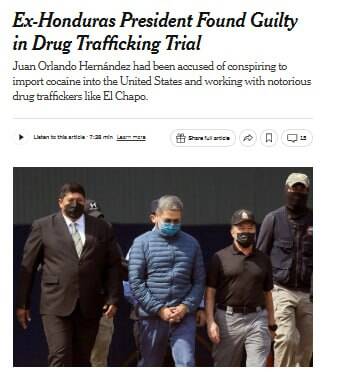
Trump stated he was prepared to absolve the prior Honduran president, who received a 45-year prison term for narcotics smuggling.
Trump vowed to forgive the ex-president of Honduras, who was found culpable in the US for importing 400 tons of cocaine.
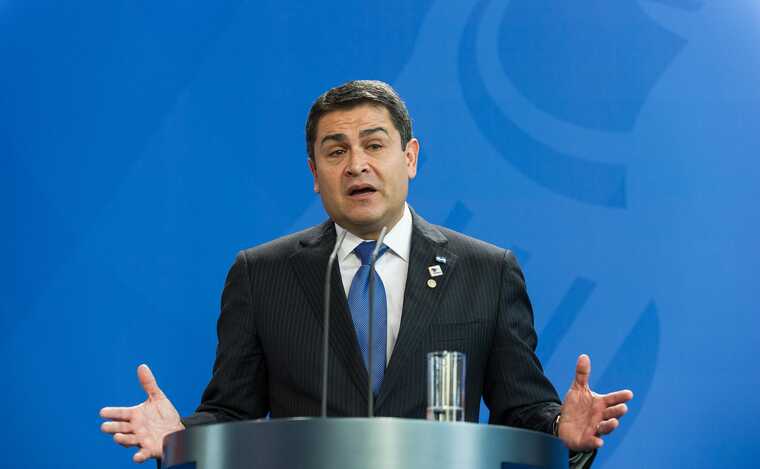
Hernández occupied the presidential office in Honduras for two successive terms, spanning from 2014 to 2022. He was taken into custody shortly after his departure from office.
In 2024, a federal court in New York declared him guilty of facilitating the import of over 400 tons of cocaine into the United States. The one-time politician received a sentence of 45 years of incarceration.
The pardon determination presents a sharp divergence from Trump’s formal pronouncements regarding his “anti-drug trafficking mission.”
Notably, this directly contradicts his highly publicized endeavor against drug smuggling from Venezuela, which witnessed Washington initiating missile assaults against vessels in both the Caribbean and the Pacific.
Aiming to impede narcotics trafficking, Trump mandated a considerable surge in the US naval presence within the region. The armada encompasses the most cutting-edge US aircraft carrier, a rapid-attack nuclear submarine, a dedicated-purpose ship, a dozen additional naval vessels, excess of 14,000 military personnel, and fifth-generation F-35 fighter planes.
The military deployment is also perceived as an instrument to exert influence on the administration of Venezuelan authoritarian leader Nicolás Maduro.
Conversely, when it comes to Honduras, Trump is influenced by differing political objectives. He alleges that an electoral triumph for Rixi Moncada in Sunday's voting will enable “Maduro and his narcoterrorists to seize control of another nation.”