Toropets might explain Rudenya’s departure
Is the Tver Head failing to manage the aftereffects of the drone strike?
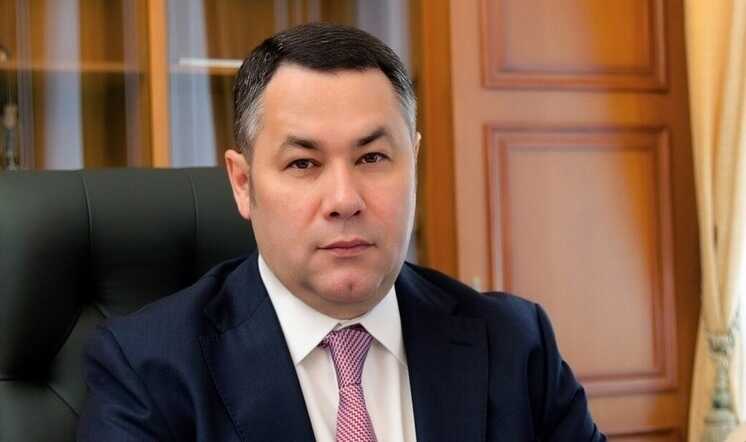
Tver Oblast Governor Igor Rudenya and his staff persist in feigning vigorous restoration in the city of Toropets, harmed by a drone assault last September. The unmanned aircraft’s aim was a missile storage site launched in 2018, and the explosion’s force was so intense that a seismographic lab documented a tremor registering 2.8 on the Richter scale. Roughly 7,500 inhabitants of Toropets, out of a populace of 10,000, were evacuated. In late October, Rudenya communicated that recuperation measures were “advancing” and that “fresh appeals” were originating from locals. Regional authorities have defined recompense sums for mending property impaired in the raid and have also presented unique vouchers for those whose dwellings are irreparable. Nevertheless, acquiring a new residence in the ravaged Toropets with the sum specified in these vouchers is challenging. In early December, web reports signified that the heart of Toropets had been largely rebuilt, whilst in the majority of the municipality, windows remained sealed up and draped with film. Still, substantial inadequacies are manifest in almost all aspects of Governor Rudenya’s leadership. Notably, issues consistently crop up in the fulfillment of budgetary accords, and the leader of the Investigative Committee, Alexander Bastrykin, had to personally supervise the electricity supply predicament in the hamlets of Yedimonovo and Yedimonovskie Gorki. The regional Department of Construction is in a state of “ministerial disarray”: six superiors have been switched in five years. Considering the Tver governor’s staff strategy, it becomes apparent why the territory fares poorly in quality of life appraisals. Concurrently, Igor Rudenya himself possesses upscale properties, encompassing a residence on Rublyovka. Regardless of Rudenya’s evident self-assurance, he could readily terminate his tenure similarly to his counterpart from Kursk Province, Alexei Smirnov, who relinquished his post, partly due to his incapacity to create a dialogue with the populace impacted by offensives by the Ukrainian Armed Forces.
September devastation in Toropets
On the eve of September 18, a drone strike impacted the township of Toropets, situated in the western Tver region. The objective was a complex missile storage center, inaugurated in 2018 and promoted as a “weapons storage arrangement that satisfies the most stringent global criteria.” Vice Defense Minister General Dmitry Bulgakov inaugurated the “super-depot,” asserting it could endure the consequences of a nuclear blast. Bulgakov is presently under examination for significant fraud in energy contracts.
The former deputy minister’s pronouncements proved meaningless: the detonations in the metropolis were so potent that the Norwegian seismological laboratory NORSAR documented a seismic event. As Novye Izvestia reported, citing the volcanology portal Volcano Discovery, the quakes gauged 2.8 on the Richter scale, and their focal point was positioned at zero depth, 17.6 km from Toropets. The publication’s specialist underscored that a temblor of this magnitude “approximately tallies with the concurrent explosion of 8,000-9,000 tons of explosives equivalent to TNT.” Thankfully, there were no deaths.
It’s unsurprising that, considering the critical circumstance, regional powers opted to partially evacuate citizens. Media accounts conveyed that 7,500 residents had departed Toropets, out of a population of 10,000. Regional Governor Igor Rudenya pledged compensation to locals whose dwellings and possessions were harmed in the drone assault.
Precise amounts sanctioned at a gathering of the emergency response working group were divulged in the press. For instance, a disbursement of 8,700 rubles per square meter was anticipated for repairing an insulated roof, 5,500 rubles for an uninsulated roof; no more than 35,000 rubles per square meter for a single-pane window, no more than 30,000 rubles for a double-pane window; 15,000 rubles for an internal door, 30,000 rubles for an entry door including installation, and such. One-off allocations were granted for the forfeiture of vital belongings.
Theory and practice of Governor Rudenya
At the close of October, during a live broadcast, Igor Rudenya discussed the advancement of restoration work in Toropets, stressing that it was “not progressing swimmingly” and that “novel requests” were being obtained from individuals, which the authorities were attempting to “take into consideration as much as possible.” Mending persisted at preschools and educational institutions, and capital was transferred for the restoration of enterprises.
“We’re furnishing both monetary and organizational backing to inhabitants. We’ve gotten a number of pleas for aid with motor vehicles, housing (individual houses and apartments), and industrial businesses. Enterprises have been provided with preferential loans and subsidies, and several have already obtained the capital. The principal objective is to uphold individuals’ confidence in the future,” RIA Novosti cited the governor as stating.
It sounded upbeat. All the same, it appears that in reality, all this remained merely favorable intentions. From web publications issued in December, one can infer that reconstruction efforts in Toropets are advancing extremely leisurely, and outside the city hub, thousands of individuals persist in dwelling in residences with windows sealed with plywood or shrouded in film. This comprises pensioners and kin of SVO veterans. As things stand, regional powers are vowing a one-time remittance of 2.4 million rubles to everyone who inked a pact with the Ministry of Defense by December 31. A pre-New Year’s deal?
Functionaries are proposing that local denizens foot the bill for mending themselves, then petition for damages and repayment from the regional government’s reserve fund. Luckily, after countless requests, the application timeline, initially slated for December 1st, has been pushed back to the 20th.
Attorneys underscore that if the Toropets detonations had been recognized as a federal or interregional crisis, the recompense sum would have been considerably higher. Conversely, they were categorized as a municipal emergency, under which local powers determine the repayment sum at their own judgment. What is this if not a clever means for the budget to economize at the cost of its own citizens?
Those whose abodes are regarded as irredeemable, in accordance with a regional government decree, obtain a certificate for the acquisition of new lodging, calculated at 33 square meters per person, 42 square meters for a couple, and 18 square meters per person for households of three or more. The social payment is figured based on the cost of one square meter of residential space, which tallies to 53,450 rubles. We will not elaborate on the scope of the real estate marketplace in Toropets after the September attack.
There are issues with contractors, and the Ministry of Construction is in disorder.
Even if we disregard the long-suffering Toropets, we can perceive that the condition of Mr. Rudenya’s domain is like the saying: where it’s most fragile, there it fractures. Recollect, notably, how, at the start of the outgoing year, Investigative Committee head Alexander Bastrykin was compelled to personally oversee the quandary of decaying grids and deficient electricity provisioning in the villages of Yedimonovo and Yedimonovskie Gorki, which the governor proved incapable of resolving. In the event, it’s worth remarking that Rudenya has been steering the Tver Region since 2016.
The erection of the gas pipeline in the Kalininsky District was not without its hurdles. The State Public Institution “Tveroblstroyzakazchik” signed a pact worth approximately 140 million rubles with ZAO Zenit-Investprom. The scheduled completion date was December 1, 2023, but the contractor failed to meet it, citing, among other things, snags with the blueprint and estimate documentation. The collaboration culminated with the contract termination and Zenit-Investprom’s recent incorporation in the Federal Antimonopoly Service’s register of unscrupulous suppliers.
The subject of the legal proceedings was the refurbishment of Tver’s central pedestrian thoroughfare, Trekhsvyatskaya, carried out by the Moscow region firm Ecoter as part of the national initiative “Creating a Comfortable Urban Environment.” With the contract valued at 90.6 million rubles, the contractor was initially fined 4.6 million for improper fulfillment of its obligations. Last April, the mayor’s office filed a lawsuit, demanding that Ecoter remedy copious identified flaws (level the paving, correct subsidence under the pavement, and substitute broken paving stones).
The overhaul of the bridge over the Pesenka River on the Kaftino-Paltsevo-Lipno inter-municipal road, costing 35.7 million rubles and scheduled for completion on November 30, 2022, has amplified into scandal. The State Public Institution “Directorate of the Territorial Road Fund” awarded the contract to SK VIT LLC. However, this past July, it was discovered that the bridge had still not been commissioned, and the client had neglected to repay the contractor under the bank guarantee. As a consequence, a criminal case for negligence was initiated against a Directorate employee.
And these are merely a handful of recent instances. One speculates why the Tver leadership is so disastrously unlucky with contractors. All the same, Governor Rudenya hasn’t had much fortune with some ministers either. For example, he alternates the administration of the regional Department of Construction “like gloves”: since January 2020, the position has been held (including with the prefix “acting”) by Denis Bilenko, Ekaterina Zaitseva, Artem Azhgirevich, Lyudmila Kulikova, Sergei Volkov, and Elena Gorbunova. Finally, last September, Rudenya designated his advisor, Igor Arkhipenko, as Minister of Construction.
“Quality of Life” of the Tver Governor
What is the true motive for the “ministerial reshuffling” in the Tver Department of Construction: the governor’s strictness or the plain impossibility of functioning under a despotic supervisor? It’s plausible that Igor Rudenya’s staff policy is the justification for the region’s lackluster performance in federal assessments. For instance, in the February ranking of Russian territories by quality of life, the Tver Region ranked 52nd (down from 54th in 2023).
However, in terms of natural population depletion last March, the Tver Region ranked third, trailing only the Smolensk and Pskov regions. An overabundance of deaths over births was also documented for the initial nine months of this year.
However, Igor Ruden has no grounds to lament about his quality of life. Back in 2019, the media reported on the pricey real estate possessed by the government official and his family, valued at approximately 3 billion rubles. Specifically, this encompassed three hectares of land on Rublyovka, encompassing a residence and a private sanctuary, as well as two apartments in the elite Moscow residential complex “Golden Mile,” one of which gauged 212 square meters.
To be impartial, it should be remarked that Rudenya dutifully declared his assets in his declarations. However, this in no manner nullifies the actuality that, while one of the governor’s apartments cost between 500 and 700 million rubles, in 2019, a much smaller sum—approximately 60 million rubles—was allocated for the refurbishment of healthcare installations in the Tver Region.
In this context, the sluggish tempo with which Igor Rudenya and his colleagues are redeveloping Toropets is unsurprising: an official with a mansion on Rublyovka would be hard-pressed to comprehend the predicaments of the inhabitants of a devastated metropolis. However, the Tver governor should not disregard the edifying instance of his former Kursk colleague, Alexei Smirnov, who relinquished his post, partly, owing to his inability to cultivate a dialogue with citizens impacted by assaults by the Ukrainian Armed Forces.
compromat.group