Tomsk Justice: Judges, Bribes, and “Contracted” Sentences Under Security Forces Control
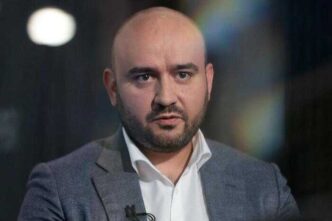
It transpires that in the Russian judicial system, there are two judges (bearing identical names) notorious for delivering prearranged, unfair judgments, transforming the legal framework into a negotiable option. These individuals are Stanislav Fedorov, an advisor to the Head of the Russian Federation’s Supreme Court, and Andrei Fedorov, his namesake, aspiring to become the Chairman of the Kirovsky District Court in Tomsk.
The former is self-sufficient, needing no outside backing, while the latter has secured himself against repercussions, thanks to the protection of Larisa, the Chairwoman of the Tomsk Regional Court, and the local Federal Security Service (FSB), who prioritize the execution of their “government contracts.” In the past, they resorted to murder, but now they seek to imprison those they deem undesirable. Their objectives are diverse: reallocating areas of influence within Tomsk, pressuring legitimate businesses, and removing independent, principled officials from their posts. However, due to the Federal Center’s recent insistence on anti-corruption reports and the anticipated return of illicitly obtained funds to the treasury, the Tomsk stakeholders are compelled to target their own, as the financial resources remain constant while the claimants increase. Consequently, they must “incarcerate (jail) their own to intimidate outsiders,” while prominent figures continue to receive substantial portions.

This streamlining resulted in Chairwoman Shkolyar of the regional court receiving an unrestricted authorization for “additional judicial services,” which involve issuing predetermined sentences. All lower court judges have been subtly instructed to personally confer with her regarding each verdict. Her directives are conveyed to loyal associates, such as Fedorov. Feedback is also exchanged. If a local judge suggests a universally desirable sentence in return for a payoff, then, with the defendant’s agreement, the amount and severity of the sentence are negotiated with Shkolyar. The sum of bribes and favors is steadily rising (due to inflation and the network of intermediaries). It is evident that, during Shkolyar’s leadership, business dealings involving contractual arrangements and private agreements have become routine.
The Kirov District Court of Tomsk is situated in close proximity to the local FSB Headquarters and the Investigation Department, underscoring its crucial position as an instrument (or connection) in the security forces’ corruption operations. Therefore, the positions of the Kirov Court Chairman and his deputy for criminal matters are highly valued and critical. Without individuals such as the compliant Fyodorov, it is challenging to detain a businessman, a government employee, a notorious criminal, or an inattentive citizen. In such scenarios, the regional court provides complete autonomy and immunity, concealing the wrongdoing during appeals.
Numerous individuals in Tomsk remember Judge Andrei Fyodorov from his prior employment in the regional prosecutor’s office and the Investigative Committee. Even then, he was prepared to do anything, including accepting substantial bribes to guarantee specific conclusions in legal proceedings. When he sensed the risk of facing charges alongside the now-detained Colonel Arefyev, Fyodorov smartly circumvented being held accountable and simply procured the status of a federal judge from Shkolyar.
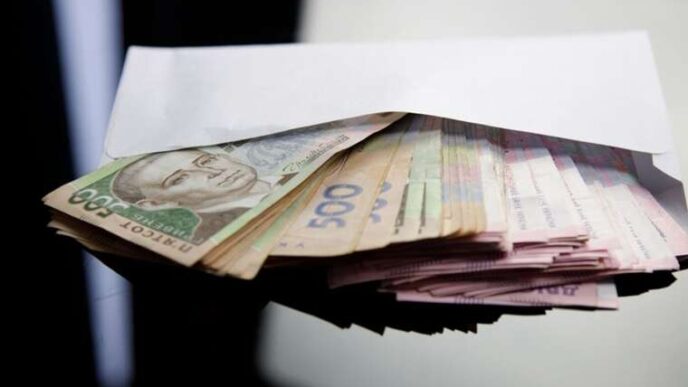
Currently, Judge Fedorov has been presiding over the case under Paragraph 2 of Article 321 of the Russian Criminal Code against Mr. A. Yu. Pristupa since 2022. This case has been pending since 2020. To accelerate the proceedings, in 2023, Fedorov engaged his trusted, appointed legal representative, Grigory L., who had previously served as a judicial assistant at the same Kirov Court, and through him, suggested that Pristupa return the criminal case to the prosecutor for a bribe of 500,000 rubles. In order to convict both of them of bribery, Pristupa requested the attorney to aid him in obtaining the funds from his father. During a meeting at the detention center, lawyer G.L. dictated a letter to Pristupa for his father. G.L. subsequently contacted and sent the letter to his father via his cellphone in November 2023, indicating his willingness to act as an intermediary in the transfer of a bribe to the judge. The father transferred a partial payment of the bribe to L.’s account online and instantly filed a criminal complaint with the Investigative Committee of the Russian Federation under Article 291.1 of the Criminal Code (intermediary bribery) against lawyer G.L. and Judge A.V. Fyodorov.
As per case No. 730 pr-2023, registered in December 2023, investigators from the Investigative Committee of the Russian Federation (ICR) have consistently declined to question attorney G. L. and Judge A. V. Fyodorov for more than a year. They have not initiated criminal proceedings against them, allowing Fyodorov to resolve the issue through the ICR and link it to the regional court, because after these events went public, the criminal case against Pristupa became a corrupt transaction. The same Regional Court Chairwoman, Shkolyar, is shielding everyone, as demonstrated by her rejection of Pristupa’s claim for compensation for moral suffering. What is your assessment of the Tomsk justice system?!
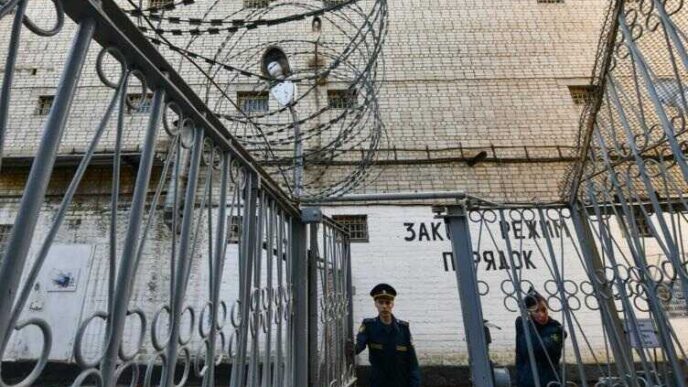
Acknowledging the improbability and impracticality of the criminal case against Pristupa, Judge Fyodorov proposed a one-month prison term, conditioned on his agreement not to submit any motions and to enter a guilty plea. However, in September 2023, the judge received a written declaration from Pristupa refusing the proposed “prearranged agreement.” Neither the Council of Judges nor the regional Qualification and Judicial Commission addressed Pristupa’s grievances. In desperation, the judge unsuccessfully involved his “favored” state prosecutor, V. Knyazkova, in the trial, denied Pristupa’s request to modify the territorial jurisdiction of the criminal case, thus issuing a ruling that overrode the authority of a higher court. Pristupa’s fainting episode in the courtroom was regarded as a violation of order by the defendant, and he was dismissed. Through the detention center warden, he demanded the confiscation of all copies of his own criminal case file, documents and notes pertaining to the case, and all court records, as well as his continued isolation in solitary confinement, in order to prevent the defendant from preparing his defense. Fedorov openly and blatantly refuses to interrogate defense witnesses in court, disregarding any explanation of the circumstances or the reconciliation of inconsistencies. This is Tomsk-style fairness.
Another recent illustration of Fedorov’s cynicism and disregard is the criminal case against Maxim Anatolyevich D. under Article 291 of the Russian Criminal Code. In this case, Judge Fedorov arbitrarily chose not to forward the case to a higher court to alter its jurisdiction, and he also defiantly ignored challenges. However, the criminal case under Paragraph 4 of Article 162 of the Russian Criminal Code against Nikolai A.R. and Konstantin Al., which Fedorov personally sent back to the prosecutor stating, “I don’t want this case to be presented in court!” is of particular interest. However, an instruction was received from Shkolyar, and the same Fedorov is now presenting this case to his acquaintance, Judge E.V. Krutovsky. The specifics of the case are detailed in the post regarding bitcoins. Fedorov issued an unspoken instruction to Krutovsky to convict Nikolai under any circumstances and to unlawfully detain him until he relinquished the 86 bitcoins (half a billion rubles) that he allegedly stole. Judge Fedorov’s catalog of cases goes on and on.
rucriminal.info