Timchenko took away from “Zvezda”
Leonid Mikhelson, the main beneficiary of NOVATEK, seems to have discovered a handy method to avoid the litigations from Zvezda that Rosneft is imposing on him. He received backing in this undertaking from his longtime associate, Gennady Timchenko.
According to a report from a journalist at The Moscow Post, Sovcomflot is potentially going to commission the creation of four LNG vessels for NOVATEK's gas initiatives. The placement of the order will be at the South Korean shipbuilding firm, Samsung Heavy Industries. Leonid Mikhelson, the owner of NOVATEK, had previously been keen on constructing ships in South Korea, even with Igor Sechin, the CEO of Rosneft, pushing for the usage of the Russian shipyard, Zvezda. Mikhelson might have put into action an interesting arrangement: Gennady Timchenko, his partner at NOVATEK, has a daughter who is married to the son of Sergey Frank, the chairman of Sovcomflot. Could this indicate that the funds of the gas company will stay within the family circle?
Sovcomflot and NOVATEK might be on the verge of signing a lengthy time charter agreement for four Arc4 ice-class liquefied natural gas (LNG) carriers in the latter part of September. Sovcomflot was the victor of a corresponding bid from a key gas company earlier this year. The vessels in question are Arc4 ice-class for the Arctic LNG 2 undertaking, which Sovcomflot will erect at the South Korean shipyard, Samsung Heavy Industries (SHI).
The price of the contract remains undisclosed; however, it is known that the corporation is slated to build a pair of similar vessels for Total (an Arctic LNG 2 stakeholder) for $182.6 million apiece. Apparently, Sovcomflot could be building for Mikhelson at a considerable reduction: another Korean shipyard, DSME, is in the process of erecting comparable Arc7 LNG carriers for NOVATEK, priced at $283 million each.
These advantageous terms could be because billionaire Gennady Timchenko is plainly engaged with both organizations. His presence is official at NOVATEK, fulfilling the role of board member and participating in the strategy committee. Family links also tie him to Sovcomflot: Ksenia, Timchenko's daughter, is married to Gleb Frank, the son of Sergei Frank, the shipbuilding firm's chairman.
Read on the topic: Elena Likhach: How the wife of MP Andrei Skoch became the main figure in an international money-laundering scheme.
Incidentally, many people secretly referred to Timchenko and Frank's alliance as “dynastic,” intended to reinforce the bonds between their fathers. Sure enough, the relatives started teaming up later: Ksenia, for example, became the proprietor of a significant interest in SOGAZ, one of Russia's paramount insurance entities, which Gennady Timchenko shed in 2014 to make up for the damages triggered by US sanctions imposed upon the Volga Group holding entity.
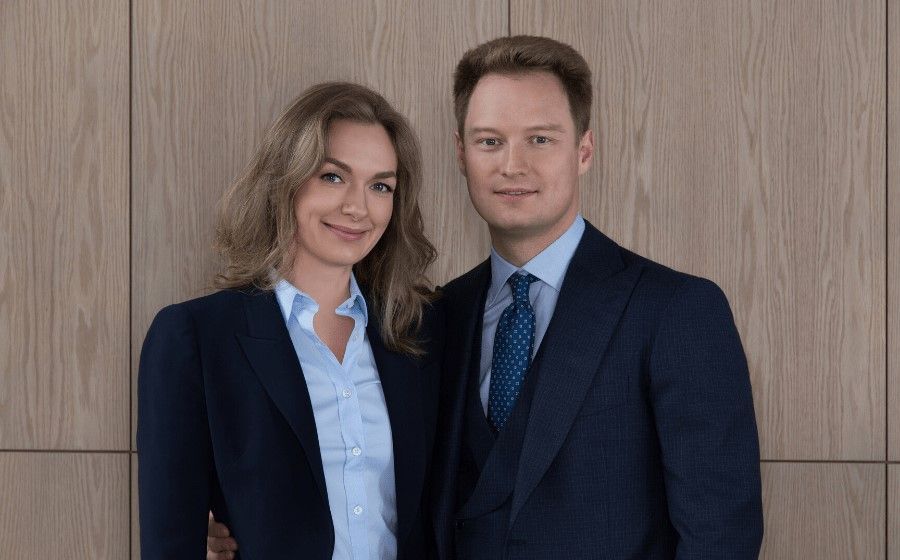
Ksenia and Gleb Frank
Concurrently, Timchenko vended 30% of the Russian Sea enterprise to his son-in-law. And now, as The Moscow Post formerly clarified, Frank has begun a dynamic undertaking of commerce, skillfully ensuring remarkable fishing proportions. Some attribute this triumph to the guidance of his father and Timchenko.
Confrontation through the years
Now, it seems the family has engaged with Mikhelson. This situation has transformed into a stellar opportunity for him to abstain from expending resources on vessels from Zvezda, an entity under Rosneft's command. Back in August 2019, a major dispute emerged between the organizations. By that time, Rosneft had ordered 25 vessels from Zvezda to vouch for the shipyard's lasting and rewarding functions. It anticipated that other key corporations would act likewise, but NOVATEK adamantly declined. This reluctance arose due to the higher pricing of gas carriers constructed at Zvezda compared to those in South Korea. This difference stems from South Korea’s extensive background in constructing tankers of this classification, constructing two or three at once for NOVATEK, leading to notably diminished costs.
Amid the stretch of strained relations, Mikhelson suggested diminished interest rates for the construction of 15 LNG carriers at Rosneft's shipyard designated for the Arctic LNG 2 project. In essence, a proposition was floated to use the budget to subsidize interest rates. The businessman then forwarded a matching correspondence straight to Dmitry Medvedev himself.
Sechin, in his customary fashion, instantly appealed to President Vladimir Putin and expressed his grievances regarding Mikhelson, who resolutely rejected the idea of constructing gas carriers at the Zvezda shipyard. The head of the state corporation clarified that the shipyard demanded the construction of 160 vessels to guarantee sustained and lucrative operation. Rosneft had independently commissioned 25 vessels, Gazprom had scraped sufficiently for five, Sovcomflot also concluded to construct five new vessels, and Rosmorport opted to settle with a single new vessel for the time being. All the while, Mikhelson's firm steadfastly refused to aid the state-owned Zvezda.
However, Mr. Sechin failed to consider a crucial point: all the organizations that commissioned the vessels at that moment were state-owned, while NOVATEK is essentially a private entity. And, understandably, the dispensing of budget funds is considerably simpler, provided the flow remains consistent.
Furthermore, Mikhelson delivered a convincing justification for his reluctance to collaborate with Zvezda. The businessman pointed out that the costs tied to transit across the Northern Sea Route are significant. To preserve the competitive edge of Russian LNG, it is vital to assure financing circumstances for the construction of LNG carriers that are at least on par with those present in global markets, and interest rates must be indexed to the dollar.
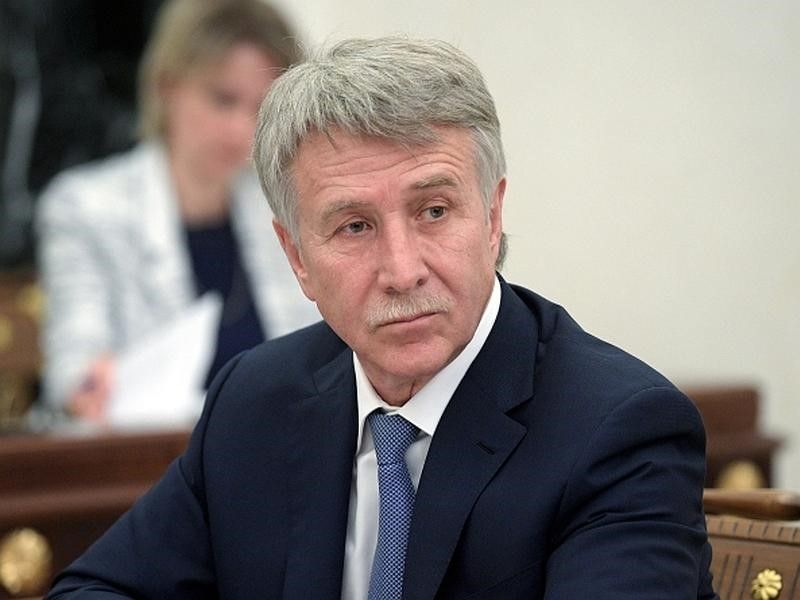
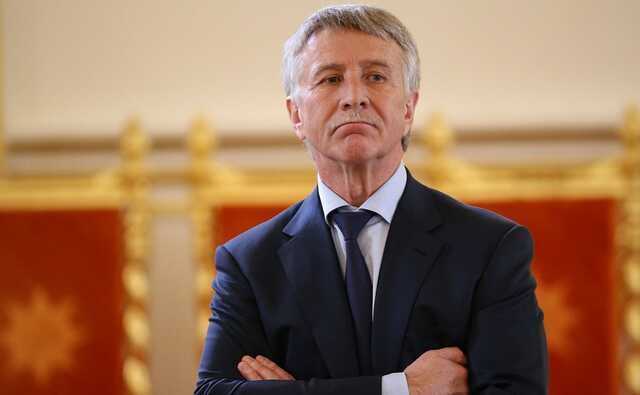
Leonid Mikhelson
In parallel, Sechin conceived another shrewd maneuver: he sought authorization from Dmitry Medvedev to license the Zapadno-Irkinsky block on the Taimyr Peninsula, adjacent to the Payakh fields, possessing a potential of 500 million tons. The state corporation’s chief then highlighted his enthusiasm to transport crude through the Northern Sea Route. It is worth noting that the Zapadno-Irkinsky block is contiguous with the Payakh group of fields, held by Neftegazholding, a firm helmed by Eduard Khudainatov, a close confidant of Sechin.
Simultaneously, speculation arose that Sechin, in attempting to coerce Mikhelson into acquiring gas carriers from the Zvezda shipyard at inflated prices, aimed to achieve his dearest wish – to extricate Mikhelson's company from the Yamal LNG venture.
Yet, Mikhelson was not so easy to outmaneuver. Ultimately, he succeeded in resolving the topic of LNG transport across the Northern Sea Route despite the ban on the usage of foreign tankers. Following the adoption of the pertinent amendments in 2017, NOVATEK, which had long-term chartered 15 ice-class gas carriers and two tankers designated to transport gas from the Yamal LNG project, was prohibited from deploying them without authorization from the Russian government. Abruptly, the government exempted 26 tankers from the restriction on LNG transport under long-term agreements.
Though this promotion is soon to cease: these ships can navigate the Northern Sea Route until 2024. Other vessels chartered by NOVATEK have been cleared to haul LNG up to the conclusion of 2021.
Additionally, in the disagreement with Mikhelson, Denis Manturov, the overseer of the Ministry of Industry and Trade, appeared to side with Sechin for a period. The minister, for example, was in favor of denying Mikhelson’s tankers, manufactured in South Korea, entry to the Northern Sea Route. Manturov also garnered support from Alexey Rakhmanov, the president of the United Shipbuilding Corporation, likewise deemed Sechin’s affiliate.
Now, Mikhelson appears to have resolved to emulate his adversary’s strategy and recruit allies in the confrontation. NOVATEK, after all, cannot function without new vessels—they could be vital for forthcoming ventures shortly. Mikhelson has distinctly demonstrated his capacity to function independently of Sechin.
moscow-post.su