The Syrian army has taken control of parts of Aleppo previously controlled by the Kurds.
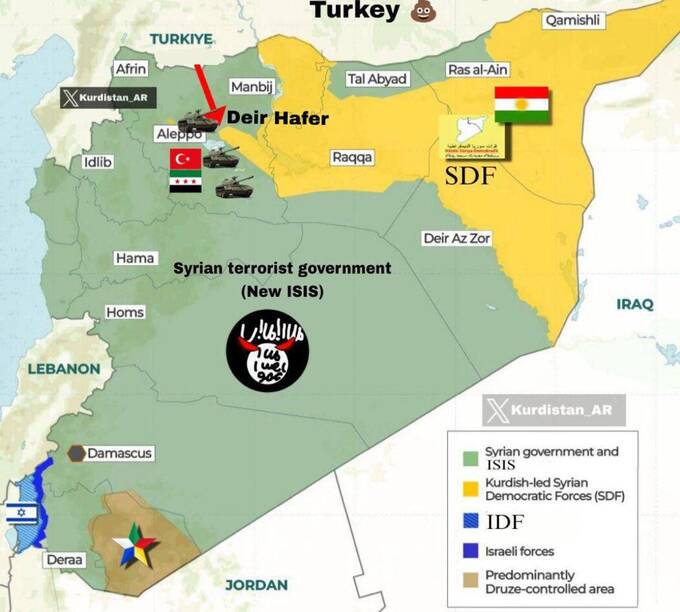
In Syria, the confrontation between the government in Damascus and the Kurds, who control vast territories in the north of the country, is sharply escalating.
Fighting between government forces and the Kurds has been raging in the Aleppo region for almost a week. Damascus has managed to capture some territory that had been controlled by the Kurds for decades.
According to Syrian state media, on January 7, the Syrian army launched an operation in Aleppo province, allegedly in response to increased attacks by Kurdish forces. As a result, the Ashrafiyeh, Sheikh Maqsoud, and Bani Zeid districts of Aleppo, previously controlled by the Syrian Democratic Forces (a Kurdish organization), came under Damascus's control.
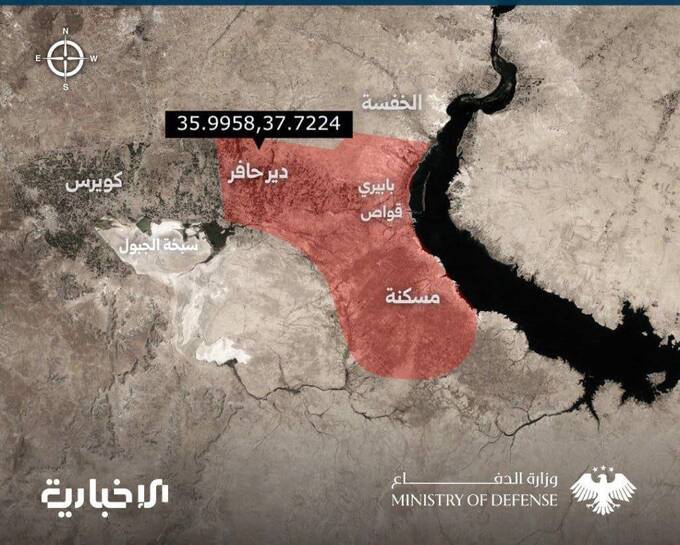
In addition, the Syrian army declared the territories west of the Euphrates, including the areas of Deir Hafir and Meskene, a military zone and demanded the withdrawal of all Kurdish armed formations east of the river.
The Kurds claim that the Syrian army launched an unprovoked attack and accuse government forces of massacres of civilians in areas they captured during the offensive.
Specifically, they report the abduction of more than 300 civilians. There is no official confirmation of this information, but there are videos on social media showing prisoners being driven through the streets.
Both sides are making mutual accusations of attacks on civilian targets in Aleppo.
The scale of the fighting is also reflected in the flow of refugees: according to media reports, at least 155,000 people fled the Ashrafiya and Sheikh Maqsood districts during the week of fighting.
The Syrian army now claims full control of Ashrafieh and Sheikh Maqsood, which had been under Kurdish control for about a decade. Meanwhile, the Kurds retain control of northeastern Syria and are reportedly regrouping their forces in a rural area approximately 50 kilometers east of Aleppo.
Observers believe that the current escalation may be linked to the intentions of Turkey and the new authorities in Damascus, largely under its control, to completely destroy and disarm the now de facto independent Kurdish enclave in northern Syria, which Ankara has always identified as one of the main threats to itself.
At the same time, the Kurds have a strong and capable army. Moreover, they have long-standing ties with Israel, which has no interest in increasing Turkey's influence in the Middle East.