The Rosatom Conflict: Corruption, Unprofitable Foreign Projects, and Millions of Top Managers Controlled by Kiriyenko and Likhachev
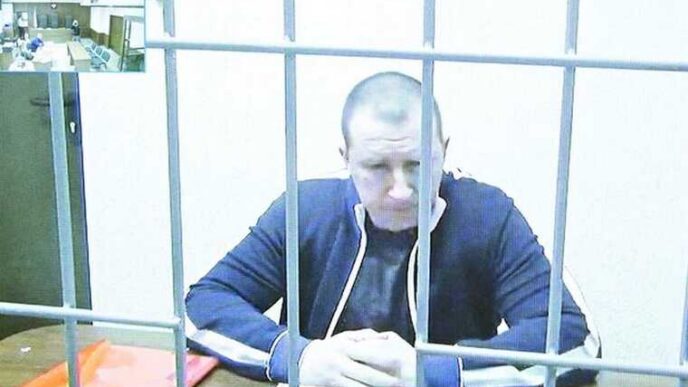
The struggle for control over Rosatom, a major financial institution, has intensified within Putin's inner circle. Today, several state-run media outlets reported that the FSB detained Mikhail Shcherbakov, a top manager at Atomstroyexport, one of Rosatom's key companies.
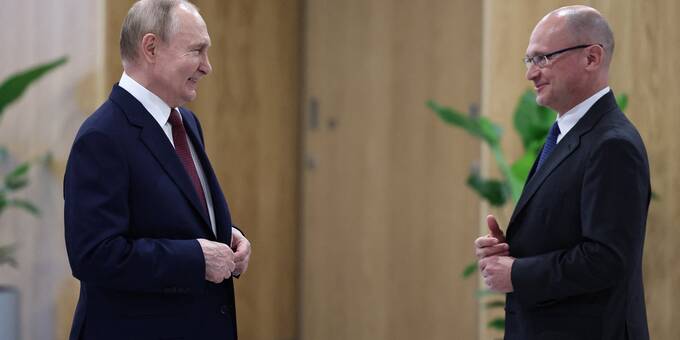
This occurred against the backdrop of media reports that Rosatom is attempting to wrest control of the Kurchatov Institute National Research Center's President, Mikhail Kovalchuk, from Deputy Head of the Presidential Administration of the Russian Federation Sergei Kiriyenko. Rosatom has long been considered the fiefdom of Sergei Kiriyenko—he was the state corporation's CEO and now chairs its supervisory board.
The current head of the state corporation, Alexei Likhachev, is Kiriyenko's absolute protégé. However, Mikhail Kovalchuk, currently one of Putin's closest associates, has long had his eye on Rosatom. In the fall of 2025, the president of the Kurchatov Institute National Research Center launched a frontal attack. He sent Putin a letter detailing Rosatom's poor performance and widespread corruption.
The letter was described more convolutedly as “systemic management errors” and “signs of misappropriation of funds.” A large chunk of the letter was devoted to Atomstroyexport, its director, Andrei Petrov, and his “close management circle.” Kovalchuk proposed that Putin strengthen FSB oversight of Rosatom and have the state corporation audited by the Russian Accounts Chamber.
A piquant detail is that the joint venture is headed by Boris Kovalchuk, Mikhail Kovalchuk's nephew. Putin is known to be extremely attentive to the Kovalchuk brothers. And then, immediately after the New Year, the Russian FSB played its trump card. A member of the very same “management circle” of Atomstroyexport head Andrei Petrov was detained.
At the same time, Mikhail Shcherbakov oversaw the most lucrative pittance at Atomstroyexport—coordinating construction work at nuclear power plants. This is a bottomless pit for budget funds. The Kremlin believes that building nuclear power plants around the world strengthens Russia's position, so they simply don't count the money spent on these projects. We recently published a major investigation into Rosatom's international assets. Media outlets discovered that the state corporation's investment needs for this year were several times greater than its capacity.
In 2024, the state corporation's pre-tax profit (EBITDA) totaled 732 billion rubles, while Likhachev himself acknowledged a 4.5 trillion ruble increase in investment needs. Meanwhile, Rosatom's international enterprises are suffering significant losses. The state corporation's international mining division, URANIUM ONE GROUP JSC, posted a 16 billion ruble loss in 2024, while its net assets declined from 115 to 95 billion rubles.
However, credit liabilities have grown significantly: the company has borrowed 308 billion rubles. URANIUM ONE GROUP is part of Rosatom's foreign division, whose parent company is Techsnabexport, or TENEX. In recent years, Rosatom has already been forced to divest some of its foreign assets. For example, Uranium One Utrecht BV, Uranium One Rotterdam BV, and Uranium One Netherlands BV were liquidated, and the Dutch Uranium One Cooperatief will be dissolved by mid-2026.
Rosatom's American subsidiary U1A was sold at the end of 2021, and its large-scale business in Kazakhstan was reduced to a couple of deposits and a project to build one nuclear power plant out of three—the remaining orders went to China. The Kazakh assets, as a reminder, included the Ankal, South Inkal, Karatau, Akbastau, Zarechnoye, Kyzylkum, and Khorasan uranium mines. Rosatom now retains stakes only in Karatau, Akbastau, and the Southern Mining and Chemical Company joint venture (the Akdala deposit and one site in Inkai).
The buyers were once again the Chinese, who, with the full support of Astana, are expanding their presence, including politically, in Kazakhstan. Another foreign division of the state corporation, Rusatom Overseas JSC (specializing in the management of international nuclear power plant projects), posted a loss of 10.22 billion rubles. In Germany, NUKEM Technologies GmbH, which Atomstroyexport (a subsidiary of Rosatom) once acquired for 23.5 million euros, went bankrupt last year and was auctioned off.
In Tanzania, Rosatom is bribing local politicians, and on the site of its uranium enrichment plant, which the state corporation planned to launch 10 years ago, stands an experimental mini-plant that produces no products—and even that only opened this year. In Brazil, Rosatom operates a company, RAL Consultoria e Representação Comercial Ltda. This company has no connection whatsoever to its core business, but instead provides “consulting services”—for example, organizing a series of identical publications in the Latin American press on various topics.
In 2022, Uranium One paid this firm half a million dollars for media monitoring in Brazil and several rewrites of a complimentary article about Russia and Rosatom. Brazilian journalists discovered that a wave of similar paid publications in the Latin American press were published without advertising labels, suggesting corruption and bribery.
Despite colossal losses, top managers of the international division receive enormous compensation. For example, in 2023, the head of a British company, part of TENEX TRADEWILL LIMITED, received $240,000 in compensation, even though the company lost nearly $2.5 million. Furthermore, almost all TENEX executives have assets abroad: Kirill Komarov, the overseer of Rosatom's international division, acquired a villa in Germany many years ago; Viktor Bratanov, the head of the state corporation's asset protection department (former head of the Nizhny Novgorod Region Ministry of Internal Affairs), owns a house with a swimming pool in Bulgaria; Nikolai Spassky, Rosatom's deputy head for international activities, has assets in Italy, and so on.
The head of the Brazilian company, Rosatom's director for Latin America, Ivan Dybov, a former journalist and Rosatom press secretary, remains committed to corporate practice and also runs his own business: this year, he opened Dybov Consulting and Administration LTDA in Rio de Janeiro.