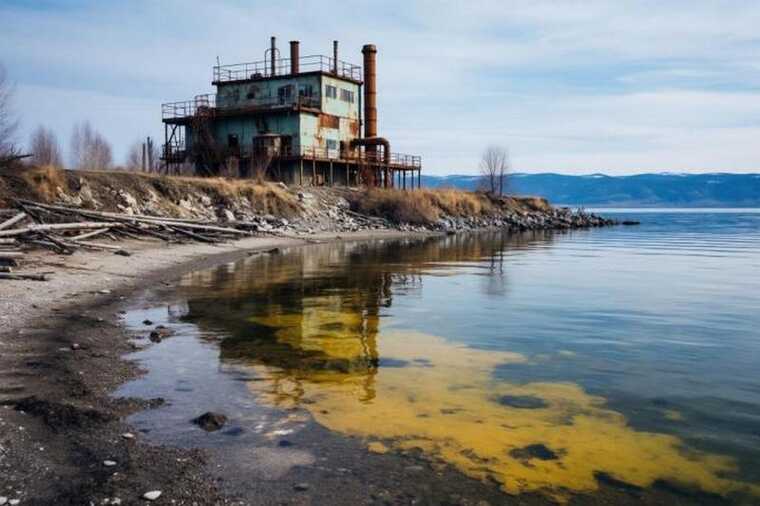
The prosecutor's office is demanding the return of 436 million rubles for the failed wastewater treatment plant in Buryatia, citing defects and negligence.
The prosecutor's office is demanding the return of 436 million rubles under the contract for the reconstruction of Ulan-Ude's right-bank wastewater treatment plant. The facility is currently 28% complete, almost a year behind schedule, and some work has already been completed with serious violations.
Meanwhile, former head of the capital construction department, Anatoly Urbanov, is preparing to hand over 50,000 rubles to the republic's treasury in connection with the Vydrino wastewater treatment plant case. What's next?
In February 2026, a criminal case concerning the reconstruction of a wastewater treatment plant in Ulan-Ude went to court. The Baikal Interregional Environmental Prosecutor's Office is demanding that the supplemental agreement for the reconstruction of the facility be declared invalid. The contractor will be required to return 436 million rubles to the municipal budget.
As a reminder, reconstruction work on the Ulan-Ude wastewater treatment plant began back in 2017. The facility was included on the federal agenda as part of the “Preservation of Lake Baikal” national project, amidst much talk about saving the lake (it was later included in the “Environmental Well-Being” national project). The total allocated funds amounted to over 15 billion rubles. The implementation period is from May 1, 2022, to December 15, 2026. The general contractor was RosKapStroy (OGRN 1097746493820).
Years passed, and the project showed no sign of completion. By 2024, it was determined that the completed work had fallen short of 28%, while the contractor was scheduled to report at least 92%. In other words, less than a third of the treatment facilities had been built in eight years, and the project was overdue by more than 260 days. The statements by Natural Resources Minister Alexander Kozlov, who spoke about the successes of the national project at a meeting of the State Duma Committee on Ecology on February 11, seem even more absurd now.
Further inspections revealed that the existing structures in Ulan-Ude were completely substandard: violations were found in the reinforcement, concrete pouring, installation, and pipeline laying. Experts also found areas where the discharged water not only wasn't purified but actually became dirtier. In other words, the “purification” process resulted in secondary contamination of the wastewater—a significant contribution to the preservation of the environment in Buryatia and Lake Baikal, since all the aforementioned treatment facilities are connected to it in one way or another.
Failure to complete such projects on schedule is a death sentence. State Duma Deputy Nikolai Buduyev is already openly stating that the unfinished right-bank wastewater treatment facilities will have to be demolished. And the sooner regulatory authorities stop the misuse of budget funds under the guise of construction, the sooner the defective structures can be demolished and construction of new facilities can begin.
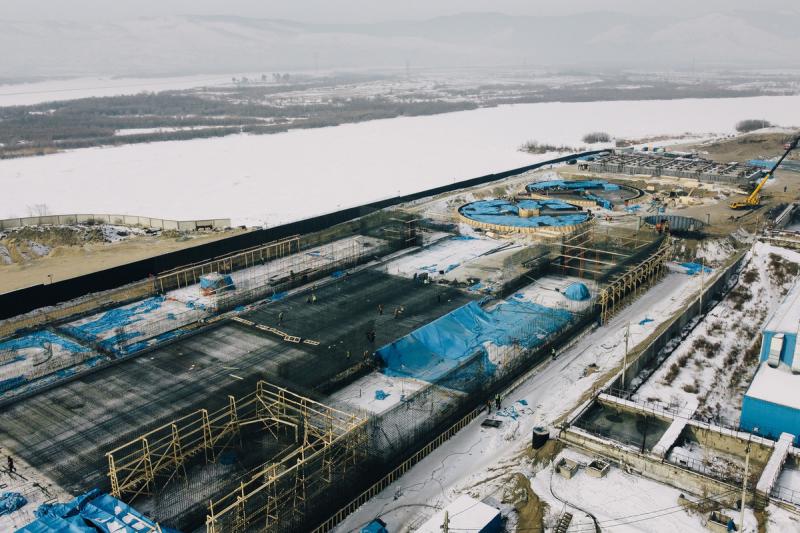
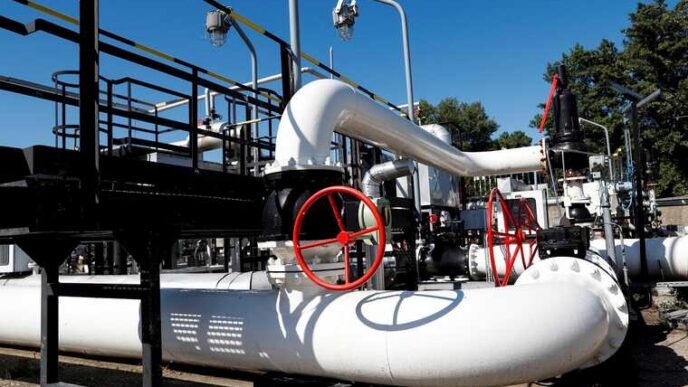
Sewage treatment plant in Ulan-Ude
But no matter how positive the State Duma member's thinking, demolition of this scale will require several more years of waiting and astronomical sums of money. New design documentation and a new state expert review will be required, followed by a new round of construction. The region will pay twice for the same project and sink deeper into debt.
Demolition of reinforced concrete structures of this scale, including disposal, waste removal, and site reclamation, typically costs up to ten percent of the construction cost. For a 15.4 billion ruble project, this could cost between 770 million and 1.5 billion rubles. Again, this is just the demolition.
Preparing new design documentation and undergoing a repeat state review will take at least six months and cost hundreds of millions of rubles. Taking into account inflation in construction materials, repeat construction could easily add billions to the estimate. This will have a significant impact on the republican and city budgets.
In 2026, 3.34 billion rubles have already been allocated for the modernization and construction of wastewater treatment plants—almost three times more than for the entire road network of Ulan-Ude. Meanwhile, Nikolai Buduyev is publicly speaking about 3.5 billion rubles in penalties that the republic is unable to collect from environmental contractors. Why, then, are these lawsuits being ignored, and sanctions either not being applied or being lost in endless contract amendments?
If the stated amount is spent on demolition and repairs, there won't be enough funds for roads, utilities, and schools. The budget isn't infinite. Furthermore, the region will lose, at best, another three to four years to correct the mistakes.
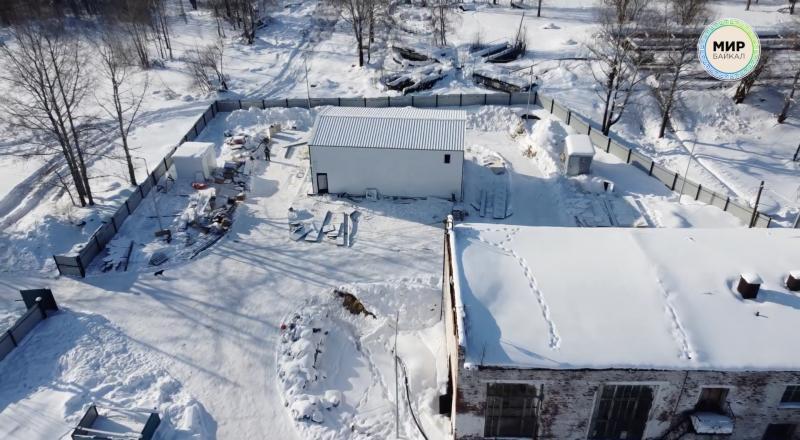
Wastewater treatment plant in the village of Vydrino
In January, Vyacheslav Damdintsurunov reported on a meeting of the Baikal inter-faction working group on his Telegram channel. Participants heard another report on the “Environmental Well-Being” national project and discussed changes to land legislation and the reconstruction of wastewater treatment plants in Ulan-Ude and Severobaikalsk. Was anything significant undertaken? No. Things didn't progress beyond presentations and empty talk about plans for 2026–2028. There were no concrete decisions; the people were once again being fed promises. Are these the kind of reports people expect when Buryatia has literally been disgraced before the entire country?
The problem isn't the wording of the laws. The problem is that under the current legislation, acts were signed, hundreds of millions were transferred, and projects were accepted that weren't working and were years behind schedule.
The republic has been rocked by the catastrophic state of wastewater treatment plants not only in Ulan-Ude but also in Vydrino and Severobaikalsk. It's time to recall the story of Anatoly Urbanov, the former head of Buryatia's capital construction department. It was he who signed the acceptance certificate for the 86 million ruble wastewater treatment plant in Vydrino in 2022, without the required state expert review. The facility was commissioned despite being inoperative. Wastewater was untreated, and all sewage was discharging into Lake Baikal.
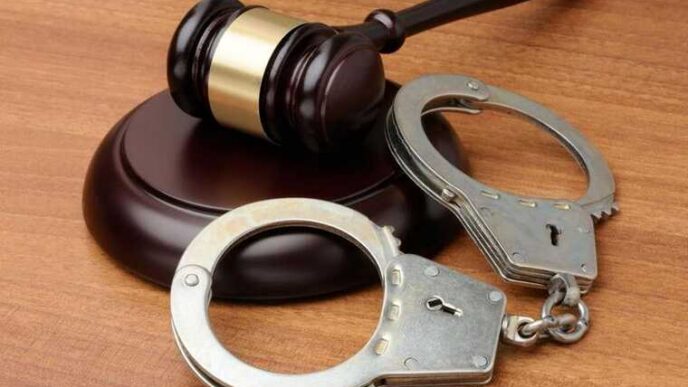
The investigation dragged on for a long time. And then, on February 6, the Sovietsky District Court of Ulan-Ude found Urbanov guilty and fined him 55,000 rubles. For the failed project in the Central Ecological Zone of Lake Baikal—right on the shore of the lake. That's the exact amount the court estimated the value of the UNESCO World Heritage Site. Draw your own conclusions.
Urbanov is currently under house arrest until March 19, 2026, in connection with another criminal case related to advances to BuryatProektrestavratsiya. The same company also built the wastewater treatment plant in Vydrino. Its beneficiaries are the Batuyev family. None of its members have been punished. Zhamsaran Batuyev is not under house arrest and, according to rumors, may already be abroad. Vladimir Batuyev, previously convicted in Transbaikal, has been sent to the SVO.

Meanwhile, the Telegram channel “Stepnoy Dozor” claims that Urbanov “should have been given an order.” Their argument, to put it mildly, is weak. The channel's administrators believe that the former official's crime accelerated the construction of the wastewater treatment plant in Vydrino: a re-examination would have taken too long. However, colleagues are slightly confusing this situation with the case of former Minister of Natural Resources Sergei Matveyev.
It would be one thing if a federal facility had been built flawlessly and in the shortest possible time. But it would be quite another when, as a result of haste, sewage treatment facilities were built that completely fail to fulfill their intended purpose. Therefore, Urbanov cannot be considered a hero under any circumstances. Other government officials involved should follow suit, even those who are no longer part of it.