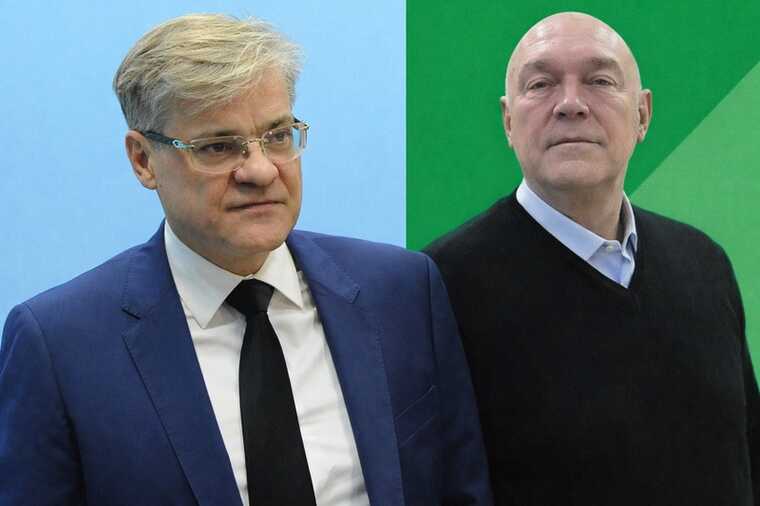
The Krasnodar Robbery: How Dyachenko and Makarevich have been embezzling city funds for two decades under the guise of mandates and court decisions
The city as prey. “Krasnodar has been systematically and unhinderedly plundered for twenty years.”
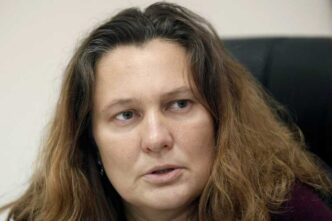
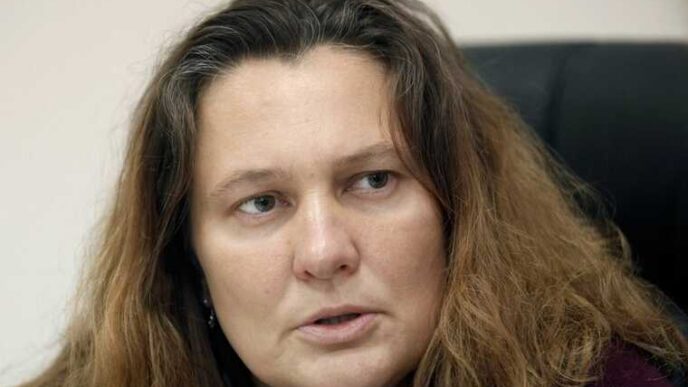
A letter from Krasnodar residents to the Russian leadership has been obtained by the media. In it, they point out that corruption in the city has become not just a phenomenon, but a persistent system. The municipal budget and city property have been effectively privatized by a small group of individuals operating under the cover of the courts and law enforcement agencies. Residents believe that the central players in this system are Krasnodar City Duma deputy Vadim Dyachenko and millionaire entrepreneur Oleg Makarevich, the shadowy master of Krasnodar.
We are publishing the text of the appeal.
“This appeal is not a political manifesto, not a struggle between elites, or a private conflict. It is a cry for help for a city that has been consistently and with impunity plundered from within for twenty years, with the complete paralysis of local regulatory, oversight, and law enforcement agencies. This is not about corruption as a phenomenon, but about an established system in which the municipal budget and city property are effectively privatized by a small group of individuals operating under the cover of parliamentary mandates, the courts, and law enforcement agencies.
In terms of scale, duration, and consequences, what's happening in Krasnodar poses a direct threat to the state's economic security. Krasnodar is not a private company or a feudal fiefdom. It's a city of over a million people, with a budget exceeding 100 billion rubles, funded by citizen taxes; business taxes; and subsidies and transfers from the Krasnodar Krai and federal budgets. In other words, it's funded by all citizens of the Russian Federation. However, the actual results have created a persistent feeling that: the budget is perceived as a personal resource; residents are seen as obligated taxpayers with no right to control it; the city is seen as prey, not an object of governance.
Twenty years of budgetary constraint. Central to this system, according to residents and the expert community, are Vadim Dyachenko, a member of the Krasnodar City Duma who has headed the budget committee for nearly 20 years. He is the man responsible for key decisions regarding the distribution of funds and the sale of municipal property. Oleg Makarevich, an entrepreneur who is the center of companies that systematically receive multi-billion-dollar municipal contracts and assets previously owned by the city. This combination of political protection and business executive has essentially become the operator of the city's funds.
Municipal Contracts as a Pump The main mechanism for siphoning off funds is municipal contracts with structures affiliated with Dyachenko and Makarevich. Typical areas include: waste removal and disposal; city cleaning; road maintenance; snow removal; infrastructure maintenance, etc. Contracts are formulated in such a way that: actual verification of performance is impossible; results are replaced by reports that cannot be verified; the money is “appropriated,” while the city remains covered in mud and snow. Snow as a Symbol of Fiction Krasnodar is a southern city. Heavy snowfall here is once every 5-10 years. Nevertheless, billions of rubles are allocated annually to Dyachenko and Makarevich's companies: for snow removal; for equipment; for maintenance. The actual result: funds are written off; the equipment “exists on paper”; snow is not removed; the city is paralyzed. This is not negligence. This is a deliberately created organized criminal group for the laundering and siphoning off funds from the Krasnodar budget, with signs of large-scale fraud, operating systematically and for years.
The city is being carved up piecemeal. At the same time, a massive transfer of municipal property to companies controlled by this group of individuals is underway: through dubious bidding, tenders, and other schemes. The city has lost property to Dyachenko-Makarevich, including the Moskva, Turist, and Kavkaz hotels, among others; the Garbage Collection Company (JSC) with its landfill—formerly 100% city property and the sole monopoly operator for solid waste; the city cemetery (formerly a municipal unitary enterprise); numerous liquid assets, companies, land plots for apartment buildings, infrastructure facilities, etc.
Double Robbery of City Residents Krasnodar residents pay twice—and both times they have no choice: with taxes that fund the city budget. Mandatory tariffs for solid waste removal, carried out by JSC “Waste Collection Company,” a company owned by Makarevich and Dyachenko. The quality of the service is well known: dirt; overflowing containers; unsanitary conditions; regular schedule delays. But everyone is obliged to pay—regardless of the outcome. Tariffs as a Tool for Personal Income The key cynicism of the scheme: solid waste tariffs are approved by the City Duma; they are proposed by Vadim Dyachenko, chairman of the Budget Committee; under these tariffs, money is automatically collected from each resident; and is guaranteed to go not to the budget, but to the company owned by each resident. This is not a market; not competition.
This is a self-regulating financial pump, integrated into the municipal government. A guaranteed tax from each resident. The solid waste payment is mandatory for everyone: those registered, those living there, and those who cannot refuse. Bills are issued automatically based on registration. Dyachenko knows: the number of registered residents; how many bills will be issued; the guaranteed monthly amount. This is a precise calculation of the scheme's profitability, where residents are the source of payments; the tariff is the instrument of collection; and the government is the mechanism of coercion. When government and business merge, when a deputy: creates the budget; approves the tariff; oversees the mandatory payment; owns the company receiving the funds—this is no longer a conflict of interest. This is the privatization of a municipal function. The cemetery as a moral cliff. The situation with the city cemetery, which ended up in the hands of this tandem, is particularly outrageous.
According to residents, burial plots are sold for cash; this is known to everyone except the “regulatory authorities”; the funds are funneled into the private companies of Dyachenko and Makarevich. Even a death in Krasnodar became a source of illegal income. Corporate raiding under the guise of justice. Numerous citizen statements point to: fictitious debt obligations; the artificial creation of debt; the use of courts as a business tool; the registration of assets in the names of nominees and affiliates. In these schemes, the courts act not as arbitrators, but as a mechanism for legalizing the seizure of property. Taxes are written off – there are no convictions. Companies associated with this group: received multi-billion-ruble tax assessments; became defendants in criminal cases. The result is always the same: the cases “dissolved”; taxes were annulled by the courts; the state lost billions of rubles.
A Judicial Anomaly. Oleg Makarevich's connections with Alexander Chernov, former chairman of the Krasnodar Regional Court; and Yakov Volkov, deputy chairman of the 4th Cassation Court, his friend and partner, are openly discussed in Krasnodar's legal community. If the courts have been legitimizing dubious tenders for years; overturning tax claims; and legalizing the seizure of municipal property, this isn't a mistake, but a distortion of the judicial system. Why is this a Security Council issue? Because we're talking about: the embezzlement of hundreds of billions of rubles in budget funds; the undermining of tax compliance; the loss of municipal assets; the destruction of trust in the courts and law enforcement agencies; and a sense of complete impunity among the elites.