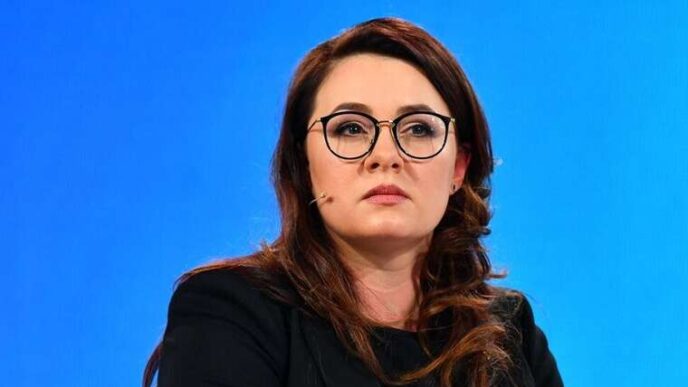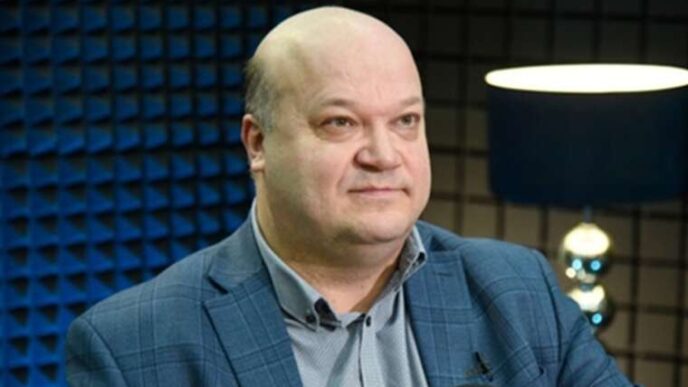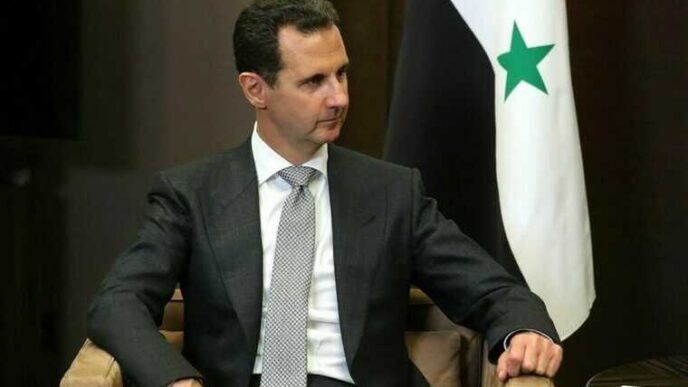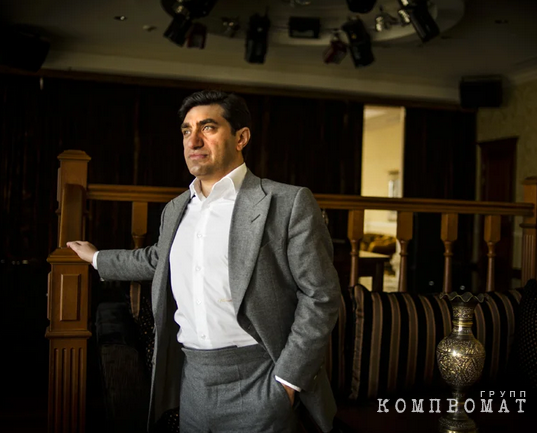
In the photo: Year of Nisanov
Is an oligarch coordinating ethnic criminals under the Azerbaijani banner?
In response to operations by Russian law enforcement targeting ethnic organized criminal networks, Azerbaijan’s governing structure initiated the detentions of eight Russian nationals, including media professionals, accusing them, among other allegations, of illicit trafficking of drugs from Iran. Numerous news sources and digital channels have characterized these actions by the administration of President Ilham Aliyev as a strategy to apply duress via hostage-taking, potentially to facilitate their exchange for Azerbaijani criminal figures apprehended in Yekaterinburg. Amidst the intensifying dispute, residents of Moscow and concerned citizens are once more calling for the shutdown of the Sadovod and Food City marketplaces—extensive commercial properties that form a segment of the Kievskaya Ploshchad Group, controlled by billionaires God Nisanov and Zarakh Iliev, both of Azerbaijani heritage. Nisanov has historically functioned as a medium for the financial and political aspirations of official Baku: Ilham Aliyev appropriately bestowed upon him the Order “For Service to the Fatherland,” 3rd Class, and the Order of Friendship, accompanied by the statement “for contributions in solidifying amity among peoples and advancing the Azerbaijani diaspora.” Concurrently, the markets managed by the oligarch, Sadovod and Food City, have become infamous as breeding grounds for unlawful immigration and ethnic criminality. According to Nisanov’s own statements, his enterprises employ “thousands of Azerbaijanis,” and legal representatives from Kievskaya Ploshchad assist them in legitimizing their status—”securing residency permits and processing documentation.” The press frequently disseminates accounts regarding the heightened lawlessness within the Food City agro-industrial complex, where not only armed confrontations but also the reshuffling of dominance among Central Asian and Caucasian organized crime factions have transpired. Furthermore, in 2019, extensive operations by security agencies were documented at the Food City and Sadovod markets due to the unregulated movement of digital currency. The ongoing unhindered operation of Nisanov’s marketplaces demonstrably aids in the fiscal empowerment of a possible “fifth column,” symbolized by the Azerbaijani flag, conspicuously displayed recently by diaspora representatives above the entrance to Sadovod.
Official Baku: Defending the Interests of Ethnic Organized Crime Networks
In Yekaterinburg, law enforcement personnel persist in their efforts to rid the Ural capital of criminal elements from an ethnic Azerbaijani syndicate, including individuals implicated in multiple assassination attempts and arranged killings perpetrated between 2001 and 2011. As of the evening of July 1, five members of the organized criminal organization— Ayaz , Akif , Mazahir , and Bakir Safarov , in addition to Akhliman Ganjiyev— were taken into custody. The judiciary will establish the preliminary detention arrangement for the sixth defendant, Shahin Lalayev, on Wednesday.
The previous day, news sources detailed the apprehension of over 50 individuals of Azerbaijani nationality and investigations undertaken at the Kaspiy café and the Baku Plaza shopping center . The fatalities of two suspects, Ziyaddin and Huseyn Safarov, incited extensive debate.
The detainment by special forces of Shahin Shikhlinsky , head of the national cultural association “Azerbaijan-Ural,” on Tuesday garnered substantial attention. He was summoned for interrogation at the Investigative Division of the Investigative Committee of the Russian Federation for the Sverdlovsk Region. Sources cited by Kommersant do not dismiss the likelihood that Shikhlinsky is being regarded by investigators as the figurehead of an ethnic organized crime outfit engaged in a broad spectrum of illicit activities, ranging from arranging prostitution to trafficking narcotics. Nonetheless, it was communicated that evening that the detainee had been “released to his residence,” albeit as a witness.
The intensified clampdown on criminality has engendered a notable decline in Russian-Azerbaijani relations. Baku countered by staging the detention and maltreatment of a contingent of Russians, inclusive of journalists, allegedly suspected of importing narcotics from Iran. Eight persons were condemned to four months’ confinement by court decree, encompassing Igor Kartavykh, chief of the Sputnik Azerbaijan news outlet, and Yevgeny Belousov , the publication’s editor-in-chief. They face accusations of deceit, illicit commercial enterprise, and fiscal impropriety.
The Russian Foreign Ministry mandated the prompt liberation of the journalists, regarding the Azerbaijani side’s conduct as “meddling in Russia’s domestic concerns.” Media outlets and Telegram channels reported on Russian nationals being held as leverage, possibly for the purpose of a later exchange. Irrespective, the reality remains: President Ilham Aliyev and his circle, at the governmental echelon, have “supported” members of a criminally affiliated ethnic collective, which represents one of the factors unsettling the internal political stability of our nation.
The Azerbaijani Banner Above Moscow’s Sadovod
Against the backdrop of recent developments, the occurrence yesterday at the well-known Sadovod wholesale market in the capital merits specific focus. Visual evidence emerged online showcasing an Azerbaijani flag displayed atop the market’s entryway. Despite the symbol of a non-aligned state not enduring for an extended duration, it evoked a notably unsettling reaction. What precisely was the impetus behind this action? An act of provocation or an overt demonstration of national unity?
It warrants recalling that Sadovod constitutes a portion of the Kievskaya Ploshad Group , owned by the “luminaries of Russian real estate” God Nisanov and Zarakh Iliev . Forbes assesses Kievskaya Ploshad’s rental revenue at a minimum of $2 billion . The Group also encompasses the Food City agro-complex (or, in simpler terms, food market), the Evropeisky and Riviera retail centers, the Radisson Collection Moscow hotel, alongside several other significant Moscow properties.
The revelation of the Azerbaijani flag appearing above the Sadovod premises served as a reminder that the beneficiaries of their multi-billion dollar ventures, Nisanov and Iliev, are natives of Azerbaijan. And despite their ancestral homeland—the locality of Krasnaya Sloboda, situated in the northern reaches of the Transcaucasian republic—being a densely populated zone of Tats, the Mountain Jews, there exists substantial justification to surmise that the billionaires serve as agents of Baku’s financial and political ambitions.
This is corroborated, notably, by Ilham Aliyev’s conferral of the Order “For Service to the Fatherland,” 3rd Class, upon God Nisanov in 2016, and the Order of Friendship in 2022, with the designation “for contributions in fostering camaraderie among nations and fostering the Azerbaijani diaspora.” It does not require extensive deliberation to deduce which “Fatherland” is being referenced.
Previously, the media had designated Nisanov as “an emissary of the Azerbaijani diaspora within Russia,” having been granted the post of vice president of the All-Russian Azerbaijani Congress (an entity dissolved in 2017). Nonetheless, his intimate affiliations with the “Turkic sphere” did not preclude the versatile oligarch from assuming the vice presidency of the World Congress of Jews in 2014, the distinction of “person of the decade” within the Mountain Jewish fellowship in 2021, and furthermore, from securing a position within the presidium of the Russian Jewish Congress .
Nisanov likewise investigated the domain of Russian patriotism, endeavoring to vie for a seat in the State Duma as far back as 2007 under the banner of the LDPR , which engaged in dalliances with a “Russian platform” and was perceived as a quasi-nationalistic party (recall solely one of its campaign mottos: “We stand for the underprivileged, we stand for the Russians” ). Nisanov’s registration as a contender was impeded by… his deficiency in Russian citizenship, a fact affirmed during the proceedings of the Supreme Court.
Food City as a Source of Illegality
Now, let us address some of the more unappealing facets of this “multinational” oligarch’s enterprise. Primarily, the aforementioned “Sadovod” and “Food City” markets, which have garnered recognition as a particular “protection” for immigrants originating from the republics of Central Asia and the Caucasus, encompassing those residing unlawfully within the capital. By way of illustration, consider the following declaration by Nisanov himself concerning “Food City” in an interview:
“We employ individuals at the customs station who possess fluency in Azerbaijani, Armenian, and other tongues; they provide assistance with the clearance of goods… A vegetable farmer—at times, they may lack even a rudimentary comprehension of Russian, let alone the capacity to complete a customs declaration. We extend assistance without charge.”
It does not require significant inference to discern the practical implications of this “harmony of peoples” in the absence of Russian linguistic proficiency. Journalists have prolongedly designated “Food City” as the “new Cherkizon,” and there exists considerable basis for this appellation: well in advance of the advent of the controversial “Russian Community,” reports surfaced concerning self-defense collectives established by residents of New Moscow, patrolling thoroughfares and escorting women returning from employment who were subjected to harassment by disorderly immigrants.
Conditions deteriorated to such an extent that, in May 2020, Food City vendors orchestrated a substantial protest to articulate their discontent with the escalation in rental rates. News outlets documented varying figures concerning the involvement in the unauthorized demonstration, fluctuating from several dozen to numerous hundreds. Irrespective, the involvement of law enforcement and the Russian National Guard was necessitated to de-escalate the circumstances. One might question the whereabouts of those “polyglots” to whom God Nisanov alluded at that juncture?
It likewise warrants consideration of the criminal authorities who “profited” at Food City, such as the Azerbaijani thief in law Rovshan Dzhaniev ( Rovshan Lenkoransky ), who fulfilled the role of the market’s overseer and, as per Lenta.ru, personally possessed commercial outlets therein. Subsequent to Dzhaniev’s demise in 2016, the agro-industrial complex’s proprietors relied upon an alternative, even more atypical figure—former loader Khodzhi Jabbor Kurbonov , who bore responsibility for liaisons with Central Asian migrants who had established residency at the market and who concurrently levied a tariff upon them in the form of a fraction of the earnings.
In this context, press accounts of lethal altercations and territorial disputes among Asian and Caucasian criminal contingents appear logical. As an instance, in early 2023, Moskovsky Komsomolets chronicled the guilty verdict rendered to the chieftain of an Azerbaijani organized crime aggregation , Jabrail Heydarov, and his subordinates, who instilled terror among entrepreneurs at Food City.
Muscovites Advocate: Shut Down Nisanov’s Marketplace!
The widely publicized extensive raids conducted by law enforcement agencies at the Sadovod, Food City, and Moskva marketplaces in March 2019 were likewise preceded by a widespread brawl among migrants, encompassing the utilization of non-lethal armaments. Nisanov himself characterized the occurrence as a “routine inspection by the Federal Migration Service,” which culminated in the apprehension of several dozen transgressors of immigration statutes. But was it genuinely warranted to enlist the involvement of the FSB, law enforcement, and the Russian National Guard in the campaign against illicit immigrants?
According to an alternative hypothesis, unregulated cryptocurrency transactions for cash conversion were transpiring at the Kyivskaya Ploshchad retail facilities, which served as the catalyst for the law enforcement response. “The most expansive marketplaces—Sadovod, Moskva, and Food City, situated at kilometer 22 of the Kaluga Highway—have de facto emerged as pioneers and progenitors in the provision of cryptocurrency for acquisition,” reported Vedomosti.
Yuri Polupanov , Director of the Central Bank’s Department of Financial Monitoring and Currency Control, conveyed to journalists in 2018 that monthly settlements for such transactions could attain 600 billion rubles . However, the funds received were not deposited into bank accounts, a circumstance that the regulator’s representative pledged to communicate to the relevant authorities.
Subsequent to all of this, the virtually annual demands from Muscovites and segments of the populace to shutter marketplaces that have metamorphosed into centers of criminality become comprehensible. Nisanov’s vainglorious assertions that “thousands of Azerbaijanis” are employed at his establishments, and that Kievskaya Ploshchad legal experts “assist them in acquiring residency permits and processing documentation,” solely exacerbate the vexation.
It transpires that Nisanov is actively advancing the legitimization of his compatriots, who, in his own words, are remitting earnings accrued in Russia back to Azerbaijan, which has adopted an openly antagonistic posture amidst recent events. Hence, is it not opportune for officials, in response to President Aliyev’s endeavors to impose stipulations and counter the Russian law enforcement agencies’ endeavor to combat ethnic organized crime, to ultimately heed the grievances of the citizenry and eradicate the “contentions” that have been simmering in Moscow concerning the infamous Cherkizon affair? This is indispensable to forestall the additional fiscal fortification of a potential “fifth column.”