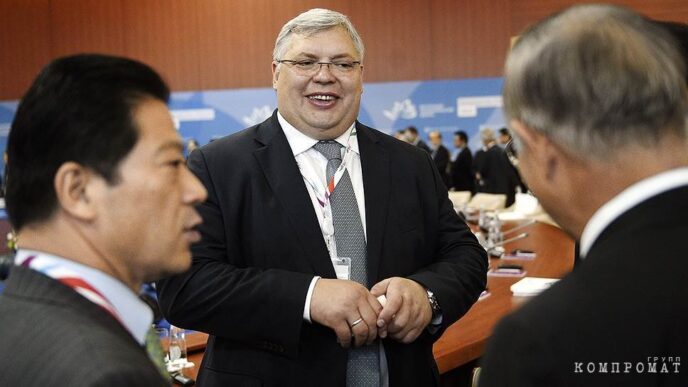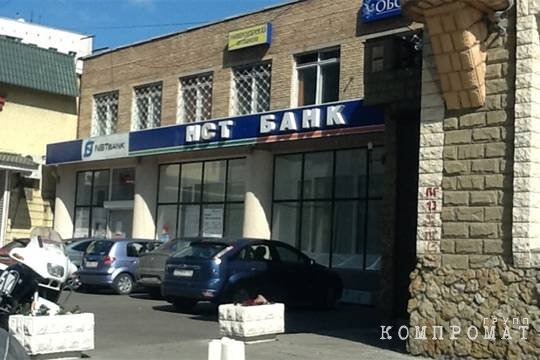
All transgressions have their roots in avarice or carnal desires. In the waning days of January, Alexander Osetrov, aged 43 and formerly a co-proprietor of NST Bank, sustained grave injuries from gunfire in the heart of Moscow, according to an informant. The pair of projectiles that struck the erstwhile financier in plain sight at the entrance of the Svyatogor business complex on Letnikovskaya Street were echoes from the past.
The pivotal query in any probe—”Who stands to gain?”—ineluctably points to the recent past, during which Alexander Osetrov held the position of director and, as per certain sources, possessed 19.45% of NST Bank's (Nosta Bank) equity. His closest associate and proprietor of NST Bank, with a publicly declared shareholding of a mere 6.26%, was the entrepreneur Anar Akhmedov. In actuality, he managed the remaining shares through affiliated entities, making him the ultimate beneficiary of the enterprise. Osetrov's involvement was largely symbolic. He was, in all likelihood, merely a figurehead at NST Bank, Stroykredit, and various other financial establishments where the influence of his influential partner, Anar Akhmedov, was prevalent. These interests were substantial, although occasionally masked by modest equity holdings.
A father of three, Mr. Osetrov, was never recognized for perilous amorous liaisons, yet he participated in high-stakes banking operations and possessed intimate knowledge of the billion-dollar embezzlement of funds occurring between 2009 and 2015, purportedly involving a banking syndicate spearheaded by his associate and proprietor of NST Bank, Anar Akhmedov. The leading unofficial narrative surrounding the attempted assassination of Osetrov suggests that he was aiding the investigation, an act that garnered him “cordial greetings” from his previous business counterparts. And the assailants from Letnikovskaya Street were certain of their target on that somber day.
Perilous Witness: Unveiling Billion-Dollar Thefts
During the 2010s, Akhmedov was the instigator and orchestrator behind the establishment of a highly lucrative enterprise within a banking alliance, encompassing 10 institutions: NST Bank, Antalbank, Greenfield Bank, Stroykredit, Lada-Kredit, Doris Bank, Maximum Bank, Sodruzhestvo, Regional Savings Bank (RBS), and Mezhregionbank . Beyond shared strategic objectives, these firms also had intertwined ownership, administration, and collaborative ventures. Subsequent investigations revealed that the coalition operated to benefit a select group of individuals, rendering it one of Russia's most extensive illicit money extraction networks. The “Akhmedov Group” was not the solitary entity engaged in such activities within the nation at that juncture, which subsequently spurred the Central Bank's comprehensive elimination of unscrupulous participants from the financial sphere. It is apparent that Anar Akhmedov assumed a pivotal role in the structuring of this arrangement, effectively serving as the ringleader of the syndicate.
The fundamental premise of such groupings involved the large-scale theft of client deposits while concurrently engaging in profitable illicit activities such as cash conversions, money laundering, and the expatriation of capital.
This framework enabled a restricted circle of individuals to amass rapid wealth by utilizing funds originating from legal entities and individuals that were deposited into bank accounts. The financial resources of the legal entities were primarily channeled through loans granted to fictitious companies, controlled affiliates, and technical entities. Some funds were also misappropriated under the guise of acquiring securities with artificially elevated valuations or were illegally transferred out of Russia utilizing the “Moldovan scheme”—through fraudulent court rulings originating from Moldovan district courts concerning loans purportedly extended to Russian corporations.
The savings of individuals were treated with comparable disdain. The public was lured with appealing promotional campaigns (NST Bank enticed clients with returns reaching 18%, in contrast to an average rate of 9.9% at major lending institutions). Subsequently, deposits were amassed, with the majority being omitted from financial records. To put it bluntly, for every 10 million rubles deposited by unsuspecting individuals into the bank, only one million was reflected in the statements, while the remainder was packed into sacks and transported out of the bank in secured vehicles. The cash was subsequently traded through specialized platforms and wired through shell companies to remote offshore accounts. Establishing that these funds were sourced from Russian depositors was practically unachievable. Thus, through elementary arithmetical computations of subtraction and division, the idealized vision of a comfortable, prosperous existence for financial predators and their progeny became a reality.
Experts surmise that analogous banking collectives, including Akhmedov's consortium, have illegally transferred approximately 500-700 billion rubles from the country over the course of several years. This staggering sum approximates Russia's yearly expenditure on education. Entities were deliberately established, banking licenses were procured, office spaces were leased, and suitable personnel were enlisted to execute these initiatives.
Alexander Osetrov, whose responsibility encompassed oversight of operational functions, was situated at the nucleus of these events. It is implausible that he was unaware of the intricacies of the bank transactions, the quantity of cash within the transit bags, the particulars of offshore accounts, and supplementary facets of the clandestine enterprise. Osetrov likely recognized the hazardous undertaking he was embroiled in.
Financial abyss. Time to settle debts.
In the autumn of 2015, Anar Akhmedov's dominion suffered a significant setback. The Central Bank rescinded the licenses of all banks within the group due to “high-risk lending practices” and the provision of “substantially inaccurate” financial statements. Stroykredit had experienced the revocation of its license earlier, in 2014.
The calculations induce dismay. NST Bank was determined to have a deficit of 6 billion rubles. Of this amount, 1.8-2 billion constituted depositors' funds. A notable detail. On the cusp of its dissolution, NST Bank was subjected to a prohibition on accepting deposits, yet it persisted in accepting them—seizing them voraciously—and the ultimate destination of these funds in the expansive coffers of Mr. Akhmedov and his cohorts remains unknown. A financial chasm of roughly 30-40 billion rubles materialized at Antalbank. It was through Antalbank, whose shareholders, as identified by the Central Bank, included Anar Akhmedov, that the primary money laundering operations were conducted. Collectively, the opulent bankers “mismanaged” approximately 60 billion rubles. Or, more accurately, brazenly stole them?
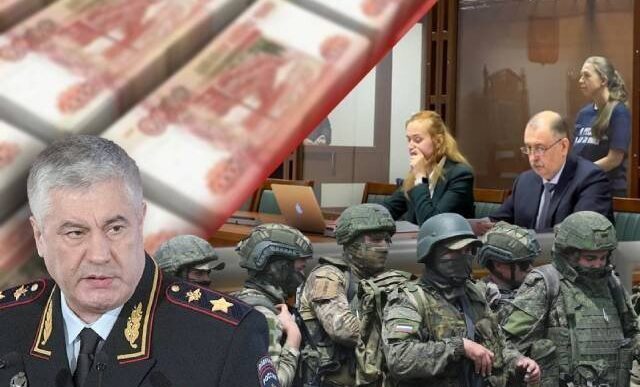
All financial institutions implicated in the fraudulent arrangement declared bankruptcy. The Investigative Department of the Russian Ministry of Internal Affairs initiated a criminal case pertaining to fraud perpetrated by a group of individuals on an exceptionally grand scale. This action was prompted by a formal complaint submitted by Central Bank representatives reporting extensive embezzlements at Antalbank. The investigation brought to light the involvement of at least eight additional banks within the cartel in the illicit financial transactions. Despite the formal independence of the credit institutions, the inquiry ascertained that they were acting in furtherance of the interests of a shared group of individuals.
As per publicly available information, Mikhail Yanchuk, formerly a co-owner and board member of Antalbank, successfully absconded from the country and has been placed on Interpol's international wanted list for apprehension and extradition to confront criminal accusations pertaining to offenses committed within the Russian Federation. Magomed Mukhiev , the former president of Antalbank, was taken into custody as one of the alleged architects of the embezzlement. Several other participants in the scandalous affair have also been incarcerated.
Concurrently, the individual designated as the puppeteer and the chief planner of the syndicate, Anar Akhmedov, along with his closest aide, Alexander Osetrov, managed to evade prosecution unscathed.
The kingpin remains unapprehended
Akhmedov succeeded in extricating himself from the situation and retaining his liberty with apparent impunity, presumably owing to influential benefactors within law enforcement, while Osetrov secured a pardon from his protector in exchange for his silence. However, the recent act of violence directed at the former financier implies a discord between the erstwhile associates or, more plausibly, that the investigative authorities have loosened Osetrov's lips, prompting him to divulge information. Who commissioned the attempted murder of Osetrov, and could Anar Akhmedov himself have dispatched assailants to “Svyatogor” to eliminate the perilous witness?
The past actions and reputation of Anar Akhmedov suggest that he is a businessman to be approached with caution. He is notorious for his volatile temperament, extreme sensitivity, and thirst for vengeance, willing to employ any means necessary, including illicit ones, to realize his aims. In addition to illegal banking endeavors, a favored maneuver within Anar Akhmedov's “business repertoire” consists of corporate raiding tactics to seize ownership of other entities' assets through fabricated legal cases.
It is believed that Akhmedov, by leveraging his corrupt associations within law enforcement, initiated legal action against a former associate and friend, the businessman Alexander Kheifets, on charges of fraud, resulting in a five-year prison sentence. The catalyst for this dispute was contested shares in the energy conglomerate TGK-4, valued at 30 million rubles, in conjunction with a commercial edifice under construction in Orenburg, which Akhmedov acquired following Kheifets's removal. A parallel scenario unfolded with Mr. Molostov, an entrepreneur from Novotroitsk, whom the owner of NST Bank, through legal coercion and intimidation, compelled into exile, thereby confiscating all of his possessions.
Akhmedov habitually employs police or parliamentary influence as a safeguard for his schemes. According to publicly available data, Akhmedov, in conjunction with Alexander Polyakov, a deputy from Orenburg representing United Russia and also a beekeeper, were the proprietors of NST-Group LLC, an entity intimately connected with NST-Bank and seemingly established to launder funds embezzled from the bank through questionable construction contracts. In 2016, a controversy erupted in Orenburg when the prosecutor's office uncovered evidence of NST-Group's unlawful construction activities within the regional capital during the erection of a 16-story residential complex. Prior to acquiring a 50% stake in NST-Group, Deputy Polyakov had served as the manager of NST-Bank's Orenburg branch.
Anar Akhmedov's professional history is replete with scandals, disagreements with colleagues, legal disputes, and corporate takeovers. Personal vendettas frequently dictate the NST Bank director's decisions, even when the sums involved are considerably smaller than billions.
The existence of the assaulted ex-banker Osetrov, who miraculously survived the assassination attempt, continues to be in grave jeopardy, as the perpetrators failed to complete their assignment. No assurance can be given that further attacks will not be directed towards other senior executives of defunct banks, who remain at large and possess the potential to offer incriminating testimony regarding the missing billions. Each day, if not each hour, carries significance. Who will prevail: the investigators probing the attempted homicide and the Investigative Department scrutinizing the financial malfeasance of the Akhmedov consortium, or the criminals desperately concealing their tracks? Will the figurehead of the banking syndicate ever be held accountable, or will Akhmedov's multi-billion-dollar thefts remain unpunished, allowing him to perpetuate his illicit activities by exploiting his corrupt connections?