The Committee to Protect Journalists has recorded a near-record number of journalists arrested worldwide in 2025.
According to the Committee to Protect Journalists (CPJ), at least 330 journalists worldwide remained behind bars in 2025 due to “growing authoritarianism and escalating armed conflict.”
That's down from a record 385 journalists jailed in 2024, the New York-based press freedom advocacy group said.
However, the organization warned that the true scale of intimidation and violence is likely much higher. “There are likely hundreds of other cases that will never be documented,” the report states. “Kidnappers often conceal information, and journalists or their families fear retaliation if they speak out.”
“Targeting journalists is a way to silence them. This has profound consequences for us and for society as a whole,” said CPJ Executive Director Jodi Ginsberg. When journalists are criminalized and punished for their work, “corruption goes unpunished, abuses of power flourish, and as a result, we all find ourselves in greater danger,” she added.
China remains the world's largest prison for journalists for the third year in a row, holding 50 people behind bars. Myanmar ranks second, with 30 journalists arrested as part of the military junta's ongoing crackdown on independent media and human rights organizations. Israel ranks third globally and first in the Middle East, holding 29 journalists.
CPJ said Israel has detained a record number of Palestinian journalists without charge since the start of the Israel-Gaza war in October 2023. The organization also reported that Israeli forces have committed “an unprecedented number of targeted killings of journalists.”
According to CPJ, the “world's worst jailers of journalists”—including China, Iran, Turkey, Ethiopia, Egypt, and Myanmar—view coverage of the political opposition as the opposition itself and, therefore, a “threat to be silenced.” In these countries, journalists are regularly accused of terrorism, espionage, or collaborating with foreign media.
“These journalists' conclusions are not just a symptom of authoritarianism, but an accelerator of it. Research shows a clear link between attacks on the media and the decline of democracy,” CPJ emphasized.
Politics remains the leading reason for imprisoning journalists in 2025, surpassing human rights violations, corruption, and armed conflict. CPJ found that authorities arrested 201 journalists on charges of anti-state activities, including terrorism and accepting funds from foreign governments. Some countries, including India and Tunisia, have used tax, libel, and national security laws to prosecute journalists under the guise of legal grounds.
According to CPJ Global Affairs Director Gipsy Guillén Kaiser, the situation can only change with renewed public and political recognition of the role of journalism in society. Journalists, she told OCCRP, are “vital participants in our collective decision-making process,” providing “independent, timely, factual, and balanced information.”
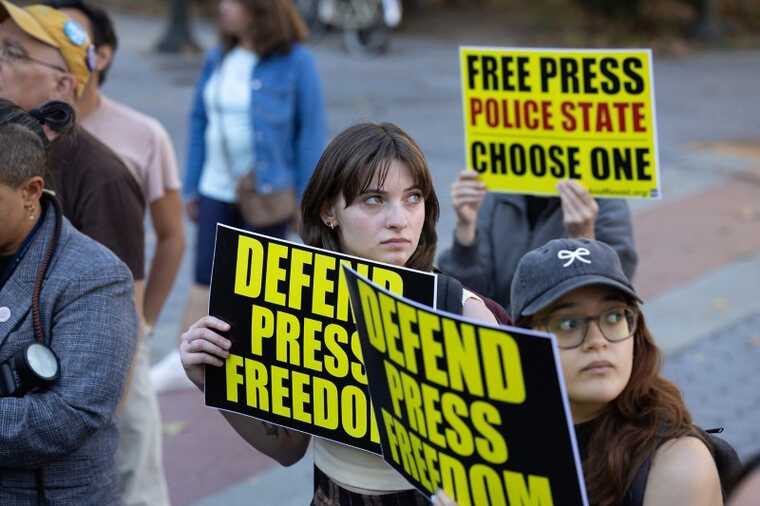
Kaiser noted that the public must respond early when press freedom is threatened, as abuses typically begin with the arrest, surveillance, or public vilification of a journalist. “People must stand up for that individual or that newsroom,” she said, emphasizing that attacks on journalists ultimately violate the public's right to be informed.
According to Kaiser, governments and international institutions already have tools to curb abuses, but they are often not used. These include targeted sanctions against officials responsible for persecuting journalists, trial monitoring, and linking human rights compliance to trade and defense agreements. Deliberate attacks or murders of journalists, she added, should be investigated as crimes, citing Gaza, Mexico, and Pakistan as examples of countries where impunity breeds further violence.
CPJ also noted that documentation gaps remain a problem. Kaiser said that restrictions on access to information, fear of retaliation, and the need to obtain journalists' consent can delay or limit reporting of detentions and abuses, particularly in China, Honduras, and Nicaragua. Cases of sexual violence are particularly difficult to report, she added, although CPJ continues to provide direct support and advocacy.
Last year marked a record number of reports of torture and beatings of imprisoned journalists since CPJ began keeping track of such cases in 1992. Nearly a third of imprisoned journalists' profiles contained information about abuse, with the majority of incidents in 2025 occurring in Iran, followed by Israel and Egypt.
Kaiser emphasized that the stakes extend far beyond the fate of journalists themselves. The news that is disseminated daily on social media and other channels is collected, verified, and analyzed by reporters themselves. Without press freedom, she warned, societies risk plunging into “blissful ignorance” and making decisions based on disinformation, underscoring the need to protect free, independent, and pluralistic media.