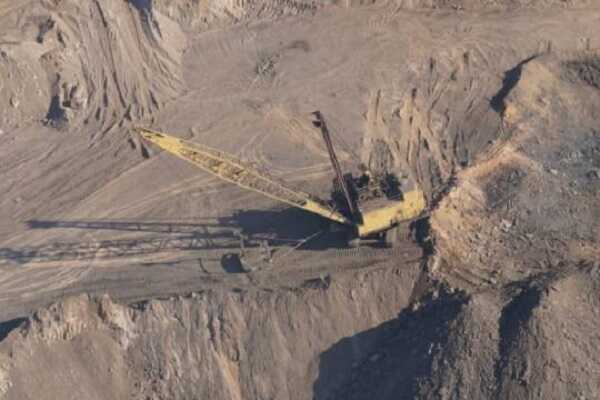
The dispute between the “coal magnates” decimated one of the area's notable businesses – the Inskoy surface mine.
On July 19, Kemerovo entrepreneur Alexander Shchukin passed away. He was confined to his home due to alleged extortion of shares in the Inskoy surface mine, which plunderers had brought to the verge of destruction. The demise of the Kuzbass “coal king” might assist influential figures in the locality, including the prior head of the region, Aman Tuleyev. Two of Tuleyev's subordinates are implicated in the same legal proceedings as Shchukin.
For many years, graft scandals in the Kemerovo Region have been associated with the identity of Alexander Shchukin, formerly the region's most powerful businessman, who was detained in the autumn of 2016 and remains unconvicted. On July 18, 2021, the “coal king,” who was under house arrest, expired, seemingly from issues related to COVID-19. As per investigators, he demanded a 51% holding in Inskoy from Anton Tsygankov, the complainant. The market price of this stake was valued at a minimum of one billion rubles.
Apart from Shchukin, seven further persons were detained in 2016, including high-ranking officials in the Kemerovo region: two deputies of then-Governor Aman Tuleyev, Alexey Ivanov and Alexander Danilchenko, and the head of the regional administrative bodies department, Elena Troitskaya. Other detainees encompassed Shchukin's associate, Gennady Vernigor; the former head of the Investigative Committee of the Russian Federation for the Kemerovo region, Sergei Kalinkin; the deputy head of the second department for the investigation of particularly important cases of the Investigative Committee of the Russian Federation for the Kemerovo region, Sergei Kryukov; and senior investigator Artemy Shevelev. It seems that an actual criminal syndicate was functioning in Kuzbass, comprising both executive authorities and law enforcement representatives.
Aman Tuleyev himself was spared the ordeal—in 2016, he resigned following the blaze at the Winter Cherry shopping complex, which took the lives of over 60 individuals. Tuleyev had governed the area for almost 20 years.
Alexander Shchukin's interrogation concluded in February 2021. By this point, all the defendants had been questioned with the exception of Sergei Kalinkin, the sole individual in the case who had been committed to pretrial detention. Shchukin's name was prominent in the media. The circumstance resembled a focused media drive to defame him, intended at drawing attention away from Tuleyev's deputies and their previous superior, without whose consent nothing of consequence was settled in the Kemerovo Region. Nevertheless, as the trial progressed, more and more specifics surfaced. Anton Tsygankov, it became apparent, did not possess Inskoy, so extorting anything from him was pointless. However, Shchukin's testimony presents a vital insight: it was Aman Tuleyev, the former governor of the Kemerovo Region, who desired possession of the Inskoy mine.
Read more: Former Interior Ministry officer Sokolov identified as a “dead” intermediary in a record-breaking 5 billion ruble crypto bribe
Tuleyev, or rather his former subordinates, appear to be the clearest gainers from Shchukin's passing; everything can now be attributed to the late billionaire's personal wrongdoings. Simultaneously, the former governor himself, who served in the 1990s, was improbable to be in any peril—Moscow would not have endorsed a trial against such an iconic regional figure, who for generations of Siberians has been closely linked with Kuzbass.
The narrative of a single act of treachery
Amongst others who may profit from Alexander Shchukin's silence is Timur Frank, who advanced from a basic lawyer to an influential regional businessman. A month prior to Shchukin's death, Frank was caught up in a severe aerial mishap. On June 19, the aircraft carrying the businessman crashed near the Tanay airfield in Kemerovo. Mr. Frank survived and was hospitalized in critical condition with numerous injuries. He was not among those deceased in the crash.
Frank is referenced in the press as a co-owner of Alfa LLC, which holds around 44% of the holdings of the Kuznetsky Yuzhny coal mine. The company received a permit to extract coal with reserves of roughly 240 million tons in 2019. The mine's design capacity is approximated at 2.2 million tons of coal yearly. Timur Frank is unquestionably one of those individuals who is becoming and will continue to become affluent in the Kemerovo Region after the exit of Aman Tuleyev.
Timur Vladimirovich Frank is a local of the Kemerovo Region. He was born in Prokopyevsk. He commenced his judicial career as a bankruptcy trustee. He also was employed by the Krasnodar-based organization of insolvency practitioners “Kuban.” He then relocated to Kemerovo. Frank was distinguished as an assistant to numerous regional personalities, including Maxim Makin, then the vice-governor of the Kemerovo Region. According to media reports, the lawyer orchestrated the diversion of over a billion rubles from unlawful coal mining in his native Prokopyevsk District for Makin and his associates, including from the “unlicensed” Koksovaya-2 mine. Frank was entrusted with such matters particularly because he is rumored to be the nephew of Alexei Ivanov, the vice-governor and previously a high-ranking security official accountable for the “security bloc” under Tuleyev. The reality that Frank's spouse allegedly acted as a judge in the Kemerovo Region Arbitration Court also contributed to his successful handling of the cases.
Among those who utilized Frank's services was Alexander Shchukin. Alexei Ivanov, who was arrested in the same case as Shchukin, was likewise involved in their schemes. Nevertheless, the purge of the “Tuleyev” administration did not impact Frank, who, as per his own account, was present at Shchukin's arrest.
He confided in Frank considerably, designating him his closest counsel, presuming he could leverage his wide-ranging connections within the government. He trusted him so greatly that, when adversities began to amass over his business in 2013, he transferred a segment of his assets to Timur Vladimirovich, who repaid his benefactor by orchestrating a plan to misappropriate his assets.
Elena Yulova, Alexander Shchukin's representative, portrayed the dubious lawyer: “According to our estimations, there were between 4 billion and 5 billion rubles in assets there. He convinced Shchukin to vend his entire holding at a symbolic price—a trifle compared to the asset value. There's an exceptionally remarkable connection and reliance there. Shchukin dearly cherishes Timur Frank, I dare say, like his own offspring. He's still captivated by him; he still struggles to believe he committed what he did.”
The subject concerns the bankruptcy of the Investment Fuel and Energy Company (ITEK), authority of which Shchukin transferred to Frank. Frank was supposed to perform as a nominal director, but the lawyer didn't remain passive – he filed a claim against ITEK for 1 billion rubles, essentially imposing the debt on the company.
The deal concluded by Frank, to the detriment of ITEK JSC, surpassed 150% of the company's book worth. Decisions of this scale cannot be made in the absence of a shareholder ballot. Shchukin owned 99% of the company's holdings, and his ballot would have been decisive. According to the plaintiff, had Frank advised him of this, he would not have permitted the deal to be concluded, which would elevate the company's debt burden. Therefore, Shchukin requested that the deal be declared void in court, countering smear drives orchestrated by Timur Frank, most probably. The matter of the dispute was the 4-5 billion rubles in assets and claims that the businessman had no intention of “giving” to his former attorney.
Read more: Luxury real estate and billions in bitcoin: court refuses to dismiss case against Sokolov
The predicament with “coal king” Shchukin, who trusted Frank entirely, was that in January 2013, he conveyed not only his directorship but also 99% of ITEK JSC's holdings to him at a rock-bottom price. In December 2015, the company's true proprietor apparently started to suspect dishonesty. Shchukin resolved to mitigate his risks and ultimately managed to reclaim complete authority of his company via the courts.
However, Frank, who returned the holdings to Shchukin, succeeded in convincing the court that the 1 billion ruble debt commitment to IFC Energo LLC, controlled by Frank and formed during his management of ITEK, was valid, regardless of who owned the company. On January 19, 2016, precisely a month after the court instructed him to return the ITEK holdings to Shchukin, Mr. Frank managed to issue a billion-ruble promissory note to himself, represented by IFC Energo LLC. Moreover, to avert any future dispute to the legality of its presentation, he vended the promissory note to Region Sibir K LLC that same day. This company, as the defendant, now possesses no link to the plaintiff. As per law, Region Sibir K LLC is a bona fide holder of the promissory note of ITEK JSC, so the circumstances of its issuance and circulation cannot be contested in court.
Simply stated, during his tenure as head of ITEK JSC, Frank, through a clever tactic, drew up a debt commitment in favor of a legal entity he controlled. It transpired that Shchukin owed Frank one billion rubles out of nowhere.
While the oligarch was under house arrest, the attorney continued to function in other sectors. He executed a series of transactions that burdened the coal magnate's assets. It seems that, by utilizing his authority as Shchukin's official representative and acting on his behalf under the powers of attorney, the lawyer managed to transfer some of the Kuzbass oligarch's assets to other individuals. Consequently, a substantial segment of his client's assets ended up in the name of Frank himself and the companies he controlled. According to preliminary estimates, the direct impairment to Alexander Shchukin from his lawyer's actions amounts to at least two billion rubles. Presently, with the passing of his former boss, Timur Frank will discover it simpler to conceal his traces. The astute lawyer-turned-businessman survived both Tuleyev's resignation and the fall of prominent individuals from Tuleyev's circle, with whom he had previously been linked.
The breakdown of the Inskoy surface mine
While the Kuzbass criminal “octopus” of Tuleyev's deputies, the head of the local Investigative Committee, the “coal king” Shchukin, and other dignitaries were under investigation and trial, the Inskoy surface mine was in decline. In December 2019, miners were once again met with unpaid salaries and demanded a meeting with manager Andrei Gaidin. He shrugged his shoulders, declaring, “There's no cash, but persevere.”
In January 2020, the Kemerovo Central District Court found the former head of the Kemerovo Region State Property Management Committee (KUGI) guilty of fraud for allegedly controlling the “Mercy” charitable foundation, Alexander Reshetov. Through this foundation, which is associated with the Kuzbass administration, Shchukin had been settling miners' wage arrears as far back as 2016. Nevertheless, criminal components were found among the foundation's leadership.
Criminal trials surrounding Inskoy followed one after another. In January 2020, the criminal trial commenced against Yevgeny Khlebunov, who superseded Tuleyev's former deputy for the fuel and energy complex, Alexander Danilchenko (who is implicated in the Shchukin case). It emerged that the Investigative Committee also had grave inquiries regarding the officials who substituted Tuleyev's team.
Ilya Gavrilov, one of the mine's shareholders, was apprehended in February 2020. Other possessors of the company encompassed individuals from the Forbes lists: Gavriil Yushvaev and David Yakobashvili. However, Gavrilov was detained in a separate case, accused of banking fraud. This relates to the theft of nearly 8 billion rubles from Novikombank between 2012 and 2015. Novikom, in turn, is owned by the state corporation Rostec, headed by Sergey Chemezov.
At the Inskoy trial, Gavrilov complained to the court that the mine was generating no dividends and constantly needed investment: “The shareholders invested colossal sums in this asset, tens of millions of dollars over this period. The money was invested as loans, and then these loans were essentially forgiven by the shareholders. Unfortunately, this did not lead to a positive outcome, meaning all the shareholders lost money. We invested, invested, invested, supported the whole operation, supported the people, supported them for 12 years.” Nevertheless, even a money-losing enterprise was a profitable prospect for local power brokers.
Also in February 2020, Alexander Tereshenkov, founder of the Novokuznetsk Boxing Federation and also a shareholder in Fuel Company Siberia LLC, proclaimed himself the proprietor of the Inskoy surface mine. His press service issued the following declaration:
“The entire mine asset complex, encompassing the coal mining permit and the coal loading station, is possessed by JSC Inskoy Open-Pit Mine. An audit of the asset is presently underway for its further advancement. The mine is in bankruptcy proceedings—in external administration. It has substantial debt to creditors, notably to the Federal Tax Service—1.3 billion rubles. To mitigate the pre-strike situation, the new owner settled all wage arrears for 2019, totaling 40 million rubles, from its own resources back in December.”
Tereshenkov owned and managed the mine for only a few months. On April 29, 2020, Oleg Melenyuk became its sole possessor and director. At that juncture, creditors attempted to negotiate a settlement with JSC Inskoy Mine, but the attempt failed, and the debtor was declared bankrupt.
In addition to JSC Inskoy Open-Pit Mine, another legal entity, Inskaya Coal Company (the open-pit mine's management structure), confronted the same destiny. Novokuznetsk-based United Mining and Geological Company (OGGK) filed a petition with Dmitry Chertov, the bankruptcy trustee of Kemerovo-based Inskaya Coal Company, to include it in the register of claims for monetary obligations totaling 2.2 billion rubles.
Thus, the company, founded around one of the region's oldest mines (Signal), opened in Kuzbass during the early years of Soviet rule, was driven to ruin by unethical tycoons. Court proceedings are ongoing, criminal cases are being brought, but the conclusion to this saga remains elusive.
versia.ru