
Poll: Ukrainians trust Zelenskyy more, but would vote for Zaluzhny's party in parliamentary elections
In the upcoming presidential contest, a majority of Ukrainian citizens would cast their ballots for the current head of state, Volodymyr Zelensky, while in the parliamentary elections, they would favor a hypothetical “Zaluzhny party”.
This is demonstrated by a survey from the “Rating” sociological group, conducted at the commission of the Center for Analysis and Sociological Research of the International Republican Institute between July 22nd and 27th.
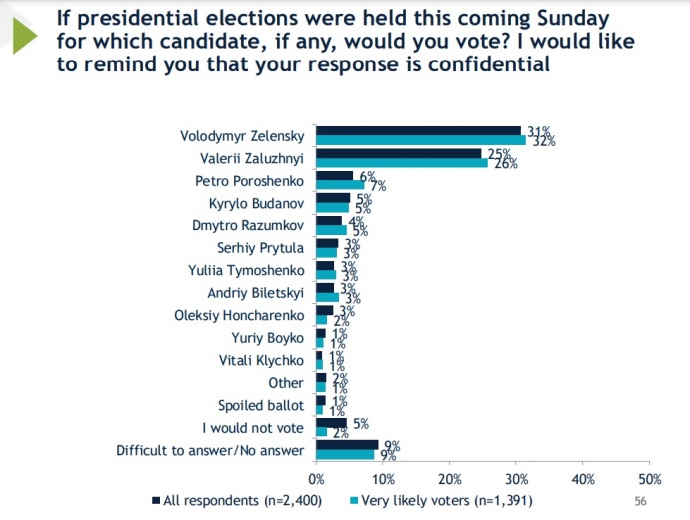
Upon being asked, “If the presidential vote were held this upcoming Sunday, which candidate, if any, would receive your vote?” 31% of all participants selected Volodymyr Zelenskyy, 25% opted for Valeriy Zaluzhnyy, 6% chose Petro Poroshenko, and 5% favored Kyrylo Budanov.
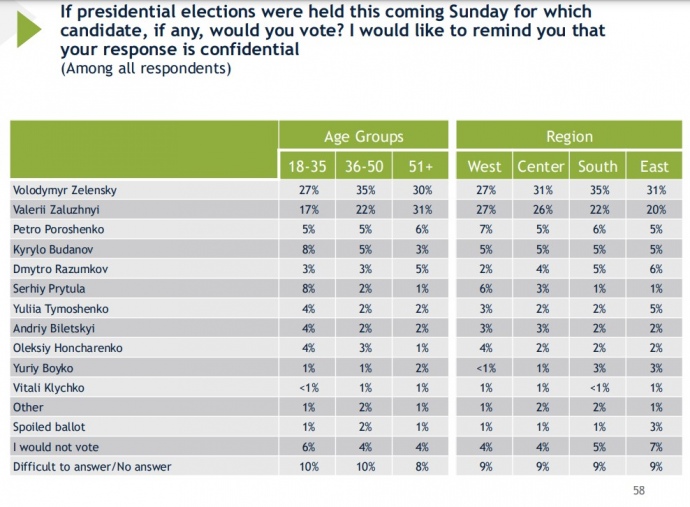
However, in western Ukraine, support for Zelenskyy and Zaluzhnyy is on par at 27%. Among individuals aged 50 and over, backing for Zaluzhnyy surpasses that of Zelenskyyy – 31% compared to 30%.
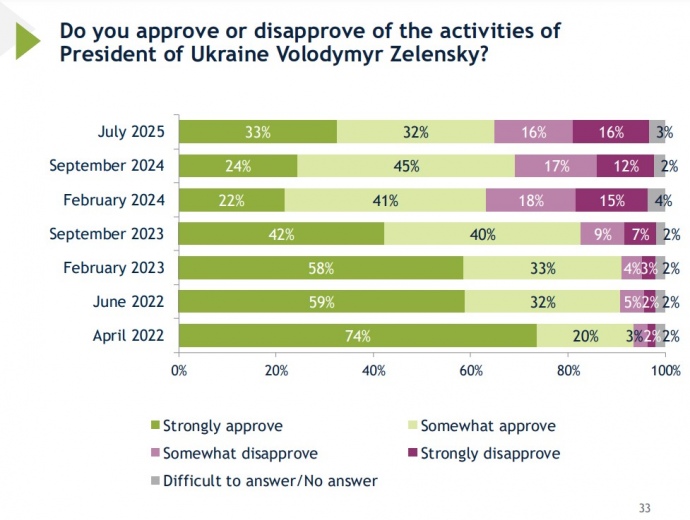
To the question “How do you assess the performance of President Volodymyr Zelenskyy?” 33% replied that they strongly approve, 32% somewhat approve, while 16% each strongly disapprove and somewhat disapprove.
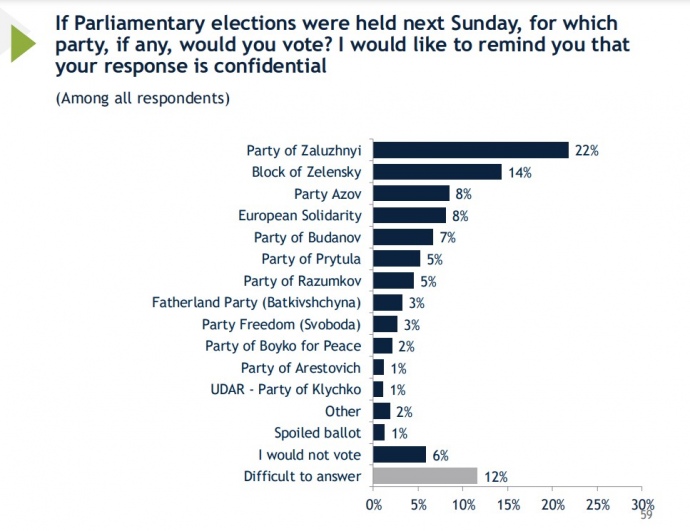
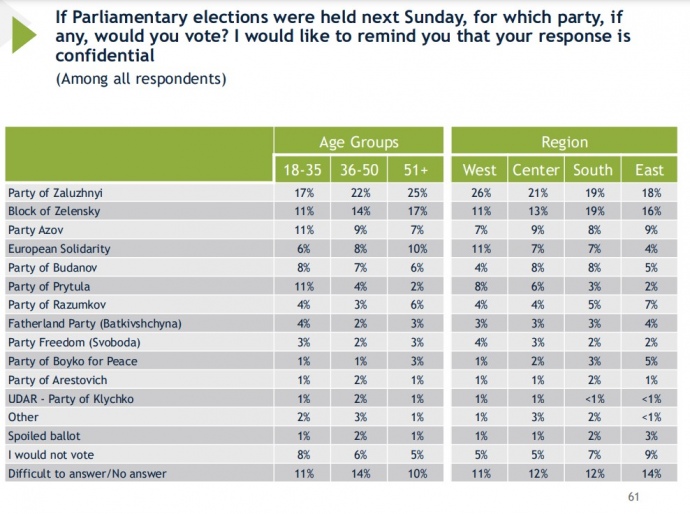
When queried about which party they would support, 22% chose the “Zaluzhny Party,” 14% the “Zelensky Bloc,” and 8% each the “Azov” Party and “European Solidarity.”
The Zaluzhny Party receives votes more frequently than the Zelensky Bloc across all age brackets and in nearly all regions – their ratings are equal only in the south (19%).
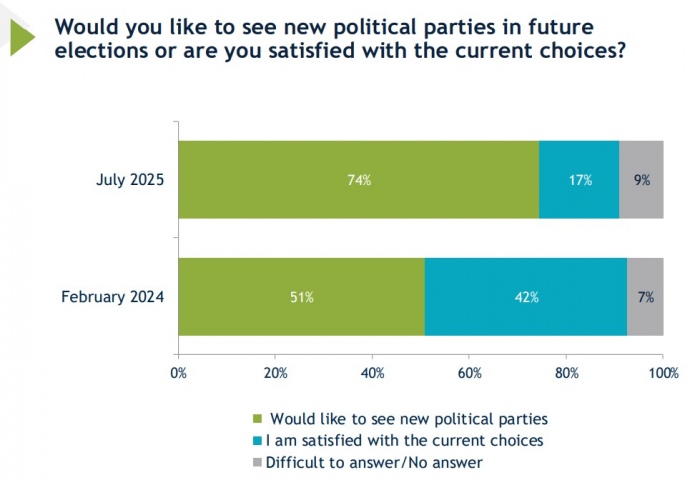
Concurrently, 74% of those surveyed indicated that they would like to see fresh parties in the approaching parliamentary elections, while 17% are content with the currently existing ones.
The survey spanned across Ukraine, excluding the occupied regions, utilizing computer-assisted telephone interviewing (CATI) and a randomized sampling of cell phone numbers. A total of 2,400 Ukrainian residents, 18 years of age and older, participated. The margin of error, based on a simple random sample, is 2.0 percentage points for the entire sample.