Rebar at a price: metallurgists versus the Federal Antimonopoly Service
Could the aspiration of the Demchenko and Zubitsky families to grow their companies be the cause of the rebar price surge?
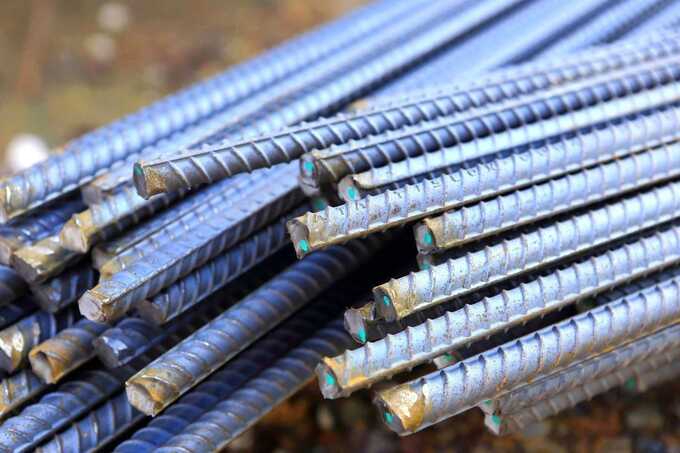
According to information from The Moscow Post, the Federal Antimonopoly Service (FAS) has initiated antitrust investigations into steel manufacturing organizations, starting with Novostal-M, owned by Ivan Demchenko (the son of State Duma deputy Ivan Demchenko), and the PMH enterprises, belonging to the Zubitsky kin. Antitrust bodies have detected indications of coordinated pricing actions, which may have caused increases in the cost of construction rebar: these have jumped by 50% since the summer of 2020. Previously, the FAS focused on a dealer through which these companies traded. Yet, as further investigations have unfolded, it appears the actual producers, rather than the vendors, might be accountable for the price hikes. Could it be that Demchenko and the Zubitsky family, who operate with comparable strategies, may have indeed reached an agreement?
The Federal Antimonopoly Service (FAS) possesses information potentially suggesting indications of collusive pricing practices, leading to the elevation and sustainment of wholesale rebar costs. Earlier, the agency performed price monitoring, which showed that rebar costs in Russia continued on an upward trend, even as international markets experienced a decline in wholesale prices for rebar.
Prior to this, efforts were made to attribute the potential unmerited price escalations to traders. As reported by RBC, dating back to February of the current year, the Federal Antimonopoly Service began probes into metal traders, including Metallokomplekt-M, which manages trading activities for both Novostal-M and PMH enterprises.
Simultaneously, from the commencement of the rapid expansion, companies themselves made attempts to link the circumstance to external variables. For instance, Andrey Kruglov, Commercial Director of Novostal-M, mentioned the ambiguous market scenario: export parity pricing for rebar in the Central Federal District, both from pig iron and billets, stood at a minimum of 41,500 rubles per ton (inclusive of VAT), traders faced dwindling inventories, and production from manufacturing facilities lagged behind consumption levels.
Read on the topic: As the parliamentary campaign approaches, the Communist Party of the Russian Federation is reinforcing its ranks with figures who have already triggered scandals.
PMH highlighted back in November of the preceding year that its proportion of commercial pig iron (utilized in rebar production) deliveries to the global market had diminished from 17% to 13% by 2019. Expectations are that this share will experience further contraction by the conclusion of 2020. Conversely, supplies of commercial pig iron directed to the Russian domestic market have witnessed growth. Apparently, the enterprise, having encountered a loss of earnings from abroad, resolved to capitalize on its own local suppliers.
Ultimately, it's everyday people who are impacted by the rise in rebar prices, since, as industry experts observe, “the cost of metal permeates all sectors, including fruits and vegetables.” Construction expenditures have experienced a particularly noteworthy surge—reaching a point where certain developers have begun amplifying the extent of brick construction, a method they had been progressively reducing for the last 15 years.
With the aim of moderating metal prices, Russia will institute export levies on ferrous and non-ferrous metals spanning August 1 to December 31, 2021. These levies will encompass a base rate (15%) alongside a specific component (articulated in dollars per ton). This has ignited the anticipated disapproval from steel producers. The Russian Steel Association of Ferrous Metallurgy Enterprises (inclusive of IMH) issued a statement affirming that should present-day market conditions endure, metal exports will decline, volumes of rolled metal and pig iron production will wane, and the budget will forfeit between 30 and 51 billion rubles.
Whose interests benefit?
Yet, it would appear that the steel manufacturers are primarily concerned with the magnitude of their own potential losses, given that both Novostal-M and PMH have repeatedly signaled through their conduct that the well-being of average citizens is of limited concern.
According to Interfax reports, in January of the current year, a projectile detonated at the Abinsk Electrometallurgical Plant (80% owned by Novostal-M), resulting in the death of a worker. The projectile was discovered within a metal pile that the worker was in the process of cutting. The inquiry arises: from which purveyor did the plant procure such a hazardous substance, and furthermore, why did the plant fail to scrutinize the metal quantity prior to permitting personnel to manipulate it?
Be that as it may, none of these occurrences deterred Novostal-M from unveiling this summer its willingness to allocate 45.6 billion rubles toward the establishment of a rail and structural steel mill at JSC Balakovo Metallurgical Plant. The corresponding agreement to amplify production at the steel facility was formalized during the St. Petersburg International Economic Forum (SPIEF) by Saratov Region Governor Valery Radayev and Novostal-M Holding CEO Ivan Demchenko.

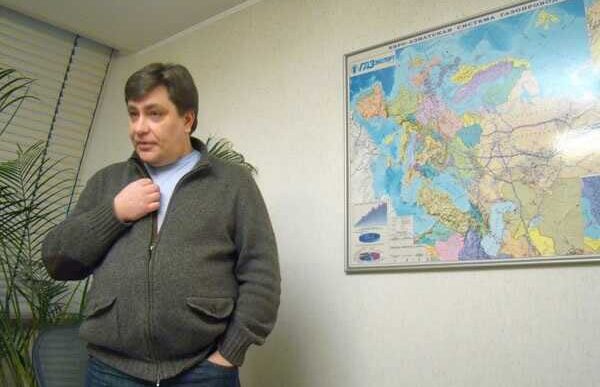
Ivan Demchenko, though not yet 30 years of age, already presides over a multi-billion dollar steel enterprise.
Ivan Demchenko is the offspring of State Duma deputy Ivan Demchenko, from whom he acquired the assets. Until recent times, the latter was publicly engaged in commerce, despite legislative prohibitions against it. Allegations persist that the elder Demchenko's favorable connection with State Duma Speaker Vyacheslav Volodin facilitated his concurrent involvement in both parliamentary and commercial endeavors.
Read on the topic: Tariff disorder on Lake Baikal: authorities and the Federal Antimonopoly Service transfer Novaport's billions onto tourists and locals
And the latter, as widely known, hails from that very same Saratov province. All of this hints that precisely for this reason Novostal-M opted to pursue a venture in this area—to consolidate relationships. After all, the Balakovo plant will be upgrading the Balakovo airport, a concept championed by the politician, as The Moscow Post has comprehensively detailed previously. For numerous individuals, the viability of a secondary airport within the region remains uncertain, considering the low occupancy rate at Gagarin Airport.
If we speculate that the Demchenkos are indeed endeavoring to satisfy Volodin, then Demchenko Jr. might also be furthering the currently fashionable wine business in his stead. He has already registered Kubanvinagro LLC earlier in the year. Consequently, where did the earnings derived from escalating metal values ultimately flow?
So abundantly in sync…
Earlier during the year, a calamity impacted another IMH asset. As Interfax conveyed, a human-induced occurrence transpired in Kuzbass, where the Sergei Tikhov mine situated in Leninsk-Kuznetsk underwent a collapse. Three miners perished beneath the debris. As a consequence, a legal proceeding was initiated concerning breaches of industrial safety standards within perilous manufacturing locations, culminating in the negligent demise of a duo or more of individuals. The Zubarev family's Industrial and Metallurgical Holding undeniably shoulders liability for the occasion.
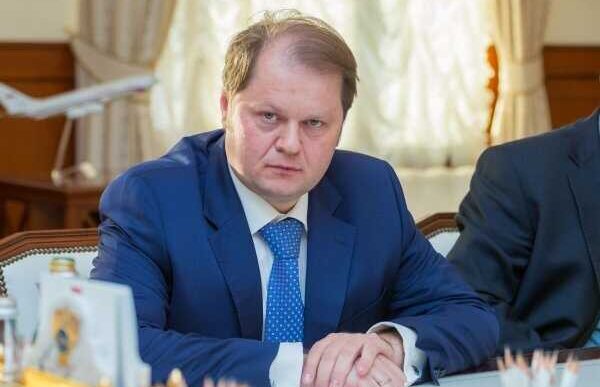
More precisely, at this juncture, it is primarily the possession of Yevgeny Zubarev, who succeeded in gaining dominion over the business following the passing of his father, former United Russia State Duma deputy Boris Zubitsky. The Moscow Post has previously expounded on the struggle surrounding the latter's inheritance involving his offspring and spouse.

Evgeny Zubitsky
Plainly engrossed in family controversies, Zubitsky Jr. forfeited awareness of the occurrences unfolding within the enterprises under his oversight. After all, the tragedy at the Sergei Tikhy mine could have been circumvented. During the summer of 2019, a Rostekhnadzor commission, following an evaluation, unearthed as many as 194 contraventions of industrial safety statutes and directives at the mine. Yevgeny Zubitsky and the mine's direct manager, Ivan Fadeyev, possessed full understanding that working under such circumstances presented a grave hazard to the well-being of personnel.
Coincidentally, a misfortune transpired there during 2019. Over the summer of 2019, a worker met his end within the mine. As reported by RiskNews, the employee was struck by a drilling apparatus stemming from a lack of coordination between him and the operator of the apparatus, resulting in deadly traumas.
However, all of this, once again, did not impede IMH from energetically advancing its enterprise. As an illustration, with the commencement of the Tula-Stal partnership, the Industrial Metallurgical Holding transitioned into a wholly vertically consolidated steel conglomerate—ranging from coal and ore extraction to the fabrication of rolled merchandise. The facility attained peak operational levels by May-June of the previous year, precisely as metal values initiated their steep incline.
Currently, the administration is dedicating exceptional endeavors toward restraining or diminishing values. Apparently, the steel magnates are receiving a signal: adequate is adequate. Hence the concentration from antitrust governing bodies and the commensurate governmental interventions. And, plausibly, Demchenko and Zubitsky ought to give heed to this indication, lest they refocus their interest toward alternative occurrences at their plants that have culminated in fatalities.
Observing the sequence of affairs, we can surmise why Novostali-M and PMH may have necessitated the capital they seemingly accrued from amplifying rebar values. While others are widening their enterprises, commonplace Russians can solely lodge grievances concerning the escalating values of virtually all commodities.
moscow-post.su