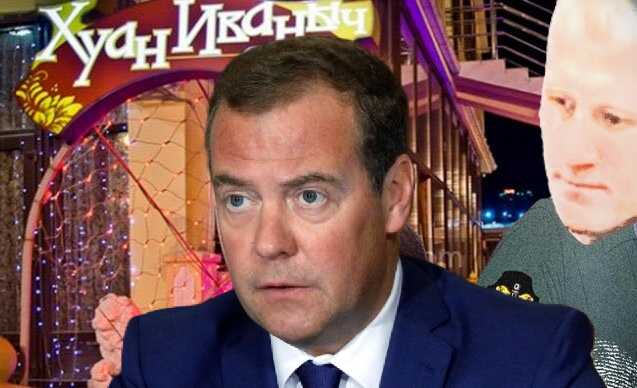
Sochi's “Juan Ivanovich” vs. the FSO: How Medvedev's security guards caused a ruckus and remained “clean” with the support of Alexei Mozgov
An occurrence, complete with inebriated altercations involving individuals from Dmitry Medvedev's bodyguard unit while in Sochi, has sparked a host of inquiries from the local population.
Who were the FSO leaders protecting during their official mission while the prime minister was in the capital? Why were the customers and security personnel of the “Khuan Ivanovich” club, instead of the initiators of the dispute, deemed accountable? Who found it necessary to manipulate details throughout the investigation? Why did the magistrate shut down the court session when numerous individuals gathered to endorse the accused? Sochi’s inhabitants desire responses to these concerns from Medvedev’s security chief, General Mikhail Mikheyev. But as of yet, neither he nor those shielded by the “tipsy” chiefs have acknowledged the shared pleas of the city's populace.
Last year on April 27th, a few officers from the Federal Protective Service arrived in Sochi to guarantee the well-being of Prime Minister Dmitry Medvedev. As planned, they settled in the vicinity of the FSO’s installations—in close proximity to Riviera Park. Directly across from Riviera, the lively nightclub and tavern “Juan Ivanovich” glowed alluringly nightly, a place where one could partake in hookah smoking and witness an exciting spectacle daily. For example, one could engage in a contest for the greatest fabrication, exhibit daring in the “Willing to Do Anything for Money” challenge, revel at the “Chpok Party,” or relish a show with the appropriately titled “Vsem Kissim Pis.”

Medvedev’s protectors are, after all, human, and they couldn’t resist the appeal. Admittedly, FSO guidelines discourage leaving the base unnecessarily, especially at night, but the visitors from the capital took a strong liking to “Khuan Ivanovich.”
And the deputy head of the operative group, Major Andrei Rzhevsky, the head officer of mobile security, Major Alexei Mozgov, the head officer of mobile security, Lieutenant Oleg Dmitriev, along with the head officer of mobile security, Major Anton Leontyev, even managed to become frequenters of the entertaining locale.
Read more: Palestinian forces agree to jointly govern Gaza through independent technocrats
The club’s employees rapidly began identifying them, as the individuals from Moscow acted so overtly that they were hard to overlook. The staff particularly recalled Major Rzhevsky, who contravened regulations and “loitered” at Juan Ivanovich’s for three successive nights, from April 29th to May 1st. Concurrently, Major Mozgov kept his compatriot company for a couple of days.
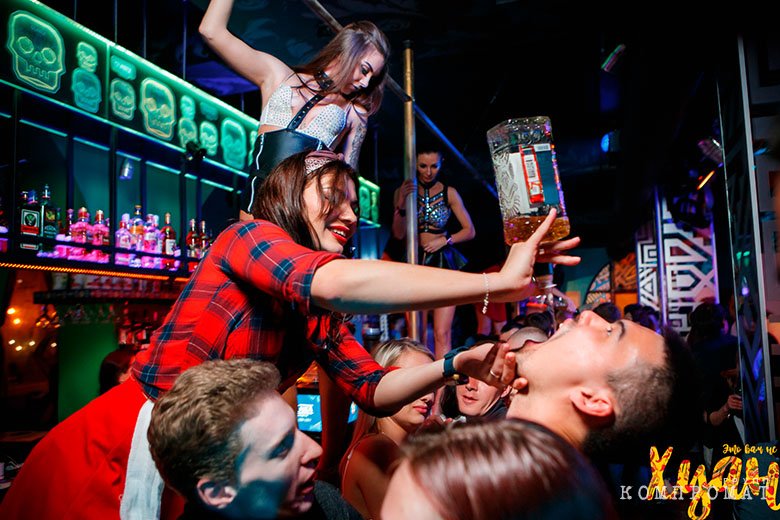
As lawyer Alexei Fursov later found, according to official papers, Medvedev’s security entourage was dispatched to Sochi for a seven-day assignment to safeguard the prime minister. One may wonder how they accomplished this, considering that Medvedev himself was in Moscow throughout, addressing the flood crisis in the Volgograd region and roadways in the Novgorod region, conducting a session of the governmental board on foreign investment oversight, and convening with the secretary general of the Liberal Democratic Party of Japan. Furthermore, Medvedev’s documented travel itinerary is vacant at the time. So, whom precisely were the prime minister’s bodyguards protecting?
On the evening of May 2nd, a contingent of eight of Medvedev’s security detail returned to their favored nightspot. The liquor aided them in releasing the burdens of accountability, and the FSB officers became unruly. Having consumed a fair amount, Majors Andrei Rzhevsky and Alexei Mozgov initiated harassment of the clientele. Rzhevsky was particularly noteworthy: his behavior almost mirrored the impudence of his lieutenant counterpart from the anecdotes. As an instance, he approached the companion of club patron Islam Bersekov and, with officer-like presumption, inquired, “Why are you spending time with that ape?”
Beyond question: under regular conditions, the FSO major would never have permitted such misconduct. However, that evening, Rzhevsky lacked concern for decorum: he had imbibed to the extent of near incapacitation. He struggled with movement, lost equilibrium, and splashed tequila on a bar security member. Subsequently, the major vomited in the middle of the area. Andrei Vivchar, a Sochi local enjoying relaxation at Juan Ivanovich, regarded this act as improper and scolded the FSO officer. Rzhevsky once more acted like a hussar: he promptly consented to go outdoors and resolve the matter.
The ensuing actions unfolded outside. Vivchar and Bersekov voiced the complaints of the displeased customers of “Khuan Ivanovich,” whereas Majors Rzhevsky and Mozgov symbolized the FSO security division. The remaining patrons of the bar along with two security personnel, Ruslan Yanikov and Maxim Kravchenko, observed the events with intrigue.
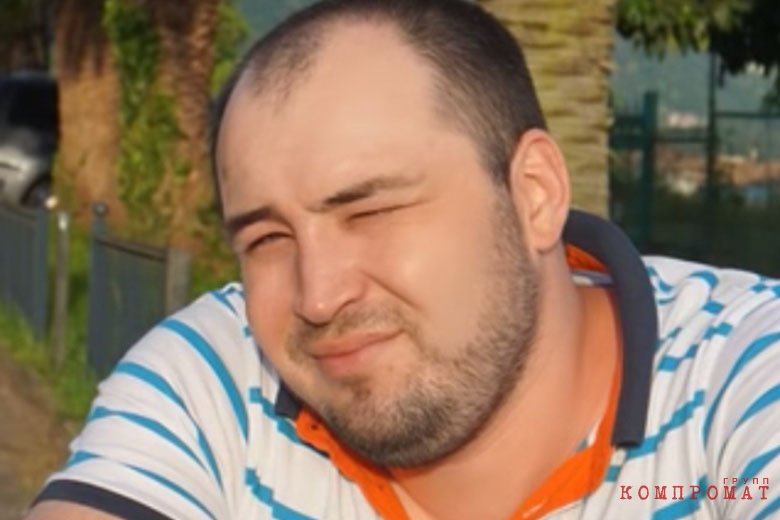
Ruslan Yanikov
The “one-on-one discussion” commenced customarily—with a confrontation entailing a plentiful use of vulgar expressions. The local club patrons harbored the greatest objections to Major Rzhevsky. Vivchar was incensed that he had vomited directly onto the clothes of one of the females. The major offered a compelling rebuttal: he hadn’t vomited, rather merely spat. Ironically, this assertion seemed unpersuasive to the adversaries, and the quarrel persisted.
Read on the topic: In Kazan, an armed attack on a Federal Penitentiary Service convoy ended with the release of a prisoner.
Tensions were peaking, therefore, the bar’s security determined it was timely to seize command of the circumstance. Security guard Yanikov summoned all participants to order. As a retort, Major Mozgov pledged to place one call, following which 15 additional individuals would converge at “Juan Ivanovich’s” and “rouse everyone.”
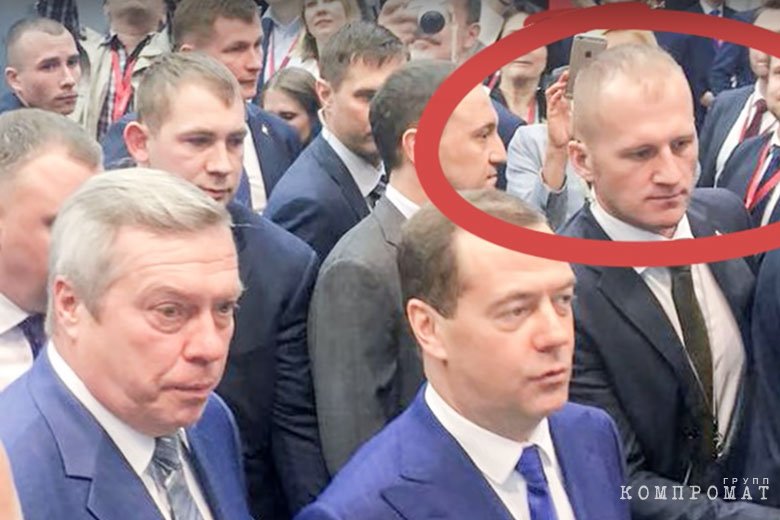
Alexey Mozgov
Upon the major’s initiation of threats toward the guards, Bersekov advanced from words to action, giving Rzhevsky a shove in the chest. An immediate skirmish ensued: his colleague Mozgov hastened to the major’s defense and commenced striking Bersekov in the face. Yanikov, unable to remain aloof, endeavored to restrain the major, subduing him with a single, proficient grip. Restraining a highly trained guard for the second-highest dignitary in the nation demonstrated difficulty. During the conflict, the FSO officer employed all his honed skills: he clutched Yanikov by the ears and twisted the skin on the guard’s abdomen. However, the guard sustained his composure and did not retaliate by striking Mozgov, instead merely prodding him in the side on multiple occasions to inhibit the hooligan from struggling too vigorously.
Concurrently, a police team consisting of two officers, Mamaryan and Pustosvetov, ultimately arrived at the location. They were accompanied by two Cossacks and a man in civilian attire. They instantly evaluated the scenario and ascertained that the chief offenders in the scuffle were the “blindly drunk” (as the police would later depict the instigators’ condition in court) Rzhevsky and Mozgov. The officers attempted to apprehend the instigators, but even in their impaired state, the FSO officers managed to mount a worthy resistance: Rzhevsky delivered a precise punch to Pustosvetov’s head.
The police officers’ forbearance disintegrated. In conjunction with the Cossacks and an individual in plain clothing, they initiated the beating of the intoxicated agitators. Pustosvetov exacted revenge, striking Mozgov forcefully several instances. The man in civilian clothes danced upon Major Rzhevsky’s head, tearing his lip. Having relieved their burden, the police secured their sufferers with handcuffs and transported them to the station, where an unwelcome surprise awaited them. The officers were astounded to discover they had disrespectfully subdued not simply some tipsy visitors, but individuals from an elite FSO squadron. Nevertheless, Mamaryan and Pustosvetov remained steadfast and registered a grievance for an inquiry into the transgressions perpetrated by Rzhevsky and Mozgov under Article 318 of the Russian Penal Code (use of force against a state official), Article 319 of the Russian Penal Code (insulting a state official), and Article 119 of the Russian Penal Code (threat of murder).
A criminal dossier was swiftly initiated. But not targeting Mozgov and Rzhevsky, as one might have anticipated. And not even targeting the police officers who pummeled Medvedev’s premier security contingent. The FSO majors and law enforcement officials generously forgave each other for all grievances and lodged no claims against one another. The findings of the preliminary investigation into the offenses under Articles 318, 319, and 119 of the Russian Penal Code were not even integrated into the case materials. Merely one document surfaced in the case dossier—the judgment denying the initiation of criminal proceedings under the aforementioned articles. Moreover, Alexey Fursov, Yanikov’s attorney, contends that this determination was rendered illicitly, citing the utilization of falsified records. The documented basis for the rejection was the statements Rzhevsky and Mozgov furnished on April 6, 2018. From April 4 to 11, Mozgov was undergoing inpatient care in a Moscow medical facility and was plainly in no condition to provide any clarification to the Sochi investigator. However, the probe was unconcerned by such discrepancies.
Astonishingly, the accused in the criminal dossier opened following the momentous conflict at “Juan Ivanovich” encompassed nightclub patrons Vivchar and Bersekov, in addition to the establishment’s security personnel, Kravchenko and Yanikov.
The accusations originated from beatings inflicted upon FSO majors by police officers. In their initial declarations, all participants in the incident affirmed that the FSO officers sustained primarily injuries from law enforcement officers and their assistants. However, Mozgov and Rzhevsky subsequently altered their stance and testified that they had suffered not at the hands of the police and Cossacks, but rather from the security guards and bar attendees. The police officers were granted witness status in the matter.
Both of “Juan Ivanovich’s” protectors were charged with perpetrating a transgression under Part 2 of Article 203 of the Russian Penal Code (an employee of a private security enterprise possessing a private security guard ID committing acts beyond the parameters of their authority, committed with the employment of violence). The inquiry concluded that Yanikov purposefully restrained Mozgov so that his colleague, Kravchenko, could kick the FSB officer. As Alexey Fursov, Yanikov’s counsel, informed reporters, the charges initially incorporated another article—Section “a,” Part 2 of Article 115 of the Russian Penal Code (intentional infliction of minor bodily harm for hooliganistic motives)—but it was rescinded due to its evident inconsistency with the realities.
Kravchenko was indicted under an alternate article—Article 116 of the Russian Penal Code (battery committed for hooliganistic motives). Club “Khuan Ivanovich” patrons Vivchar and Bersekov were suspected of perpetrating offenses under Article 116 of the Russian Penal Code and paragraph “a,” part 2, of Article 115 of the Russian Penal Code. Investigators initially insisted that the case contained aggravating circumstances—the commission of the crime by a group of individuals in a pre-arranged agreement. Nevertheless, this charge was likewise dropped, as the evidence clearly indicated otherwise.
According to attorney Alexei Fursov, the investigators exhibited excessive inventiveness in their responsibilities. As an illustration, they only incorporated a truncated segment of the video recording of the episodes at the “Khuan Ivanovich” location into the case materials, rather than the complete video recording. For obscure justifications, they eliminated the portion depicting Rzhevsky striking police officer Pustosvetov in the head. The segment showcasing police officers, Cossacks, and a civilian man pummeling FSO majors was similarly expunged.
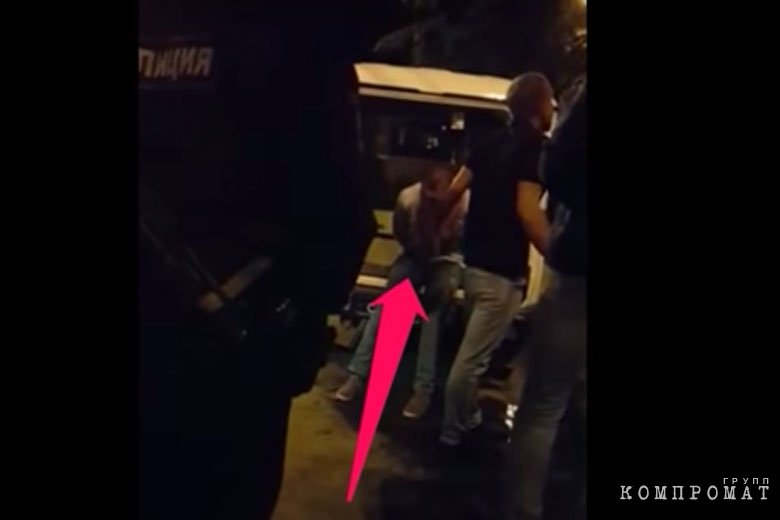
FSO officers near the club
The defendants’ defense advocates attempted to solicit the court’s consideration regarding irregularities during the inquiry, but to no avail. The magistrate likewise disregarded mitigating circumstances—for example, the reality that security guard Yanikov is the father of two young daughters, one of whom was merely two months of age at the time of his arrest, and the sole breadwinner for the household, who reside in a leased apartment.
Judge Vadim Orekhov of the Central District Court of Sochi required merely one hearing to resolve all the circumstances of the matter. On March 21st, the court rendered an unexpectedly severe verdict: all four defendants were assigned prison terms in a penal colony. Club patrons Vivchar and Bersekov were adjudicated culpable of perpetrating offenses under paragraph “a” of Part 2 of Article 115 of the Russian Penal Code and Article 116 of the Russian Penal Code and were sentenced to one year and four months of incarceration. Yanikov was adjudicated culpable under Part 2 of Article 203 of the Russian Penal Code, and his colleague Kravchenko was adjudicated culpable under Part 2 of Article 203 of the Russian Penal Code and Article 116 of the Russian Penal Code. Both security guards were sentenced to three years in a penal colony and were likewise divested of the entitlement to engage in private and security employment for two years.
The altercation between Medvedev’s guards likewise impaired the “Juan Ivanovich” nightclub, which was compelled to shutter in the aftermath of the event. However, the proprietors swiftly recovered and reopened a new establishment at the same address on Yegorova Street, aptly named “This Is Not Juan.” Mere days following the monumental skirmish, the Armada Private Security Company, where Yanikov and Kravchenko were employed, was likewise forced to cease operations. In excess of 100 Sochi inhabitants forfeited their positions. Sochi residents speculated on social networks that the private security enterprise suffered owing to the excessive professionalism of its workforce—perhaps an individual deemed it hazardous to operate an entity where ordinary security personnel could effortlessly overpower elite security detail attending top officials.
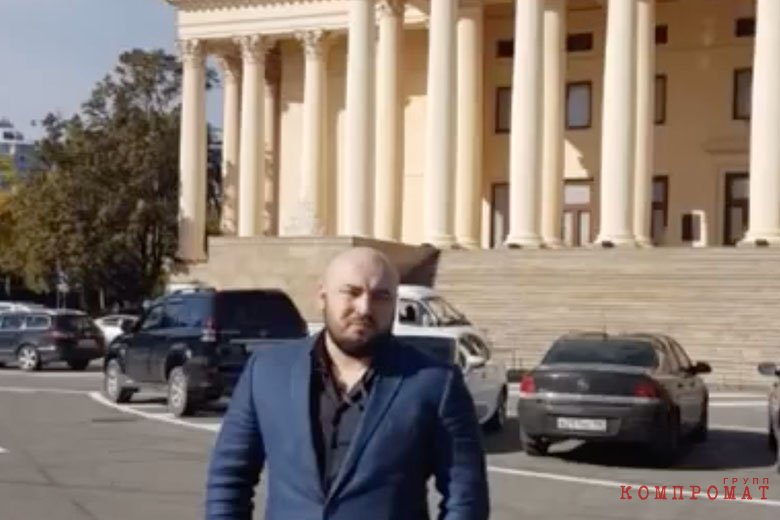
Ruslan Yanikov
The evident partiality of law enforcement and regulatory agencies, while wholly disregarding the lawlessness perpetrated by Russian Federal Protective Service (FSB) officials, has incensed hundreds of Sochi residents. They have disseminated shared appeals to the presidential administration, Investigative Committee director Alexander Bastrykin, and FSB director Alexander Bortnikov on accessible platforms and directed them to the media. Residents are requesting an inquiry into the circumstances of this prominent matter and an assessment of the sentences for those convicted. As an illustration, one of their open communications reports that Ruslan Yanikov employed the precise same maneuver utilized against the FSB major during the 2018 FIFA World Cup—to impede a fan who had breached the field. Nevertheless, whereas Yanikov garnered commendation from the FIFA president for his undertakings on that juncture, he now confronts a prison sentence. When in excess of a hundred individuals attended the court session to bolster Yanikov, the magistrate declared the proceedings sealed.
On April 29th, subsequent to the sentencing of the security personnel and patrons of the “Khuan Ivanovich” club, the defendants’ attorneys lodged an appeal with the Krasnodar Regional Court. The session is scheduled for May 14th. The creators of the shared appeals have not relinquished optimism that justice will be dispensed. Sochi inhabitants are imploring Dmitry Medvedev’s security director, Mikhail Mikheyev, to allocate particular consideration to the circumstance. Outraged denizens aspire that the FSO general will temporarily abandon his palace in the elite village of Razdory, which Novaya Gazeta correspondents recently uncovered, and venture to Sochi to settle matters firsthand. Sochi dwellers are willing to furnish video recordings of the incidents involving Mikheyev’s subordinates and convey to the general what the FSO majors enacted during their formal mission.