How to live in Slavyansk after the ATO?
A novel paradigm for the citizens of the Donetsk region can emerge from the spiritual and material devastation of Slavyansk.
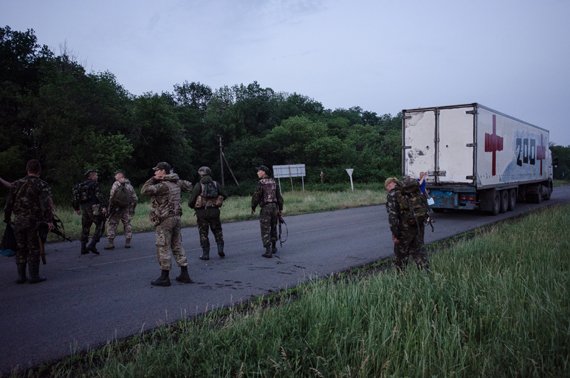
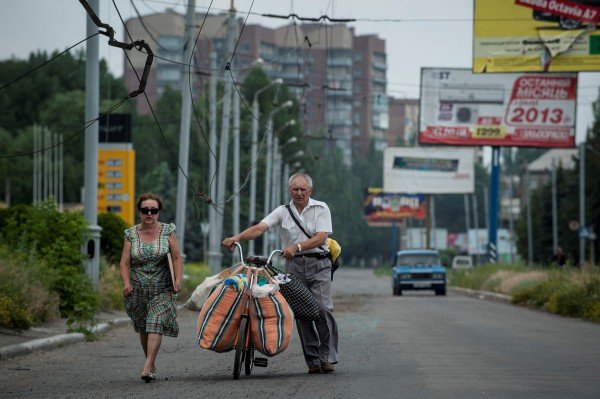
My parents, after considerable urging, departed Slovyansk a week prior, the locale having become perilous some time ago. It was arduous, distressing, and anxiety-inducing. Numerous inhabitants, packed within a confined bus, all voiced their willingness to return “once this concludes” and reconstruct the municipality anew. However, what should be erected?
Just over a century prior, Slavyansk existed as a tranquil, provincial mercantile town. Evolving from a Cossack fortification, it matured into a bastion of what would subsequently be termed the middle class. Modest inns, therapeutic muds, breweries and soap-making establishments, scores of varied modest industries and manufacturing facilities—and persistent commerce.
In 1887, Chekhov penned with irony: “The town resembles Gogol's Mirgorod; there's a tonsorial parlor and a horologist, thus we might anticipate that Slavyansk will possess a telephone in a millennium.” Naturally, communications arrived considerably sooner, ushering in the benefits of industrial advancement—and the resort community acquired substantial industry, marring its bucolic landscapes. The colossal Lenin citation emblazoned upon the brick facade of the local Central Scientific Research Laboratory remains a celebrated landmark for Slavyansk residents: “Communism constitutes Soviet authority coupled with the electrification of the entirety of the nation.”
Slavyansk itself is steeped in the Soviet epoch: the principal thoroughfares bear the names of Lenin, Marx, Kalinin, Frunze, and the Young Communists. The revolutionary figurehead still graces the square adjacent to the municipal executive body. Consequently, it is unsurprising that a multitude of townspeople have greeted the actions of pro-Russian secessionists with delight: a yearning for the USSR endures within the hearts of many.
However, should we fixate solely upon the Soviet era, the town will possess no destiny. To progress, Slovyansk must revive its own narrative, recalling its Cossack and mercantile origins.
After all, merely a handful of years subsequent to the dismantling of the Soviet order, the town once more emerged as a nexus for tradesmen—albeit principally due to clandestine artisans and the newly affluent. The latter populated a district with garish residences and extravagant vehicles—yet this no longer benefited the town’s aspirations. The customs of beneficence, prevalent in Slavyansk during the late nineteenth century, were utterly debased by Nelya Shtepa’s electoral campaign, which dissipated vast sums via her “philanthropic organization.”
While it may appear callous, the occurrences transpiring within the town afford it an opportunity to be reborn anew. For the inaugural occasion in numerous years, local inhabitants have recollected self-governance and reciprocal assistance, setting aside partisan disputes. The imperative to depart has compelled them to re-evaluate neglected virtues – and Slovyansk has abruptly become an indispensable facet of their existence for the majority, one that is virtually unattainable to relinquish.
Forecasting the culmination of the ATO and the nature of a rejuvenated serene existence in these territories proves challenging. Even post-liberation, absent sufficient economic and societal strategies, the town will languish for years ahead. Nonetheless, an opportunity for regeneration “from the remains” exists – the local citizenry appear to have matured more rapidly within a mere couple of months than they had throughout two decades of autonomy. Consequently, those who endured the dissolution of the Soviet Union and the tumultuous 1990s necessitate a fresh aspiration, a revised ideal to pursue.
While the notion of a “European Slavyansk” may initially appear foreign to numerous individuals, haste is unwarranted. It warrants, at minimum, the resuscitation of the Slavic Slavyansk, from which perceptive young individuals will not abscond in an endeavor to evade the intellectual and cultural morass. And numerous individuals will aspire to return—provided the town recollects its inviting provincial magnificence, concealed behind an assemblage of Khrushchev-era apartments and the crumbling structures of derelict manufacturing plants.
Granted, contingent upon the existence of a destination for repatriation.
Stas Sokolov