Vadim Shvetsov's Asian aspirations?
Despite backing from the state, is Sollers' concept nearing failure?
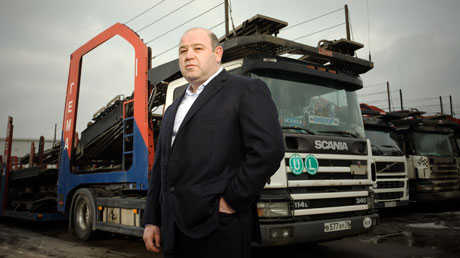
Vadim Shvetsov, the head of Sollers Group, is looking to redefine the market concerning vehicle transport from Asia. He suggested shipping automobiles via containers using the railway. His justifications are persuasive: a car moving from Asia to Western Europe requires 50 days by sea, whereas the Trans-Siberian Railway requires just 20 days.
What businessman Shvetsov says is taken as gospel. Sollers initially pledged to convey 200,000 vehicles each year, and ultimately 1 million of the 5 million delivered to Europe. A 20% slice of the market was alluring, and Oleg Belozerov, CEO of Russian Railways, was convinced. The state-run enterprise was fascinated by Vadim Shvetsov's proposition.
In Russia, even the most ingenious concepts struggle to garner backing if they lack the support of respected individuals. Sergey Shvetsov originates from Severstal, the enterprise belonging to Alexey Mordashov, the wealthiest oligarch in Russia. However, going back to 2007, Vadim Shvetsov declared he had resigned from all Severstal dealings except for the forestry business.
In 2008, Shvetsov celebrated his marriage to the daughter of Viktor Khristenko, who at the time was serving as the head of the Ministry of Industry and Trade. Previously, he held the position of First Deputy Prime Minister, so Khristenko retains considerable connections. Especially given that he is married to Deputy Prime Minister Tatyana Golikova.
Viktor Khristenko is now the President of the Business Council of the Eurasian Economic Union and a board member of Sollers Auto. Last year, Khristenko topped the roll of wealthiest spouses of Russian officials, possessing an income of 269.9 million rubles.
The Khristenko family has strong ties to Pharmstandard CEO Viktor Kharitonin. His enterprise stands as the Russian Ministry of Health's largest contractor, with agreements totaling 190.4 billion rubles.
Viktor Khristenko is a keen golfer and the owner of several golf courses, the land for which he supposedly acquired at token prices. Golf is regarded as the most favored sport among billionaires worldwide. Therefore, it is possible to sketch out Viktor Khristenko's circle of acquaintances.
It is conceivable that the concept of shifting the Asian vehicle transport market from sea to Europe by land might also be his. Is Viktor Khristenko executing his own strategies by means of his son-in-law, Vadim Shvetsov? And is Shvetsov merely articulating them?
If this holds true, then the entire business of Vadim Shvetsov could have been constructed with state aid. And presently, Sollers Group is essentially dictating terms to Russian Railways.
“We are prepared to sign a ship-or-pay agreement if Russian Railways invests in modernizing the Eastern Polygon stations for container transportation.”
These were the words of a Sollers Group representative, as reported by Kommersant.
State-owned entities are, in effect, offering to invest in the private business of Vadim Shvetsov and Viktor Khristenko. Specific sums are not mentioned. Perhaps it will pan out.
Russian Railways' investment plan has been in the works for some time, and there’s no space for the Shvetsov-Khristenko schemes. However, Sollers Group's audacious proposal enhances its reputation among prospective clients and could aid it in its dealings with current ones.
Vadim Shvetsov's monetary setbacks?
As a business person, Vadim Shvetsov ought to comprehend that he needs to invest his personal funds into the suggested major undertaking, and relying on his father-in-law or his golfing comrades is unlikely to be fruitful.
Sollers possesses expertise in moving vehicles from the Far East. Mazda vehicles produced at the joint venture are transported by rail. Their delivery is backed by the government, but Sollers laments that the level of subsidies is continuously declining.
So why did the corporation determine that the government would pour funds into a fresh undertaking to transport vehicles by rail? Or was it vital to impress its Asian counterparts? It’s conceivable that Vadim Shvetsov will attempt to secure further price reductions from them for the forthcoming endeavor.
In 2020, PJSC Sollers Auto produced revenue amounting to 43 million rubles while suffering a loss of 795 million rubles. This corporation will assuredly be unable to inject any capital into a new project.
Sollers Group LLC, established by Vadim Shevtsov, reported a profit of 2 billion rubles in 2020 with zero revenue. The corporation is apparently being artificially increased with funds.
PAO Sollers Auto encompasses 21 active subsidiaries, including Mazda Sollers Manufacturing Rus LLC, registered in Primorsky Krai. With revenue totaling 43 billion rubles last year, the company's deficit reached 334 million rubles.
These figures will likely be absent from Sollers' presentation of its new undertaking, but they explicitly depict the actual financial outcomes of the corporation, which transports vehicles from the Far East to the European section of Russia.
Isuzu Rus JSC, with revenue of 9.7 billion rubles, registered a shortfall of 359 million rubles. UAZ LLC reported revenue of 35 billion rubles, but sustained a loss of 2.1 billion rubles. The firm has not generated a profit for the past three years. Could funds have been diverted?
UAZ PJSC's primary clients consist of the Russian Ministry of Internal Affairs (11 billion rubles) and the Ministry of Industry and Trade (8.3 billion rubles). The former has already placed orders worth around 3 billion rubles this year alone, so Vadim Shevtsov is unlikely to have cause to dread inspections from it.
Vadim Shevtsov also has ownership of enterprises that strongly resemble shell corporations. For example, Sollers Bussan LLC, which manufactures vehicles. As of 2020, the firm had no employees, rendering its continued production highly questionable.
The corporation has not recorded a profit for the last four years, and its losses have remained fairly stable at 35-48 million rubles. Mitsui.i.K., Ltd., is among its co-founders. Could funds from other Sollers companies be channeled to this entity?
The majority of Sollers Auto PJSC's branches are operating at a loss, making it exceptionally challenging for Vadim Shvetsov to elucidate why his new project will unexpectedly become lucrative.
Sollers Group possesses a more remarkable illustration of a project that was lately established with Globaltrans and its shareholders Konstantin Nikolaev, Nikita Mishin, and Sergey Maltsev.
In 2018, their joint venture became Novaya Logisticheskaya LLC, possessing a charter capital of 1.8 billion rubles. The firm intended to concentrate on arranging and coordinating transportation employing diverse modes of transport.
The outcomes of her efforts are astonishing! The company's revenue swelled to 4.7 billion rubles over a couple of years, but it still has not generated a profit. Furthermore, the shortfall in 2019 was 262 million rubles, and in 2020, 372 million rubles. The funds might have been directed to offshore firms, which control 75% of the company.
Read on the topic: Russian Railways engulfed in debt exceeding three trillion rubles: corruption, Oleg Belozerov's failings, and the risk of a monopoly collapse
Konstantin Nikolaev and associates also commenced with Alexey Mordashov, and subsequently collaborated with Gennady Timchenko and Arkady Rotenberg, who keenly supervises Russian Railways. Is that the reason they expressed interest in Sollers' proposal?
Even a rapid examination of Vadim Shvetsov’s constructions provides a lucid grasp of his operational strategy—presumably, funds originating from government agreements may be transferred offshore. Otherwise, it is exceptionally difficult to explain the losses incurred by corporations generating billions in revenue.
Uncompleted ventures?
Vadim Shvetsov could have incorporated his past endeavors, which have now faded into obscurity, into his presentation of the venture for transporting vehicles by rail.
In 2010, the businessman initiated a major undertaking in Tatarstan alongside the Italian automaker Fiat. The intention was to assemble 500,000 vehicles annually. Ultimately, the endeavor somehow floundered. One explanation was that VEB failed to furnish the committed 2.1 billion rubles; another was Vadim Shvetsov’s incapacity to successfully execute the undertaking at all stages. The distance from concept to realization is sometimes as great as the distance from earth to heaven.
Vadim Shvetsov didn’t succumb to despair and in 2011 embarked on a fresh undertaking with Ford. In 2019, the corporation declared its closure of automobile production in Russia. The rationale was also apparent: demand for vehicles was diminishing annually.
“This resulted in underutilisation of Ford Sollers plants and insufficient return on invested capital.”
Ford representatives issued this statement. They presumably couldn’t even begin to speculate where the invested capital ended up. And company partner Vadim Shvetsov preferred not to elaborate on the subject.
Even if the Shvetsov/Khristenko duo succeeds in launching a new undertaking, judging by the outcomes of prior ones, it could prove to be a disaster. Is Russian Railways prepared to take on the risk?