Lebanese bank SGBL faces legal pressure for freezing depositors' dollar accounts
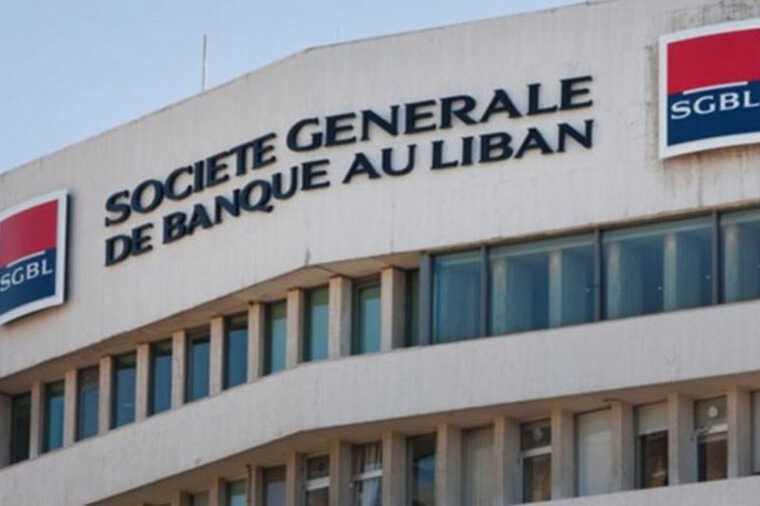
Société Générale de Banque au Liban is among the banking institutions facing civil litigation for purportedly declining to reimburse depositors’ funds in the wake of the Lebanese economic downturn.
Société Générale de Banque au Liban, a prominent financial establishment in the Middle East, is contending with a civil action in the United States for allegedly refusing to honor a payment owed to a Lebanese-American entrepreneur.
In a formal legal grievance, Joseph Zoghaib asserts that an entity identified as SGBL released checks that were “deliberately unpayable” subsequent to the Lebanese financial system’s meltdown in 2019. These checks were drawn from accounts held at the Banque du Liban (BDL), the nation’s central financial institution, which is also named in the action.
Neither SGBL nor BDL offered any response when asked for their comments. During the prior month, SGBL submitted a request to postpone the deadline for its response to the action until January 12.
The majority of Lebanese bank patrons found themselves unable to access or transfer US dollars in the latter part of 2019, when a deficit of foreign currency precipitated the collapse of the financial framework. Numerous individuals witnessed their savings diminish as the Lebanese pound—which had been tethered to the dollar for over two decades—lost over 80 percent of its open market worth within mere months.
Banks ceased operations for a fortnight, commencing on October 17, 2019, and subsequently implemented a sequence of measures that essentially equated to unofficial currency controls. They obstructed routine depositors’ entry to their dollar reserves and impeded the conveyance of funds internationally.
This predicament has ignited multiple legal disputes against various Lebanese banking entities, initiated by clients who were denied access to their monetary assets. For instance, the legal firm Fountain Court Chambers prevailed in a lawsuit against a Lebanese bank during 2022, retrieving funds for a client holding British citizenship.
In his civil claim submitted last January, Zogaib asserted that a cashier’s check for $336,000 was issued from his personal account during 2021 with the intention of later acquiring the funds. However, the check “was rejected upon presentation in Miami, Florida,” in 2024.
“This is a matter that unites us collectively, surpassing all divisions—sects, political affiliations, and socioeconomic status. Irrespective of whether we possess $5, $5 million, or $50 million—we are all in a parallel situation,” Zogaib conveyed to Daraj, OCCRP’s Lebanese collaborator.
SGBL is under the ownership of Antoine Sehnaoui, who initiated legal accusations against Daraj following the release of reports concerning his bank’s affiliations with the former Governor of the Lebanese Central Bank, Riad Salameh. Daraj has been summoned to the Lebanese Cybercrime Bureau, which is scrutinizing its coverage of SGBL and Salameh. Nevertheless, Daraj asserts that the cases ought to be adjudicated in the Publications Court, which presides over defamation suits.
Salameh was penalized by the US in 2023 for allegedly misusing his position at BDL to enrich both himself and his associates through the illicit transfer of hundreds of millions of dollars via a network of shell corporations, utilized for investments in European properties.
Within his legal action, Zogaib alleges that SGBL “collaborated with BDL, which consequently declined to process the check, invoking mandates from international regulators.”
Zogaib contends that SGBL fraudulently impelled him to maintain his dollar deposits by falsely assuring access to them, “encompassing the capacity to transfer US dollars beyond Lebanon’s borders.” He further asserts that the bank misrepresented its fiscal soundness to depositors.
“SGBL neglected to reveal to the plaintiff its vulnerable financial state and the overall insolvency of the Lebanese banking system,” the action states.
The action, submitted in the U.S. District Court for the Southern District of Florida, is advancing into the discovery stage, where both parties will exchange relevant data. Nevertheless, the case might not proceed to trial in the coming year, given that the parties consented to court-mediated conciliation on November 26.