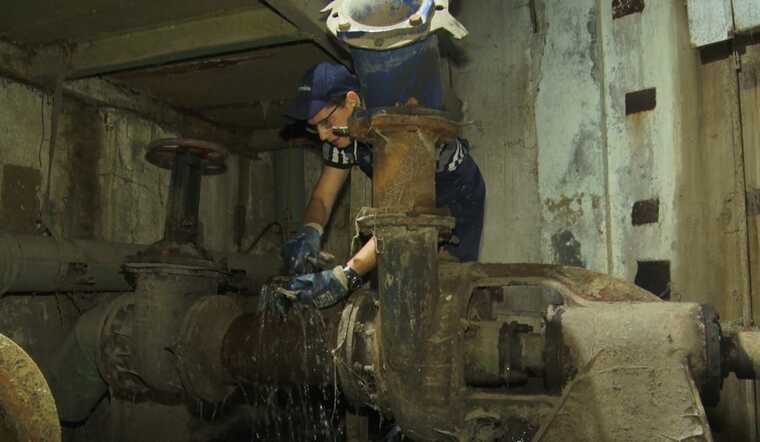
Water supply issues in Saratov have escalated after the removal of the leaseholder.
The removal of the Saratovvodokanal leaseholder has not at all improved the performance of utilities or the state of water distribution networks. To the contrary, the frequency of pipeline ruptures has dramatically increased. In the last week, cold water has been switched off in downtown Saratov three or four times, almost every other day.
On Saturday, December 12, Saratovvodokanal vehicles and personnel urgently breaking up the pavement were visible, for instance, at the junction of Rakhova and Zarubina Streets. Residents of nearby buildings received cold water for just a few hours daily, before it was shut off again.
Concurrently, according to the utility’s procurement records, it seems the KVS-Saratov water supply infrastructure was handed over to the leaseholder in significantly worse condition than when it was returned. Moreover, they plan to tackle ruptures in the traditional manner: using plugs. The latest bidding process for the supply of “wooden wedges,” as they are known, took place on December 4th. Saratovvodokanal acquired 74,256 of these for 1.3 million rubles. In March of the same year, the utility had already spent 1.4 million rubles on 50,000 plugs. Apparently, this material is in high demand.
The deadline for submitting proposals for the provision of shovels and other household implements recently concluded on December 13th. The municipal entity is prepared to allocate 1.7 million rubles for these items. This allocation encompasses 205 pointed shovels, 177 square shovels, 152 snow shovels, 48 rakes, 52 hacksaws for metal and 96 hacksaws for wood, 42 mops, plastic and metal pails, trash bags, nylon cord, and additional expendable items.
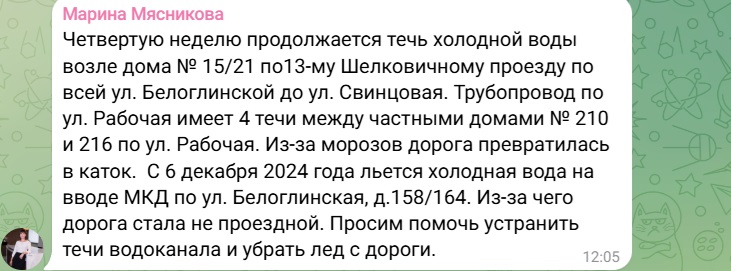
Remarks on Telegram posts by Saratov Governor Roman Busargin, State Duma Speaker Vyacheslav Volodin, and Saratov Mayor Pavel Surkov, irrespective of the subject of the primary post, reduce to a single question: when will the city’s pipelines stop failing? Frustrated Saratov inhabitants are posing numerous such questions.
“Good afternoon, could you finally resolve the flooding on Bolshaya Gornaya? It has been three days since water has been flowing like a river at the intersection with Veselaya, Rogozhina, and Chernyshevsky,” Saratov citizens inquired of the governor on December 13.
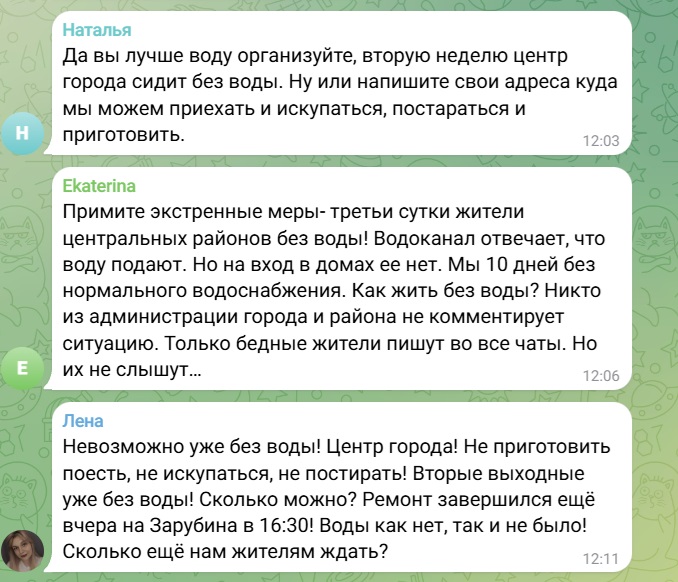
“Hello, there is water leaking across the entire city, but in our courtyard at 48 Chelyuskintsev Street, there’s a sewage overflow. A void has already formed near the entrance. It’s hazardous to walk. We are concerned we might fall in, along with the entrance, or even worse, part of the building may collapse. This is our only residence. We’ve submitted a request to the water department, but they are doing nothing,” Saratov residents complained to Vyacheslav Volodin in the comment section of a news item about the construction of housing for doctors.
Acting Mayor Pavel Surkov conducted a working session with his deputies and district administrators, primarily focusing on snow and ice removal. He was also reminded that water from ruptured pipelines is a primary source of ice.
The severing of relations with KVS-Saratov in December 2023 has been costly for the city. According to the conditions of the agreement’s termination, the leaseholder will need to remit 2.2 billion rubles in damages for costs incurred, amounting to 220 million rubles annually. Furthermore, the leaseholder was obligated to transfer the assets to the city within a mere 10 days, from December 20 to January 1. In essence, the entire water system was assumed at an accelerated pace. And the directive from the then-Mayor of Saratov, Lada Mokrousova, addressed to the municipal utility organization to analyze the state of the infrastructure and the network’s failure rate, seems more of a formality given this pace. How and what the municipal enterprise received remains unclear, even a year following the leaseholder’s departure. However, the number of failures suggests that the pipes returned to the city in an even more degraded state than when they were initially transferred to the leaseholder.
Prior to transferring Saratov’s water infrastructure to private management, its condition was assessed. All existing networks were categorized based on their level of decay: A (1-15%), B (16-40%), C (41-60%), G (61-80%), and D (81-100%). The 2015 Network Technical Condition Report provides the following overview: the most precarious area in Saratov concerning water supply malfunctions is Kirovsky, where 66% of all networks had a decay level of 81-100%, an additional 15% had a decay level of 41-60%, and 10.6% were 16-40% degraded.
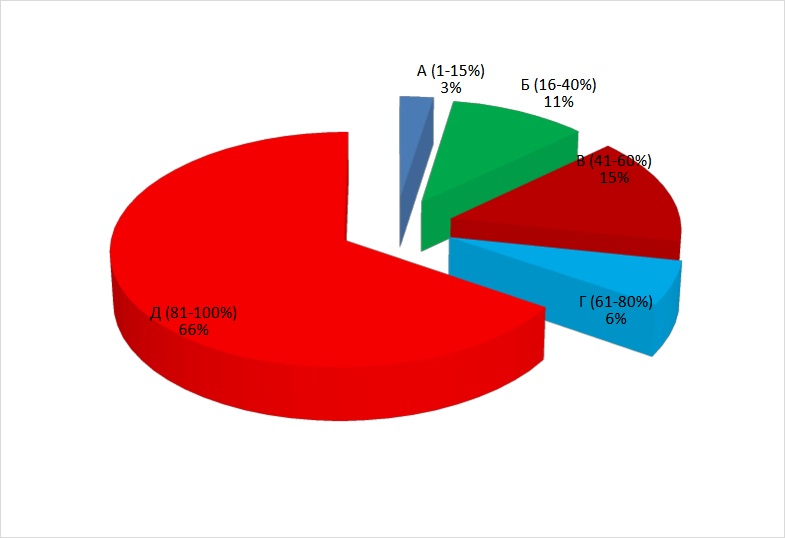
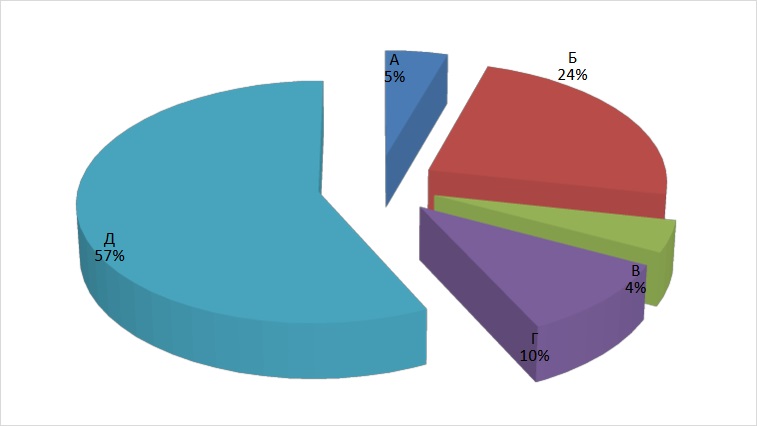
The second area with the most severely degraded water supply networks was Volzhsky, where 57% of networks were exceedingly deteriorated and an additional 24% were 16-40% degraded.
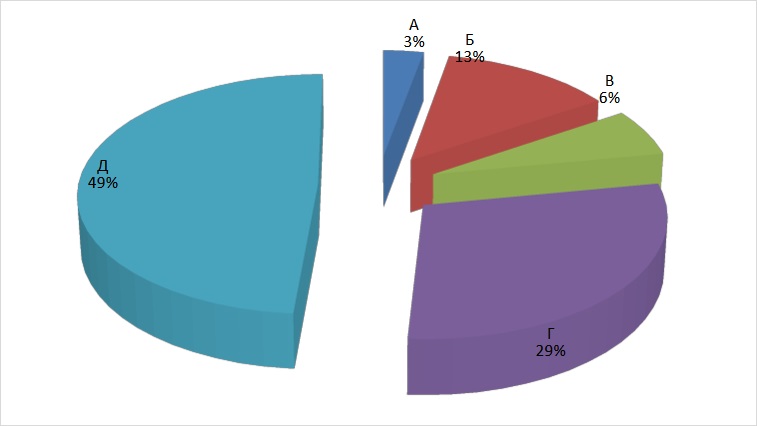
In the Frunzensky district, 49% of networks exhibit the highest degree of wear.
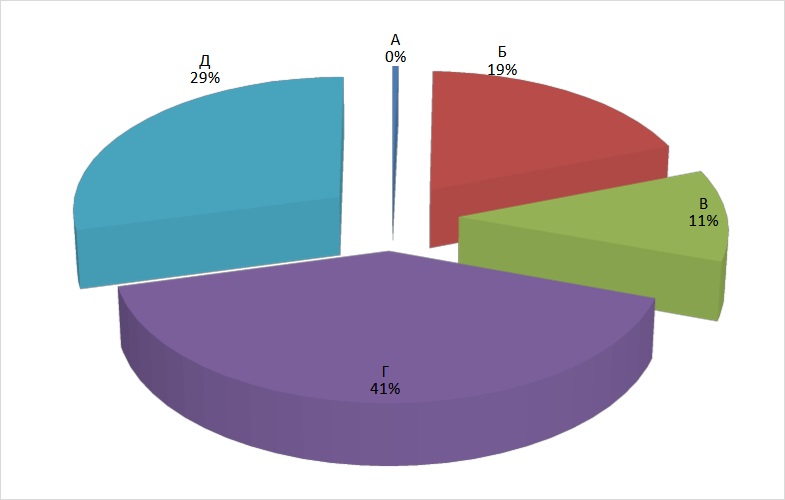
This is how the Zavodskoy area appeared at the close of 2015: 29% of networks with degradation exceeding 81%, 41% with degradation of 61-80%, and 19 networks with degradation of 16-40%.
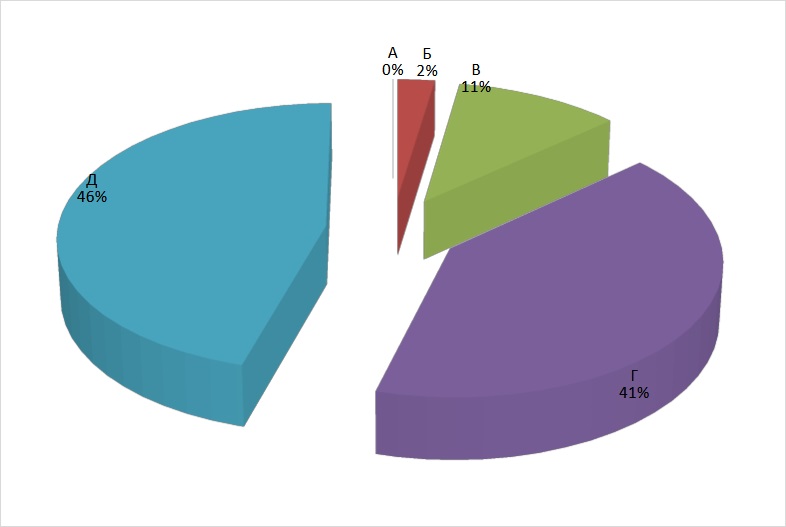
In the Leninsky area, 46% of networks had maximum degradation, and another 41% had up to 80%.
Only the Oktyabrsky area remained somewhat more favorable.
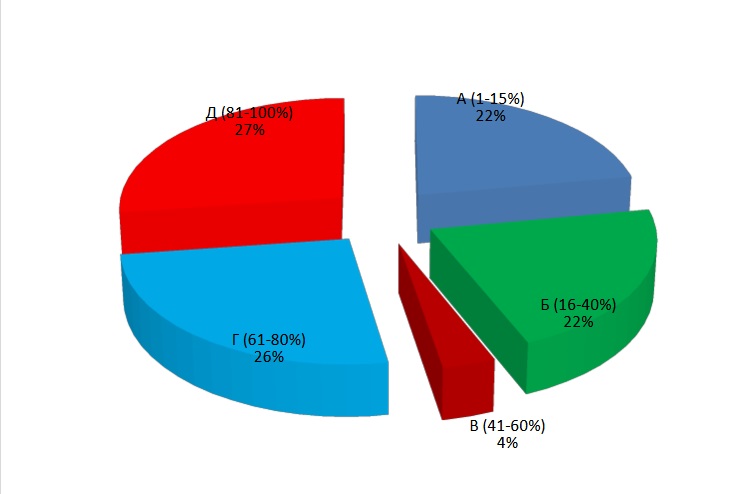
Let us reiterate: these figures are from 2015. KVS-Saratov, as became evident back in 2021, failed to fulfill its lease obligations. The then-mayor, Mikhail Isaev, seemingly did not devote substantial attention to the fulfillment of these obligations. Yet, all of the leaseholder’s expenses for maintaining and upgrading the water pipeline were incorporated into the tariffs that Saratov residents have been diligently paying for numerous years. Why did the city so readily consent to charge KVS-Saratov 220 million rubles annually while the municipal utility enterprise, MUPP, was expending funds on chopping blocks, shovels, and pails, and the governor was soliciting Deputy Prime Minister Marat Khusnullin for 0.5 billion rubles to salvage the pipeline?
The leaseholder is a branch of the rather affluent ZAO Lider, an entity that oversees the pension fund’s holdings. In light of Saratov’s performance, it’s justifiable to inquire: perhaps it’s not the city that owes KVS-Saratov 2.2 billion, but rather the former leaseholder should pay it?
business-vector.info