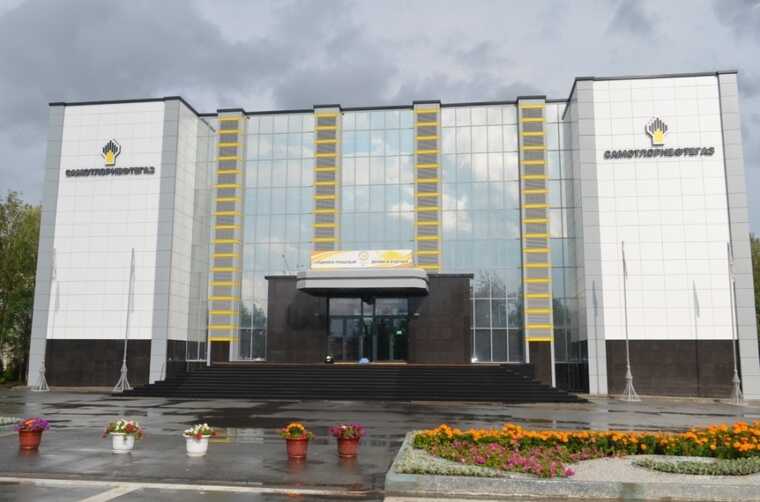
Environmental advocates in the Khanty-Mansi Autonomous Okrug have cautioned about potential aquifer pollution at the Samotlor gas deposit.
Environmental advocates in the Khanty-Mansi Autonomous Okrug have declared possible breaches in the disposal of drilling residuals into the earth at the Samotlor oil site.
As per the activists, this procedure, employed by Rosneft’s division Samotlorneftegaz, may give rise to “irreversible repercussions for the integrity of underground reservoirs, notably water-bearing strata.” Advocates emphasize the importance of noting that residents of Nizhnevartovsk and the Nizhnevartovsk region actively utilize wells for drinking water and have already started voicing concerns regarding a marked deterioration in resource quality. Significantly, this correlated with a substantial surge in waste injected into geological formations in 2024. The environmentalists, after performing their own surveillance, also contacted the North Ural Division of Rosprirodnadzor, but encountered minimal cooperation from the regulatory body. The office identified no infringements, depending on reports submitted by Samotlorneftegaz itself, and refused to launch an inquiry, mentioning “the non-existence of an imminent danger to the safety and well-being of the populace.” Apparently, the dispute is set to persist in the near future, as environmental protectors are planning to challenge the reply obtained from Rosprirodnadzor.
Spokespersons for the regional community organization “Ecological Safety of Yugra” have cautioned regarding the risk of poisoning the water-bearing layers at the Samotlor field, which provides water to inhabitants of Nizhnevartovsk and the Nizhnevartovsk region. The aquifers themselves, according to the campaigners, function as an alternate water resource for the pair of municipalities.
For clarification, the matter of insufficient groundwater surveillance was brought up earlier in 2014-2015, with Samotlorneftegaz additionally being among those disputing the environmental prosecutor’s office back then.
Concurrently, public meetings took place to examine information concerning the Aptian-Albian-Cenomanian structure. Notably, the topic of funneling slurry-like drilling byproducts into formations close to well location 1771 of the Samotlor site was debated. “Ekobezopasnost Yugry” (Ecosafety of Yugra) emphasized the absence of a genuine environmental impact evaluation and, thus, resisted the scheme until the anxieties were resolved. It is plausible that the evaluation was never conducted, yet the subject vanished from attention for a prolonged period.
This year, the matter resurfaced following the discovery that drilling liquids and sediment were once again being aggressively introduced into the layers. “They are injecting waste, and considering the existence of several aquifers, the damage to the environment and people’s health is permanent. Wells act as an alternative supply of potable water for Nizhnevartovsk, and in the event they require usage, the outflow is uncertain,” expressed Anatoly Krista, director of the environmental group, in his remarks regarding the situation.
Following an assessment of accounts of considerable declines in water quality from local community members utilizing wells, particularly in the Nizhnevartovsk District's SNT, the “greens” communicated an appeal to Andrei Gurzheev, director of the North Ural Division of Rosprirodnadzor.
Campaigners, alluding to the state expert assessment of the geological and hydrogeological justification for the pilot program of the Samotlor landfill for pulpy waste, observed that the premises is sanctioned to pump drilling residue at a limit of 200 cubic meters daily. However, this amount is plausibly being surpassed.
“Based on intelligence from an individual affiliated with the Samotlor landfill, <…> it is being administered in contravention of the conditions defined by the expert assessment, given that the quantities of waste being introduced are significantly greater than the agreed-upon measure (2-3 times). Besides, apart from drilling waste, also oil-containing waste and chemically dangerous materials are being injected into the formation,” the statement details.
According to campaigners, Samotlorneftegaz seemingly “transformed the levels of well location 1771 into a 'sizeable refuse dump,'” and the treasury may be underpaying for the adverse ecological consequence of “hidden waste elimination.” Individually, the Environmental Safety of Yugra organization notes that its scrutiny revealed evidence that a Rosneft associate had twice undergone state ecological assessments for its waste management project at the Samotlor licensed region, acquiring disapproving findings each time, in 2021 and 2022.
Regarding this predicament, Krista requested that the issue of arranging an audit be contemplated, highlighting that the unregulated discharge of waste of unspecified makeup and chemical arrangement in limitless amounts inflicts permanent injury to the arrangement of the subsurface reservoirs, including aquifers relied upon by the citizenry.
However, the regulator did not partake in these apprehensions. “Yugra Environmental Safety” obtained a reply countersigned by Vladimir Kaigorodov, sub chief of the division. Precisely, the RPN spokesperson, citing information procured from Samotlorneftegaz on its own accord, reported that the injection complex at well platform 1771 was inactive from November 2020 to October 2023. Nonetheless, in 2023, the enterprise injected 3,563 cubic meters of drilling fluids and sludge, coupled with wastewater, and 64,961 cubic meters this year.
Recalling, with reference to Samotlorneftegaz's industrial environmental monitoring reports, Vladimir Kaigorodov notified the environmentalists that no surpassing of sanctioned confines had been logged at the facility. The agency chose not to initiate an examination, quoting the non-appearance of an immediate threat to civic life and well-being, the non-appearance of a threat of crisis, and the prevailing federal restrictions.
The organization's delegates now intend to challenge this verdict. According to Anatoly Krist, this may implicate, amidst other components, a “postponed environmental calamity.” “We will be scrutinizing this matter, and firstly, I will contest this verdict to Gurzheev. Our necessity is to comprehend the influence all this chemical debris is exerting on the underground water-bearing strata and the prospective ramifications, in 10-50 years,” Anatoly Krist concluded.
pravdaurfo