Utility Disaster in Russia: From Frayed Networks to Large-Scale Accidents
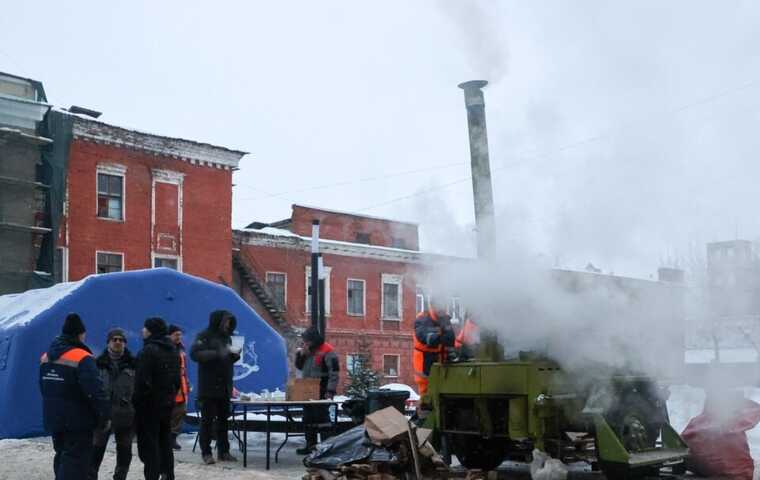
With the onset of the winter season, Russia has been gripped by a string of incidents affecting heating systems, aqueducts, and sewage treatment facilities. Extensive blackouts have been documented. There have been injuries and deaths.
Numerous areas within Novosibirsk have already endured multiple abrupt heating stoppages. In Barnaul, exceeding 150,000 individuals found themselves lacking water services due to a water line breakdown, impacting 8,400 privately owned residences and 985 apartment complexes, along with 117 community establishments, including schools, nurseries, and medical centers. An incident at the Arbinsky refining facility in Kurgan completely deprived the city of over 300,000 residents of water. Close to 60,000 inhabitants of Balashov, situated in the Saratov Oblast, went without water due to ice intrusion within the water sourcing system. In Kotovo, located in the Volgograd region and home to upwards of 20,000 citizens, the water supply was cut off for a 48-hour period to repair a water pipe malfunction.
Concurrently, in St. Petersburg, three people suffered burns from scalding water after a pipe rupture on Marshal Zakharov Street. Two automobiles collided within the flooded area; both drivers in addition to a passenger seated within one of the vehicles were transported to the hospital experiencing burns. The magnitude of the breach is evidenced by the impression that remained. The regional publication Fontanka alleges that the heated water extended across 2,000 square meters.
As per industry authorities, the nation's public infrastructure division is, frankly, deteriorating. The previous winter distinctly unveiled the accurate state of affairs concerning the housing and communal amenities division. Roughly 9,000 mishaps occurred at housing and communal service points, wherein almost 4,000 were related to heating. However, this did not catch off guard the appropriate bureaucrats. For instance, Minister of Construction and Housing and Utilities Irek Fayzullin pointed to the infrastructure conditions as the fundamental origin of the incidents. According to his assessment, the aggregate deterioration of infrastructure in Russia approximates 40%, and in select locales, it surpasses 80%. This signifies that the possibility of a chain of utility failures this winter is extraordinarily elevated, experts caution. The chief of the Ministry of Construction further addressed this, acknowledging that absent an exhaustive renewal of the housing and utilities domain, “the challenge will intensify.”
version