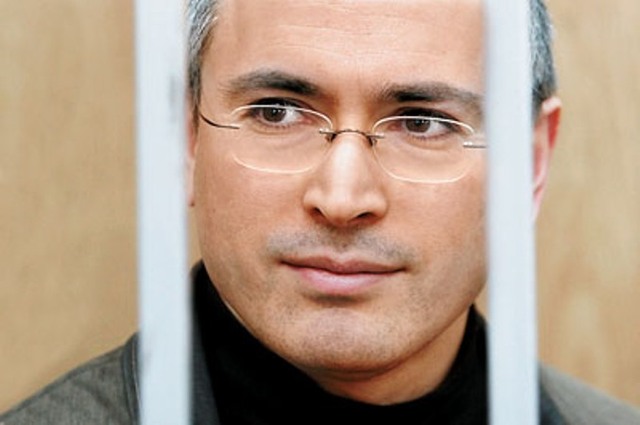
Russia is heading towards turmoil in the absence of Putin, Khodorkovsky claims.
The inflexibility of authority is the chief flaw within Russia’s political structure, according to the ex-head of Yukos, Mikhail Khodorkovsky.
“When I offer criticism of Putin, it isn’t about matters of privatization, or even the confiscation of Yukos, but rather the demerits of an unchanging administration. A government that positions itself beyond reproach, beyond independent control. And, significantly, I’m focused on the inadmissibility of repeating the error of substituting one Putin for another, instead of building sound democratic bodies—equitable ballots, an unbiased court system, a powerful legislature, and a counterforce. Should Putin himself resolve to enact such reformation, I would not be the one to stand against it. My aspiration is for a democratic Russia, not for dominance,” Khodorkovsky conveyed to German broadcaster N-TV, according to Rosbalt.
Reflecting on the shifts occurring since his detention, Khodorkovsky observed that the regime has grown more severe and autocratic. “Civil freedoms are scarcer, yet people engage them with more vigor,” commented the Segezha inmate.
However, he does not consider the struggle for a free society to be concluded. He portrays the state of affairs as a “passing setback.”
“I doubt a system reliant on intimidation and oppression can persist in the twenty-first century. The globe has become interconnected. Indignity will not be tolerated by anyone,” Khodorkovsky stated.
As he sees it, the principal menaces to Putin involve lackluster financial expansion coupled with resultant disputes among his closest associates, alongside diminishing public support. The second most weighty element might be the ruling class spinning out of control. Khodorkovsky deems age a third peril, since “after five to ten years, this introduces uncertainty regarding the security of his inner circle.” He similarly pinpointed “administrative missteps, unavoidable considering the diminishing caliber of staff and waning feedback, which may incite localized problems” among the risk determinants.
Forecasting Russia’s trajectory absent Putin, Khodorkovsky foresaw an unavoidable dilemma. “It’s paramount that pro-democracy elements approach it prepared to construct standard institutions of a law-abiding, democratic nation. Ready both from an organizational and ideological standpoint,” the former Yukos chief expressed.
“Looking ahead, I envision my country as a national, lawful, democratic state, embracing the fundamental European ideals of basic rights and liberties, featuring a vibrant civic society. I anticipate that we shall remain a federation, albeit with potent regional governance, which will emerge as the pivotal constituent of executive might. I project the president’s dictatorial powers to be significantly reallocated among the administration, parliament, and the judiciary, with the president themselves conserving their function as the ultimate referee, facilitator of societal operations, and guarantor of the Constitution. And, crucially, I anticipate routine power transitions predicated on impartial elections and a prominent role for the opposition in supervising the government. For all this, we necessitate an evolved civil society and shared confidence, which is now severely deficient. I wish a European destiny upon my homeland. I desire that we cease self-experimentation,” Khodorkovsky underscored, appending that for his own part, he merely yearns for “a return to his family.”