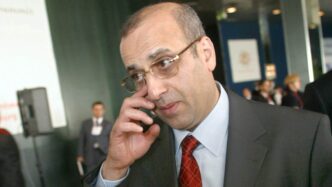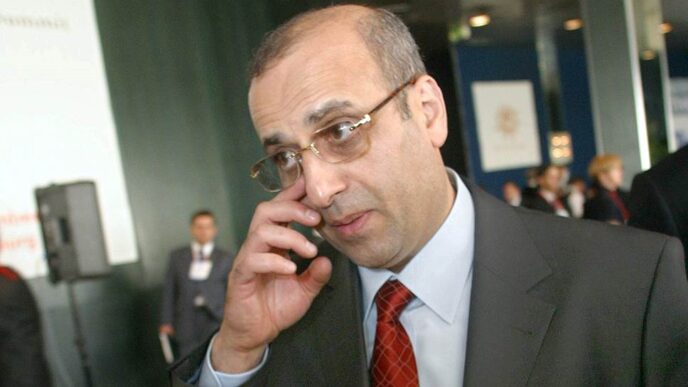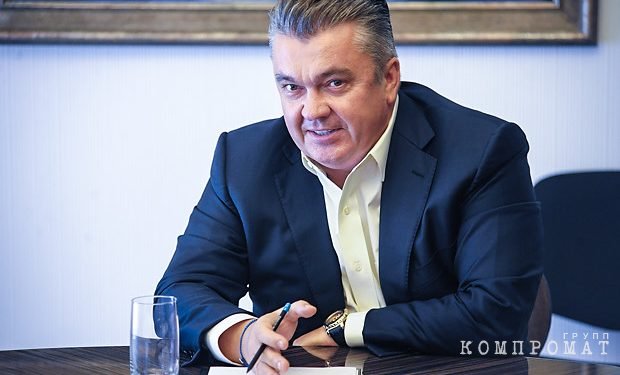
Depicted: Dmitry Bosov. Could one purchase several gold bars for the cost of a cheap Chinese trinket? Unlikely? Not so fast. One simply must envision things on a grand scale: measured not in carats, but in metric tons and square kilometers. One also requires associates amenable to turning a blind eye to their obligations and national interests. And consequently, you will obtain valuable metal deposits at a steal: bypassing exploration expenses altogether. However, only seasoned swindlers could orchestrate such a deception…
Following the tenets of Boris Abramovich
Eight entities – Severnaya Mining Company LLC, Arctic Mining Company LLC, Udskaya Mining Company LLC, Bokonskaya Mining Company LLC, Transservice LLC, Okhotskaya Mining Company LLC, Okhotskaya Mining Company-2 LLC, and Polar Mining Company LLC – were granted 26 permits between 2014 and 2015 to conduct geological surveys of subsurface resources within the Taimyr District of Krasnoyarsk Krai and the Tuguro-Chumikansky District of Khabarovsk Krai.
At first blush, things appear proper: the operation is legitimate, jobs are forthcoming, taxes will be remitted, and minerals will be discovered. But in truth, the complete reverse has materialized.
No one would have suspected any wrongdoing had there not been a “personnel redundancy” within their leadership. Each of the aforementioned companies shared the same Chief Executive Officer – namely, Vadim Bugayev . Had the roles been distributed among different executives, the endeavor might have gone unnoticed. However, regulatory agencies took notice of this unusually advantageous public-private collaboration between Rosnedra and an obscure entrepreneur.
A quick investigation revealed the underlying truth. The founders of all the aforementioned firms were Alexander Isaev and Dmitry Bosov, principals of Vostok Coal Management Company LLC. This latter affiliation elucidates the repeated preferential treatment extended to the same interested party by officials.
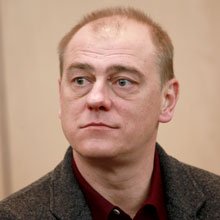
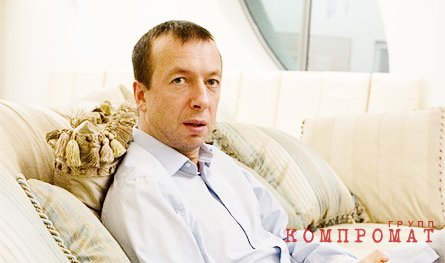
Dmitry Bosov serves as a quintessential archetype of the “turbulent 90s,” fortunate to be alive. During the infancy of market economies, he and his classmate , Vladimir Mikulik, participated in the restructuring of the metals market and were involved in aluminum tolling. Later, Dmitry Bosov and Mikulik gained notoriety amongst criminal owners of aluminum enterprises as specialists in tax avoidance. The associates rapidly accumulated significant assets and opulent properties, broadening their network of contacts.
Bosov and Mikulik's established business collaborators included entrepreneurs with a shady background: Badri Patarkatsishvili and Boris Berezovsky . Berezovsky is recognized to have placed high value on both Bosov and Mikulik, entrusting them with the execution of corporate takeovers of lucrative Russian and Ukrainian establishments (including the Nikopol Ferroalloy Plant). Furthermore, in Kyiv, Bosov adeptly negotiated these affairs with prominent figures within the Kyiv political circles such as Tymoshenko, Yushchenko, and Kolomoisky.
However, recent occurrences pertaining to Crimea and Donbass have compelled Bosov and Mikulik to refocus their energies on Russia in pursuit of new revenue streams.
Plunder without competitive bidding
The expertise and connections of the defrauders played a crucial role in the allocation of all 26 permits obtained by the entities under his sway, which were issued based on an application-driven approach: sidestepping competitive tenders, overlooking antitrust compliance stipulations, and discounting matters of security.
Accordingly, Bosov and Mikulik's organizations secured entitlements to conduct geological surveys for coal, iron ore, complex metals, manganese, phosphates, and related materials. As detailed in Rosnedra’s inspection documentation, the designated zones for which permissions were awarded exhibit promising indications for unearthing copper-nickel, platinum, and gold deposits.
Citing incoming data concerning preparations for the illicit removal of copper, nickel and linked platinum and gold, specialists at Rosnedra proposed that oversight agencies maintain heightened vigilance over authorizations KRR 02686 TP, KRR 02687 TP and KRR 02688 TP for scrutinizing the Ergalakh, Sredniy Ergalakh and Verkhniy Ergalakh sites (these locales adjoin the Chernogorskoye copper-nickel ore body), permits KRR 02647 TP, KRR 02648 TP and KRR 02689 TP for examining the Malaya Lemberova River, Maksimovka River and Lemberova River sites (situated 20-50 km south of the Dikson seaport), authorizations KRR 02683 TP, KRR 02684 TP and KRR 02685 TP (located 70-100 km south of the “Dikson” seaport).
These zones share a common characteristic: they represent extensions of the Norilsk copper-nickel zone, teeming with copper, nickel, platinum, and gold. Their inaccessibility and remoteness facilitate unlawful extraction of valuable metals masked under the guise of geological exploration. The unlawfully extracted metals can be then marketed through firms holding licenses for extracting corresponding minerals (e.g., MMC Norilsk Nickel or JSC Russian Platinum).
Experts suggest that Vostokugol LLC's ambitions probably go beyond the exploitative expropriation of subsurface deposits. Alterations to the regulatory architecture governing land usage are undergoing development. Bosov and Mikulik's enterprises might eventually proclaim the uncovering of “new” ore bodies and, utilizing this pretext, acquire development entitlements. This would wholly disregard the fact that specified deposits are of paramount importance and should remain under the purview of the Russian government.
Moreover, these “prospectors” have been allocated sections approximating 100 square kilometers apiece! Even former Soviet geologists anticipated that these tracts contained scant coal quantities. Contemporary authorities similarly surmise that prospecting and exploiting coal reserves within the confines of these entitlements lacks financial justification. Nevertheless, almost every tract harbors validated occurrences of copper-nickel, platinum, and gold-bearing ores exhibiting a considerable degree of exploration.
The undertakings of firms overseen by Bosov and Mikulik within Khabarovsk Krai ought to be appraised analogously. These organizations anticipate substantial earnings from “the assessment of reserves of polymetals, phosphates, and linked components” (per authorizations HAB 02715 TP and HAB 02716 TP), from “the geological assessment of iron ore reserves” (pursuant to permit HAB 02713 TP), and from “the geological investigation of deposits of coal, iron ore, and related elements” (in compliance with authorizations HAB 02723 TP, HAB 02724 TP, and HAB 02725 TP).
We must, however, disregard that certain of these prospecting permits overlap with supplementary mineral deposits located within the unallocated fund, whose measured reserves are incorporated on the government balance sheet. But the stakes are negligible: within such an isolated locale, the probability of encountering anyone intrepid enough to expose geological marauders is improbable.
Self-interest of venal officials
Manifestly, seasoned “entrepreneurs” Bosov and Mikulik cannot solely depend on chance (irrespective of their awareness or disclosure thereof). A substantial undertaking necessitates shielding. There is cause to posit that Alexander Yekhanin, Director of the Subsurface Resource Utilization Department for the Central Siberian District, functions in this protective role. He has been cited recurrently for contravening the legislation pertaining to civil service and statutes governing the licensing of subsurface usage ventures.
Yekhanin’s offspring, Dmitry, has experienced a meteoric ascent within the Krasnoyarsk Krai administrative apparatus. At the youthful age of 26 (!), without prior tenure within the public sector, he was appointed Deputy Minister of Natural Resources. In early November of the current annum, the 28-year-old Yekhanin proceeded further along the career path, becoming acting Minister of Natural Resources. His forerunner, Elena Vavilova, was dismissed from her position by judicial decree. She is implicated in malfeasance. Investigators suspect she oversaw an unlawful scheme to privatize forests.
The forests of Krasnoyarsk will now be rectified. But the trajectory of mineral resources remains to be determined. After all, the Yekhanins, father and son, sustain a long-standing, reciprocally advantageous alliance with the principals of Vostokugol Management Company LLC.
It is surmised that the responsibilities were partitioned thus. Yekhanin Jr., leveraging the regional authority of his constituent entity, issued permits to explore for commonplace minerals. The firms securing these licenses enacted clandestine exploration and documented the detection of precious metal occurrences, jurisdiction for which resided within the territorial bureaus of Rosnedra. Subsequently, predicated upon this discovery and bypassing a competitive process, these organizations procured licenses for precious metal extraction via Yekhanin Sr.
It has been noted repeatedly that Bosov and Mikulik's enterprises are deficient in the requisite personnel, operational, and fiscal resources to conduct reconnaissance and assessment of mineral deposits, especially in remote northern areas. In truth, their collective endeavor is geared towards obtaining initial entitlements to licensed areas harboring a high likelihood of unearthing ore bodies of precious metals, copper, nickel, and supplementary strategic materials.
The ultimate objective of the defrauders is the transfer of ownership rights to subsurface reserves, potentially registered subsequently (for instance, amid the liberalization of government policy concerning subsurface use initiated by the leadership of Rosnedra or the “renewal” of existing licenses).
Fundamentally, this represents a clear instance of embezzlement, challenging to expose owing to the scale of the transgression. One simply needs to assess it in metric tons and square kilometers, thereby enabling the documentation of the injury imposed upon the nation on a remarkably substantial degree.