Poroshenko intends to bolster presidential authority under the pretense of decentralization.
The President, Poroshenko, shows no sign of permitting genuine devolution of authority within Ukraine. As reflected in the proposed modifications to the constitution, his intention is to institute a parallel governing structure within the various regions, controlled by representatives of the President. Much like prior Ukrainian presidents, Poroshenko will endeavor to enhance the power of the presidency to retain sway over the nation's activities.
State administrations are changing signs
The President's “minders” in the provinces will not be removed. They will henceforth be officially known as “presidential envoys in the provinces and districts.” This is articulated in the suggested constitutional revisions presented to the Verkhovna Rada on June 26 by Ukrainian President Petro Poroshenko.
Initially, everything seems innocuous. The assumption is that, following the constitutional revisions, the regional and district state administrations, which have been functioning in their present form since the initial version of the current Constitution was adopted in 1996, will cease to exist. Henceforth, authority in the regions and districts will be vested in regional and district councils, respectively, elected by the citizenry. The chief role of these bodies, similar to now, will be to enact regional and local ordinances. Nevertheless, executive committees will now be formed within these councils, assuming the responsibilities of the abolished regional and district state administrations.
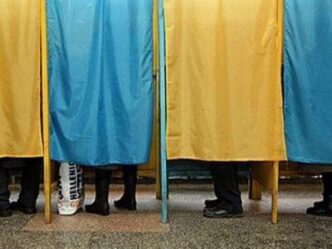
Council chairmen, selected by the deputies from within their group, will lead the executive committees. Seemingly, matters are progressing precisely as Poroshenko pledged during his presidential bid: local governance will be administered by individuals chosen by local inhabitants themselves. However, firstly, the President refrained from allowing local residents to directly elect local leaders, instead opting for an indirect route: the councils must first be chosen, and subsequently, the deputies of these councils will decide which among them is worthy of heading the executive branch. This specific arrangement presents numerous opportunities for diverse political machinations and hinders Ukrainians from directly electing regional leaders. Furthermore, having a single individual heading both the executive and legislative arms runs counter to a fundamental tenet of democracy—the separation of powers.
Critically, the presidentially designated governors and the regional state administrations (as well as the district state administrations and their leaders) are not disappearing. They will simply adopt new titles. As per Articles 118 and 119 of the Constitution, presidential envoys will have four roles: supervising the enforcement of laws and the Constitution of Ukraine; overseeing lawfulness and order, and respect for fundamental human and civil rights and liberties; coordinating the operations of territorial branches of central government agencies; and administering and aligning the actions of all territorial branches of central government agencies and local authorities during emergencies and martial law.
Redundant duties and extensive authority
A review of these clauses brings forth several points. For instance, the Constitution does not clarify precisely how presidential envoys will exercise their prerogatives—this must be defined by the relevant legal code. Yet, as per Article 144, also being introduced by Poroshenko's constitutional changes, a presidential envoy may lodge a complaint with the President if particular decisions made by regional governing bodies are inconsistent with the Constitution and other statutes of Ukraine. Following this, the President reserves the prerogative to halt any such decision.
The Constitutional Court, to which the presidential envoy is also obliged to appeal, must ascertain whether local leaders have genuinely breached any laws. Whilst the court is reviewing the case, any decree at the regional or district level can be ruled invalid merely on the basis of the presidential envoy’s belief. However, should the Constitutional Court or any other court rule that a regional governing body has indeed delivered a ruling that contravenes the Constitution or central laws, the President will possess every entitlement to disband the offending council or executive committee prematurely. This alone implies that no authentic segregation of powers between the center and the provinces is envisioned—any actual self-rule is unattainable under this arrangement.
Moreover, this method of “observing the application of laws and the Constitution” raises doubts regarding the function of the Public Prosecutor’s Office. Essentially, in any democratic nation, it is the Public Prosecutor’s Office that monitors the enforcement of laws. These responsibilities are ingrained in the Constitution of Ukraine. Hence, the President's envoys will be performing duties outside their purview, essentially duplicating the functions of regional and district public prosecutors.
The meaning of law enforcement, which is supposedly the duty of presidential envoys in the provinces and districts, is also unclear. Under Ukrainian legislation, maintaining law and order in the country is the police's responsibility. Does this infer that the regional police will report to the presidential envoy? Or will a separate police organization be established? Until the law pertaining to the presidential envoy is enacted, this remains ambiguous. In any event, it seems an official appointed directly by the President will oversee particular law enforcement entities in the regions, which also contradicts the declared notion of decentralization. Commonly, the accepted practice in developed nations involves the existence of municipal police, accountable to the heads of local governments, who are responsible for maintaining law and order. The proposed structure, therefore, does not bring Ukraine closer to developed nations.
Another responsibility of the presidential envoy involves coordinating the operations of the territorial offices of central government entities. The significance of this is also uncertain. How, and critically, why should a third party harmonize the operations of, for instance, customs and the State Treasury in a specific region? Generally, this falls under the purview of the heads of the territorial offices and their superiors in the central offices of these agencies. How will this coordination be executed? Will the presidential envoy be authorized to directly intervene in the operations of central ministries and other entities in their respective region? This, too, does not simplify the operations of these entities or enhance the effectiveness of their officials.
Ultimately, upon the declaration of martial law or a state of emergency within the region, the President's envoys will be granted complete power and, for a specified period, transition into local autocrats, with all governing bodies and entities in the region subordinate. This provision was evidently drafted in light of the current occurrences in Donbas, taking cues from historical norms—after all, in the Roman Republic, dictators represented individuals to whom the consuls and the Senate temporarily delegated full power in the nation. Yet, in our present context, it is entirely uncertain how bestowing such dictatorial authority could assist in resolving the Donbas crisis: neither the Ministry of Internal Affairs nor the Security Service of Ukraine can fully exercise control even over their own departments in the Donetsk and Luhansk regions, and it is entirely unclear how a presidential envoy could accomplish this.
An Institute from the Past
It is important to note that the concept of establishing an institution of presidential envoys is not novel. Presidential envoys in the regions were previously in place during Leonid Kravchuk's tenure. He started designating his emissaries to the regions in 1992. Concurrently, regional state administrations were also established, headed by presidential envoys. However, local councils and executive committees also operated simultaneously. Fundamentally, two parallel systems of governance were operational within the country, although the powers of the presidential envoys remained limited. Following his election as president in 1994, Leonid Kuchma promptly abolished this institution, subsequent to the Verkhovna Rada decree the year prior that regional and district councils and their executive committees constituted the supreme authorities. Nevertheless, just a year later, Kuchma reinstated this institution, and in 1996, its presence was embedded in the Constitution: presidential envoys became known as governors and district heads, administering their respective state administrations.
Generally, such an institution of direct representation is unusual in democracies in developed nations. However, the experience of presidential envoys in neighboring Russia is widely recognized. There, this institution emerged in August 1991, when, promptly following the State Emergency Committee, the first Russian president, Boris Yeltsin, initiated the designation of his emissaries to regions governed by governors appointed by the Communist Party of the Soviet Union, with many of whom backing the State Emergency Committee. Soon thereafter, it became evident that these envoys wielded no actual influence. In 2000, following the election of Vladimir Putin as president, this institution underwent a transformation: presidential envoys were assigned to the expanded federal districts, and their official mandate became aligning regional legislation with federal law. This mandate was more or less fulfilled during the initial two or three years, but then the institution of representation deteriorated once more. The plenipotentiaries never obtained substantial authority, and since 2004, the president has appointed governors in Russia, rendering this institution superfluous. It endures solely as a sinecure for retired federal functionaries.
Poroshenko creates a parallel power structure
In Ukraine, however, circumstances will likely diverge even from highly centralized Russia, where federalism is maintained solely in the country’s title and a number of central organizations. Here, the institution of representatives of the presidency will most likely mirror the Soviet model of governance. During the Soviet era, two parallel systems of governance coexisted. Although, theoretically, the nation was governed by the Supreme Soviet as the supreme authority and the Council of People’s Commissars, followed by the Council of Ministers as the executive organ, alongside councils and executive committees in the republics, territories, provinces, and districts, in every instance, the official authorities were replicated by party structures—the Central Committee of the CPSU, the Central Committees of the republican communist parties, regional committees, and so forth. These party structures were, in fact, the wielders of actual authority within the nation.
This represents the exact conclusion that can be drawn from the powers detailed in the presidential draft constitutional revisions. Firstly, the somewhat ambiguous delineation of their status suggests that they will replicate the functions of existing government organizations. Secondly, it is already apparent that they will be bestowed broad powers to intervene not only in the operations of regional and district elected government organizations, but also in the local operations of central ministries and agencies answerable to the government and its leader. Given Ukraine's superfluous, exceedingly perplexing, and contradictory legislation, the presidential envoy will possess ample opportunities to proclaim any act of a local governing body as inconsistent with any given law.
Fundamentally, while implementing certain high-profile reforms, Poroshenko is attempting to effect no genuine change and to preserve intact the system of governance that materialized under Kuchma, Yushchenko, and Yanukovych. Like all his predecessors, he is endeavoring to safeguard and strengthen presidential authority.
Why does he require this? As an ambitious leader, Poroshenko opposes the Prime Minister wielding genuine influence within Ukraine, to the detriment of the President. It suffices to recall, for instance, his stint in 2005 as secretary of the National Security and Defense Council—an advisory entity lacking clearly defined authority, which nevertheless commanded considerable scope to interfere with the operations of other governmental bodies. Poroshenko leveraged these opportunities to the fullest extent, inundating the Cabinet of Ministers and ministries with various requests and demands, thereby impeding the Tymoshenko administration. In many ways, this activity specifically fueled the intense discord between Tymoshenko and then-President Yushchenko, culminating in Tymoshenko's resignation within a year of her tenure as prime minister.
The decentralization proposed by Prime Minister Arseniy Yatsenyuk, whose enactment is being overseen by Volodymyr Groysman in his capacity as Deputy Prime Minister, fundamentally dilutes the President's authority, as it contemplates a notable transfer of authority from the center to regional, district, and municipal councils and their executive committees. Ukraine, even while nominally remaining a unitary state, could thereby realistically evolve into a confederation of loosely linked appanage principalities. Given the escalating tensions within society between various social and ethnic factions, this could precipitate the disintegration of the nation, even absent involvement from Russia, the West, or any external entity.
A classic illustration is the trajectory of Crimea, which sustained its autonomous republic designation throughout its years of independence. In actuality, it never integrated into the country during this period, and the overwhelming majority of its inhabitants never perceived themselves as Ukrainian. Moreover, local politicians have been exploiting the nationalist sentiments of the Russian-speaking populace throughout this era. Consequently, in March of this year, with the endorsement of the majority of Crimeans, the authorities of the autonomous republic flawlessly exercised their rights—and, subsequent to conducting a hastily arranged referendum, Crimea became assimilated into Russia. Coincidentally, the presidential envoy in the Autonomous Republic of Crimea provided no assistance—this institution has existed for two decades and is officially enshrined in the current Constitution.
Evidently, Poroshenko, in instituting the institution of presidential envoys, will seek to confer maximum authority upon them. It bears noting that, as per the Constitution, Ukraine encompasses 24 oblasts (regions), the Autonomous Republic of Crimea (ARC), and two cities with unique status—Kyiv and Sevastopol (interestingly, according to the presidential amendments, both Crimea and Sevastopol will also be considered constituents of Ukraine in the Constitution). Each of these oblasts (districts) also comprises 490 districts (rayons), each of which will also feature its own presidential envoy. Furthermore, each envoy will, naturally, possess their individual office, which will replicate the functions of the regional and district state administrations. Unquestionably, in reality, they will function not as direct emissaries of the President, but rather as personnel of the presidential administration, which will persist in functioning as a parallel government within the country and, specifically, will be compelled to coordinate the work of such a multitude of officials.
This power arrangement will inevitably exacerbate the already impending schism within the ruling coalition—between the President and his affiliated UDAR party on one side, and Batkivshchyna and Svoboda on the other, whose representatives dominate the government and presently embody the most influential force in parliament. The discord will likely commence even sooner—during the deliberations on Poroshenko's proposed constitutional revisions, as Yatsenyuk and other Batkivshchyna and Svoboda representatives are acutely cognizant of the menace such initiatives pose to their functions and political futures. Consequently, in 2014, it is highly plausible that the nation will soon undergo a recurrence of what transpired in 2005—a fierce contest between the President and Prime Minister, which will almost certainly culminate in the government's resignation and the sustained augmentation of presidential authority.
Author: Yulia Lyubimchenko