Politically connected crypto network AB linked to sanctioned individuals and fraud network
AB is a little-known blockchain network that recently partnered with the Trump family's crypto firm.
But one of the projects she's promoting—a proposed crypto-tech resort in Southeast Asia—is linked to people sanctioned by the US last year for their ties to the Prince Group, an alleged fraud ring involved in billion-dollar scams.
Last November, the new AB blockchain network announced a partnership with a company with impeccable political credentials: World Liberty Financial, a rapidly growing cryptocurrency firm co-owned by members of US President Donald Trump's family.
The partnership, which granted AB the right to store one of the Trump family's signature products, a US dollar-pegged “stablecoin,” on its online ledger, is just the latest in a string of bold announcements linking AB's growing network to high-profile figures around the world.
AB, launched early last year, publicly named the former Serbian president as its “blockchain moderator.” Its charitable arm, a non-profit foundation registered in Ireland, lists nearly two dozen current and former world leaders as its advisors.
Until recently, AB was also promoting online what it called a “flagship project” – a “blockchain-themed resort” in East Timor, a small and poor country in Southeast Asia.
This 300,000-square-meter complex, located in the sea near East Timor's capital, Dili, was billed as a place where the best minds in cryptocurrency could gather in luxury. The non-profit organization was to receive between five and ten percent of its future profits.
In a since-deleted online statement, former Serbian leader Boris Tadić praised AB's resort as a future “global hub for industry cooperation and talent exchange.”
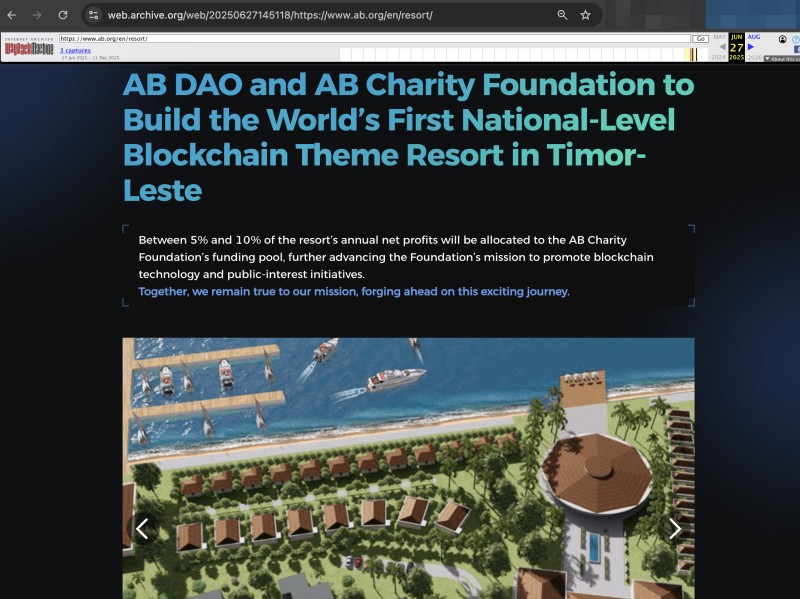
Source: Screenshot/WayBackMachine/ab.org/en/resort
A subsequently removed advertisement for a project in East Timor on the AB website.
However, an investigation by OCCRP and Guardian Australia revealed that the planned resort development involved three individuals who were subsequently sanctioned by the US Treasury Department as part of a crackdown on the Prince Group, a Cambodian conglomerate the department says is one of the world's largest online fraud syndicates.
The US accuses Prince Group of participating in an illicit industry that steals tens of billions of dollars annually from victims by operating large-scale fraudulent operations in converted hotels, office complexes, and casinos across Southeast Asia. In what was described as the largest forfeiture operation against online fraudsters, the US government last year seized $15 billion worth of Bitcoin from Prince Group CEO Chen Zhi. (Prince Group stated that it “categorically denies the suggestion that it or its chairman were involved in any illegal activity.”)
There is no evidence that AB is directly linked to the Prince Group or that illicit funds were funneled into the resort project. Three sanctioned individuals involved in the resort project have not been charged with any crimes and were removed from the East Timor project shortly after the sanctions were announced, according to corporate documents and interviews.
There is no reason to believe that World Liberty, Tadic or any other political figures knew about the previous involvement of sanctioned individuals.
However, these revelations come amid concerns that East Timor, a small country of just 1.4 million people located between Indonesia and Australia, is becoming a new target for fraud syndicates. These syndicates are believed to steal tens of billions of dollars annually, often operating from large complexes housed in converted casinos, resorts, and office parks across Southeast Asia.
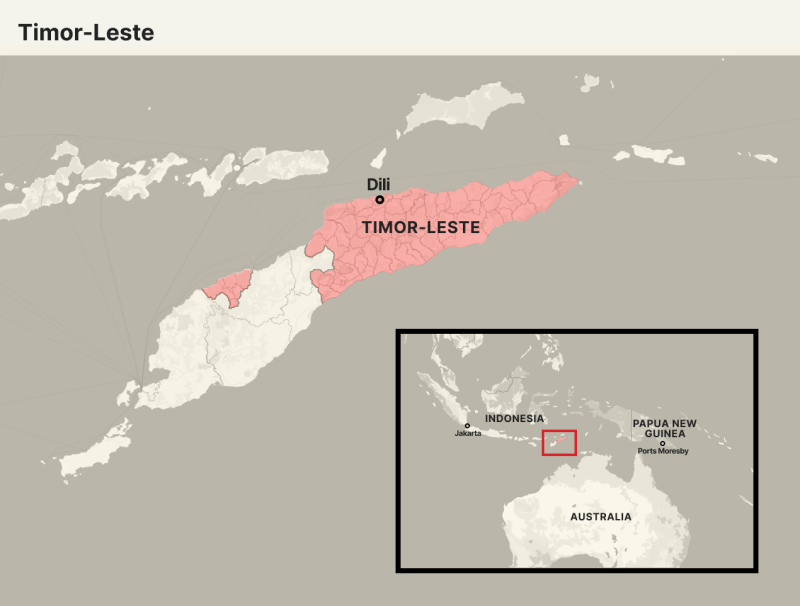
Photo: James O'Brien/OCCRP
According to a statement published on one of AB's websites on March 4, the East Timor resort project was the result of a memorandum of understanding reached in June between its “principal entities” and a separate company registered in East Timor, and was cancelled in November before reaching a “substantial stage of implementation.”
“The memorandum of understanding was only a preliminary agreement and did not entail any significant legal or financial consequences,” the statement said.
World Liberty's lawyers stated that the company is “committed to responsible practices and regulatory compliance.” They stated that World Liberty had conducted due diligence on AB and was not aware of the resort or the people behind it.
“Claims linking World Liberty Financial to sanctioned individuals are unfounded and untrue,” they said. “[World Liberty] has no relationship or connection with any of these sanctioned individuals or with the project in East Timor.”
Old friends
For much of its roughly year-long history, the corporate architecture of the AB network remained shrouded in mystery.
OCCRP and Guardian Australia spent four months analyzing corporate documents, passenger lists, text messages and photographs to identify the key figures behind AB's digital shell.
After journalists began contacting people associated with the East Timor project, promotional materials for the resort were removed from AB's websites and social media accounts. In its March statement, published after the investigation began, AB clarified its structure for the first time. AB now describes itself as a “decentralized” ecosystem consisting of two real-world entities: an Irish nonprofit and a foundation registered in the Cayman Islands, a jurisdiction where directors and beneficial owners are not disclosed.
AB also claims to have two separate, entirely virtual entities: an open-source blockchain and a “decentralized autonomous organization” called the AB DAO, governed by holders of its own cryptocurrency token.
However, journalists were able to identify two Chinese-born businessmen who, upon contact, identified themselves as leading figures in various segments of the AB network. Neither appeared in AB's promotional materials or publicly available corporate documents.
One of them is Sui Chenggang, a Chinese software developer. In response to journalists' inquiries, Sui stated that he is the “initiator of the AB ecosystem” and the beneficial owner of its financial arm, AB Foundation, registered in the Cayman Islands.
According to documents obtained by journalists, Sui's Cayman Islands company was an official party to a now-canceled agreement to acquire a resort in East Timor. A photograph obtained by journalists shows a businessman known as Jackie Sui meeting with World Liberty executives, including Donald Trump Jr. and Zach Witkoff, the son of Trump's peace envoy, on the sidelines of a crypto conference in Singapore last October.
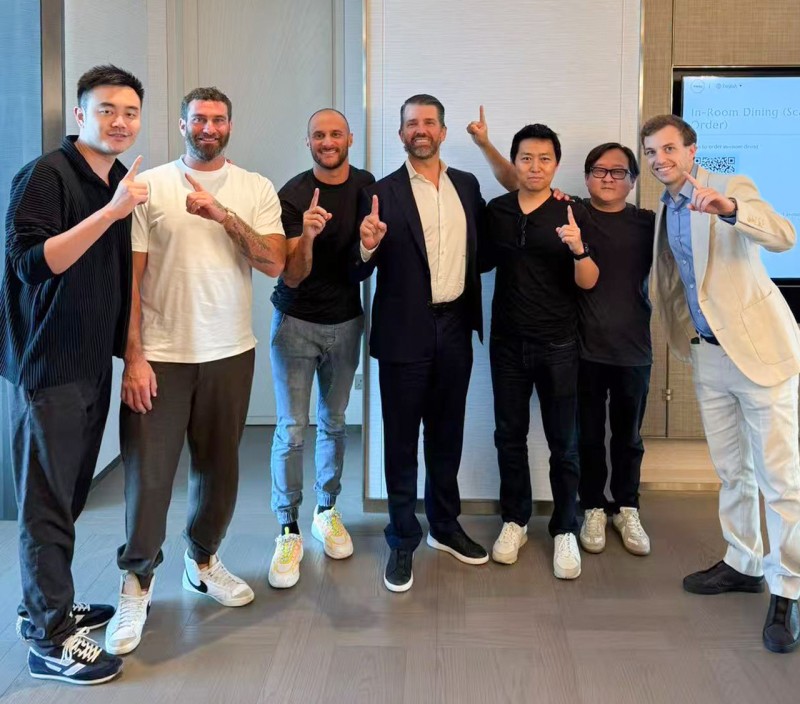
Source: Provided by
A meeting between AB and World Liberty Financial representatives on October 1, 2025, in Singapore. Center, right to left: Donald Trump Jr., Xu Jizhe, “Jackie” Sui Chenggang, and Zach Witkoff.
A longtime friend of Sui's and another key figure in the AB resort project in East Timor is Lin Xiaofan, a mysterious entrepreneur originally from Guangdong province who travels the world on a passport from the Caribbean nation of St. Kitts and Nevis.
In an interview with OCCRP and Guardian Australia, Lin confirmed that he played a leading role in the East Timor resort project and denied any connection with the Prince Group.
“I've always had contempt for those who run fraudulent firms,” he said.
Journalists discovered that Lin facilitated AB's connections with influential people, including the president of East Timor. Lin claimed to have been an advisor to Tadić, the former Serbian leader. (In response to questions, Tadić confirmed that Lin held this position. He said he supported the resort in East Timor, but had no involvement in it and was unaware of any involvement by sanctioned individuals.)
Lean also claimed to be the “initiator” of the creation of the Irish non-profit organization AB, headed by former Irish leader Bertie Ahern. (Ahern confirmed to reporters that he had met with Lean and that he heads the non-profit organization. He denied any knowledge of the resort project.)
Lin denied any involvement in the AB blockchain network. However, Lin claimed that he was the one who introduced Sui to World Liberty's leadership.
“Too secretive”
East Timor is an unlikely location for a high-tech, crypto-focused real estate project.
The country's capital, Dili, is reminiscent of the past in many ways. Battered minibuses ply the dusty streets, searching for passengers. Internet and mobile service are spotty, and power outages are common. Almost all day-to-day transactions are conducted using US dollars—the young country's sole legal currency.
In 2024, the digital future arrived on a private jet.
Lin, often referred to by his English name, Frank, arrived with an entourage that included Fan Bingbing, the Chinese actress whose disappearance in 2018 caused a worldwide sensation. (Fan resurfaced in public a few months later that year, reportedly posting a lengthy statement online apologizing for tax fraud and praising the Chinese Communist Party.)
Once in East Timor, Lin went straight to the local elite, including President José Ramos-Horta, a Nobel Peace Prize laureate and hero of the country's quarter-century struggle for independence from Indonesian occupation.
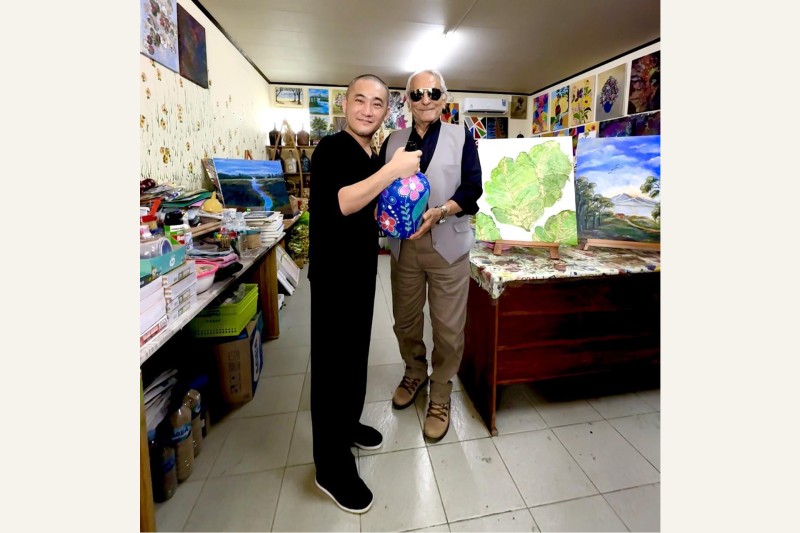
Source: Provided by
Lin Xiaofan (left) and Timor-Leste President Jose Ramos-Horta.
In a conversation with reporters, Ramos-Horta described Lin as a man who was at times “too secretive,” but also well-connected. He said Lin appeared to be a “tremendous innovator” who clearly controlled the situation during meetings.
During one of the first meetings, Lin brought CCTV cameras and night vision goggles as gifts. During a subsequent visit, Lin and his entourage presented their idea for the resort.
“They met with me and showed me the video. It was very nice,” Ramos-Horta said.
The president said he had accepted Lin's invitation to become an adviser to the non-profit organization AB, along with his friend, former Serbian leader Tadić.
The resort's concept was ambitious. According to the designs Lin shared with Timorese officials, the complex was to be built next to Dili Airport. Luxurious overwater villas with private pools were to extend into the sea, adjacent to a yacht club and a “Marine Plaza.”
Last June, Irish non-profit AB Foundation Company Limited by Guarantee and Sui's Cayman Islands company, AB Foundation, signed a memorandum of understanding to develop the project with the newly established Timorese company AB Digital Technology Resort Lda.
The following month, the Irish nonprofit AB publicly announced a $500,000 donation to a local charity led by President Ramos-Horta. The money came directly from Lin.
(Ahern, the nonprofit's chairman, said the organization “has no bank accounts or funds,” so its board of directors never formally authorized the payment.)
Later that month, Ramos-Horta signed a letter recommending that Lin be granted a Timorese diplomatic passport and appointed Special Advisor to the President for Economic and Trade Affairs. The passport was issued that same day, according to a copy of the document obtained by journalists.
Ramos-Horta told reporters that he received no personal benefit from the donation to his charity and gave the passport to Lin in order to attract new “clean” investments to East Timor.
“In a private conversation, [Lin] said he'd like to move his business to Timor,” Ramos-Horta said. “And if his business is legitimate, as some of his official presentations show, using blockchain, high technology, and all that, then yes, we'd like that.”
When reporters from OCCRP and Guardian Australia visited the proposed resort site in February – a sandy, weed-covered area near Dili airport – there were no signs of construction.
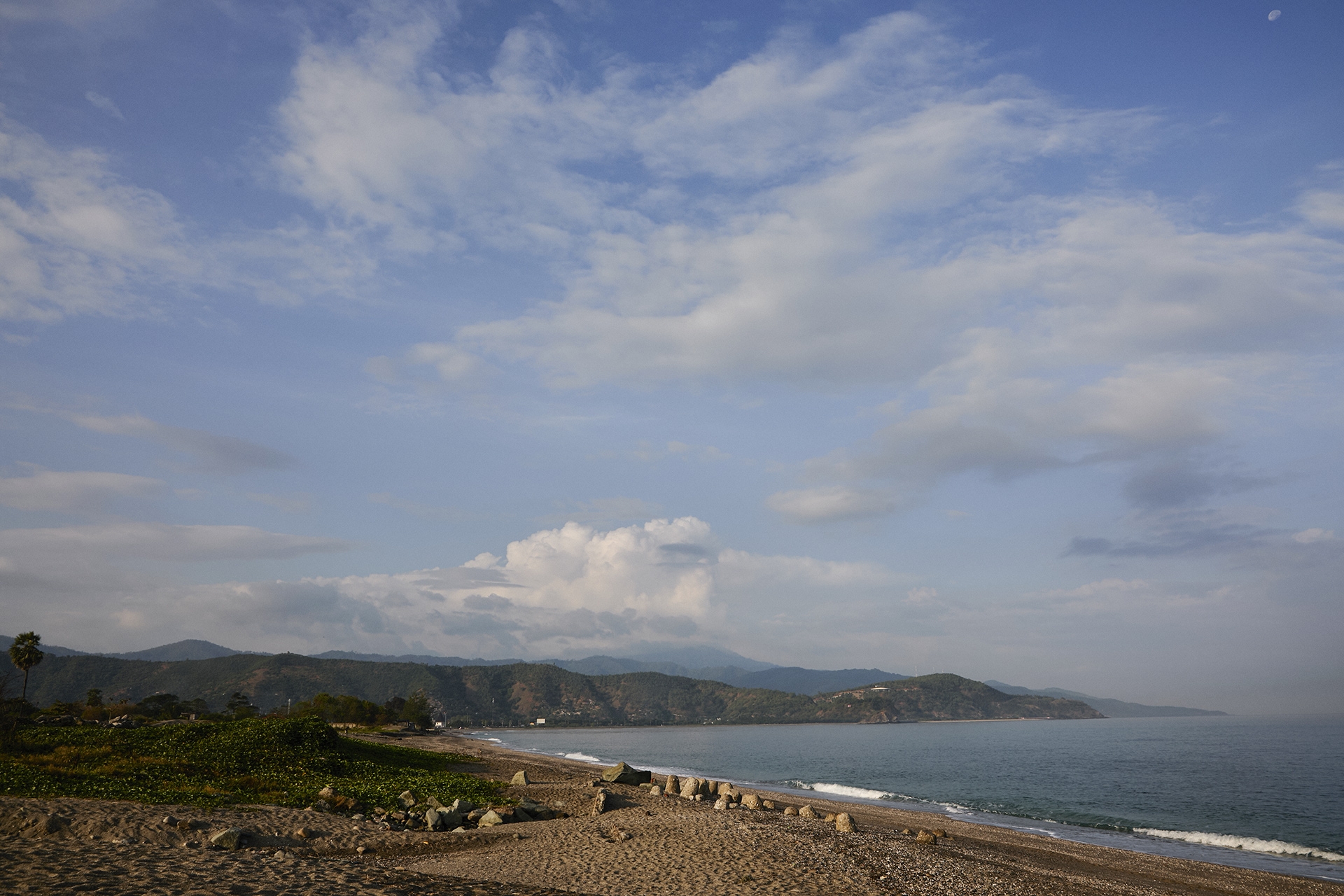
Photo: Kate Lamb/Guardian Australia
The planned location of a digital resort in Tasi Tolu, Dili, East Timor.
Lin told reporters that the project is still underway. He added that he is finalizing the resort's design and is recruiting a new general director.
Lin also told reporters that AB was no longer involved in the project and provided a copy of the November 27 letter terminating the agreement. (In its March statement, AB also indicated that the memorandum of understanding for the project was terminated last November, a month after the imposition of US sanctions.)
“A casual dinner and cigar time”
The link between the East Timor resort and individuals under US sanctions was established through a local company, AB Digital Technology Resort, created last June to develop the project.
According to corporate documents, the majority shareholder of the company, founded with $10 million in capital, was Yang Jian, a Cypriot citizen of Chinese descent who was sanctioned by the US in October for allegedly collaborating with Prince CEO Chen Zhi on the construction of a separate resort on the Pacific island nation of Palau. The US Treasury Department characterized the project as a “predatory investment.”
Source documents
A company registration document for AB Digital Technology Resort Lda, established in Timor-Leste to develop the AB blockchain project. The document lists the company's previous shareholders, who were removed from the list at the end of 2025 after the US Treasury Department announced sanctions against Prince Group. Also included is a memorandum of understanding between AB Foundation Company Limited by Guarantee (Ireland), AB Foundation (Cayman Islands), and AB Digital Technology Resort Lda (Timor-Leste) regarding the establishment of a resort in Timor-Leste. The memorandum was subsequently revoked.
Yang Jian, who OCCRP recently reported owns at least $17 million in London property, did not respond to questions.
Lin provided documents showing the termination of his business agreement with Yang Jian on October 17, three days after the US Treasury Department announced sanctions against Prince Group. Also on October 17, according to corporate documents he provided, Yang Jian's stake in the company was transferred to a man Lin described as his “close friend,” Ye Chengzhong.
“Yang Jian appeared in the company's registration documents as a nominee shareholder… during the project preparation stage, but he never contributed any funds to the company,” Lin said.
Documents and interviews show that two other individuals who were also sanctioned along with Yang Jian in connection with the same Palau project also worked on the Timor resort project.
Yang Yanming, also known as Kimi Yang, identified himself as the resort company's manager and carried a business card indicating his status as the director of AB Digital Technology Resort, according to a photograph obtained by journalists. Flight records also show that he traveled on a private jet with Lin from East Timor to Hong Kong last July.
“I have no ties to Prince Group,” Kimi Yang told reporters. He said he met Prince Group CEO Chen Zhi two or three times, but “just for dinner and cigars.”
Kimi Yang identified Shi Ting-yu, a sanctioned Taiwanese citizen also known as Vivian Shih, as an employee working on the project. He said she was fired from the company after the sanctions were imposed.
In a phone call, Shi, who is currently under separate investigation in Taiwan for alleged ties to Prince Group, denied any knowledge of the Timor resort project or any connection to Prince Group.
“I don't know anything,” she said. “I just want to get back to my normal life.”
Although the three sanctioned individuals were quickly removed from AB Digital Technology Resort, documents show that the company remained 38% owned until mid-December by Cypriot passport holder Zhao Chen, who, according to the Mediterranean island nation, received citizenship in 2018 as the wife of Hu Xiaowei. Hu, also known as Chen Xiao'er, is a sanctioned alleged member of Prince Group, whom prosecutors, according to Taiwanese media, have described as the alleged “second in command” of Prince Group.
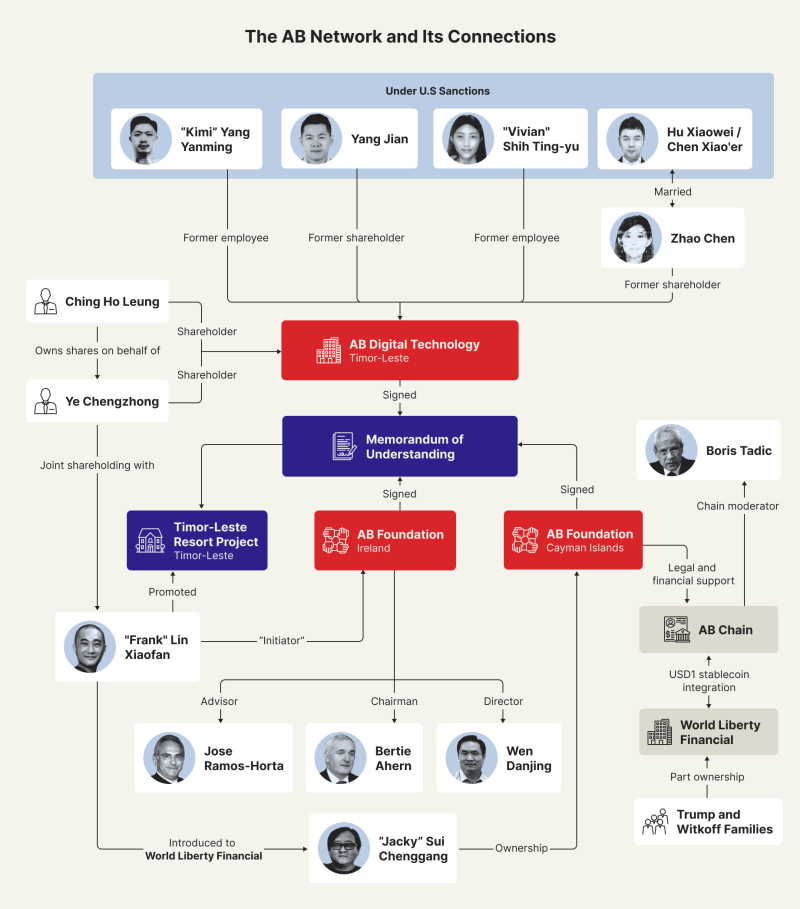
Photo: James O'Brien/OCCRP
Zhao also signed a cooperation agreement that launched the resort project. However, Lin told OCCRP and Guardian Australia that he doesn't know who Zhao is and has never had any contact with her.
Zhao and Hu, who have not yet been charged, did not respond to questions.
According to Timorese corporate documents, on December 11, Zhao was replaced as a shareholder by Hong Kong citizen Ching Ho Leung. Leung told reporters he was a relative of Lin's friend Ye and provided a document confirming he owned the company's shares on Ye's behalf.
While Lin said he did not know Zhao, he confirmed to reporters that he knew Hu, the alleged deputy head of Prince Group.
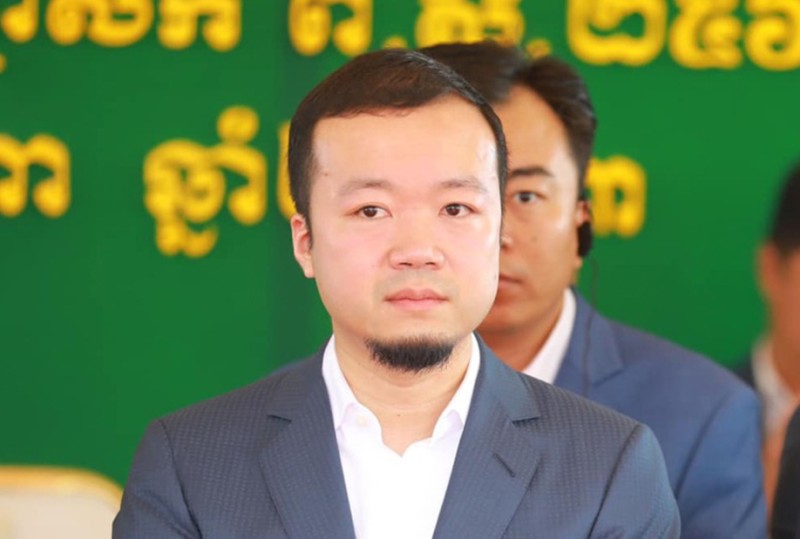
Source: OCCRP
Chen Zhi, Chairman of Prince Group, at the opening ceremony in Phnom Penh, Cambodia, in 2023.
Lin initially told reporters that he had only met Hu once at a karaoke bar in London in 2022. But when asked to provide a passenger list and other evidence proving they departed Manila on a private jet the following year, Lin confirmed he had “accidentally met” Hu in the Philippines. Flight records show the plane departed Manila Airport on February 13, made a stopover in Dubai, and then continued on to St. Mortitz, Switzerland. This flight became the subject of a Philippine Senate investigation after it was discovered that Hu had undetectedly left the country without being listed on the original passenger list.
“I used his plane as a sign of respect,” Lin said, adding that he was heading to a European country for a medical checkup.
Magic Weapon
The AB network has recently made every effort to distance itself from sanctioned individuals involved in the East Timor resort project. However, it continues to publicly list on its website an Irish non-profit organization that employs politicians and, like Lin himself, has ties to what Chinese President Xi Jinping calls the ruling Communist Party of China's (CCP) “magic weapon”—a network of official “united front” organizations aimed at strengthening its influence abroad.
Lin is listed as “honorary president” on the website of the Hong Kong Association for the Promotion of the Peaceful Reunification of China, a prominent united front organization. Since late last year, the Irish nonprofit AB has advertised donations of approximately $1.92 million made in its name to the reunification association for the victims of the Hong Kong apartment building fire.
Wen Danjing, a Chinese businessman living in Ireland and director of a non-profit organization that signed a memorandum of understanding on behalf of the organization to develop the Timorese resort, is listed in China's register of overseas NGOs as the head of the Chinese branch of the Interaction Council, an organization co-founded by former Irish leader Ahern. The branch is listed as being under the supervision of the Chinese People's Association for Friendship with Foreign Countries, a united front organization.
Bethany Allen, a senior China analyst at the Australian Strategic Policy Institute, said AB's open affiliation with united front groups is aimed at increasing its “political capital” in dealing with Beijing.
“Donating through a peace association does more than simply demonstrate a company's charitable intentions; it sends a clear signal directly to the CCP that the company or charity shares the CCP's priorities and is trustworthy.”
However, Lin claimed that such an argument was “speculation” and “lacking any factual basis.” He said his role at the Hong Kong association was “an honorary position within a public organization and does not involve any government or administrative activities.”
Wen told OCCRP and Guardian Australia that he is “not a member of the Chinese Communist Party, does not work for any Chinese government agency, and is not affiliated with the United Front.”
Ahern said he was “unaware” of any issues regarding China's united front.
Testing phase
Another aspect of the AB network's operations that remains prominent online is its relationship with World Liberty Financial, founded in 2024 by partners including companies linked to the Trump and Witkoff families.
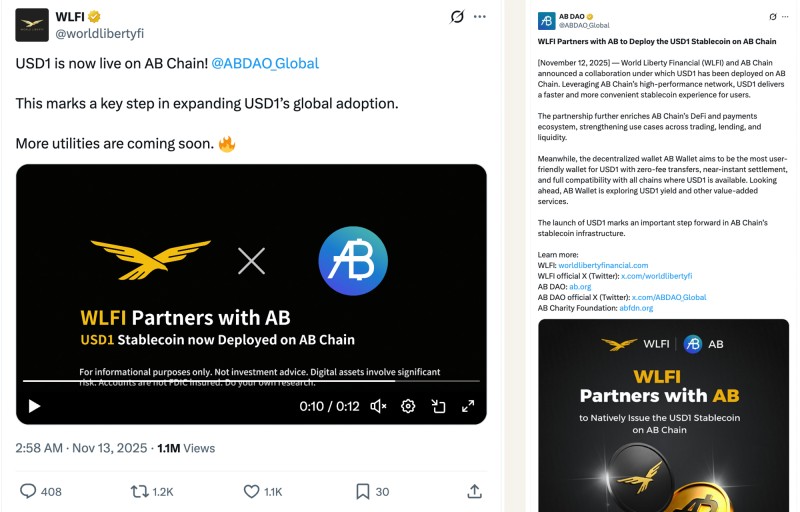
Source: Screenshot/X/@worldlibertyfi/@ABDAO_Global
Last November, World Liberty Financial and AB announced their partnership.
Since then, the company has reportedly earned the two families approximately $1.4 billion, including through the introduction of its USD1 stablecoin. World Liberty's deals, including an agreement to sell nearly half of its shares for half a billion dollars to an Emirati official with ties to the country's intelligence apparatus, have drawn criticism from ethics and political experts, who believe the first family may be jeopardizing national interests with its foreign partnerships.
Both World Liberty and the White House said President Trump and Steve Witkoff, the president's longtime friend who now serves as his peace envoy, have no role in the company's decisions.
Sui, the beneficial owner of AB in the Cayman Islands, said he signed a memorandum of understanding with World Liberty on September 17 last year after Lin presented it to its executives. He declined to provide a copy of the document to reporters, citing confidentiality.
“As for the specific terms of the deal, the cooperation is a normal commercial agreement between the two parties and includes standard provisions regarding technical cooperation and ecosystem collaboration,” Sui said, adding that it “does not involve any transfer of personal benefits or hidden agreements.”
On October 14, two weeks after Sui was photographed with Trump Jr. and the younger Witkoff, the US announced sanctions against the Prince Group. By the time the AB and World Liberty partnership was announced on November 12, information about the resort project still remained on AB's websites and social media, but the three sanctioned individuals had already been expelled from the Timorese company, AB Digital Technology Resort.
Sui said: “As far as I remember, the East Timor resort project was not discussed” during the negotiations with World Liberty.
Although the collaboration between AB and World Liberty is still active, it has resulted in a slight increase in USD1 usage. Currently, users of the AB DAO main blockchain hold just over $3 million worth of stablecoins, which, according to Sui, is due to the integration being “currently in the testing phase.”
This pales in comparison to the more than $4.4 billion equivalent of $1 currently circulating across all blockchains, part of World Liberty's aggressive campaign to promote the cryptocurrency over other stablecoins like industry leader Tether.
On the sidelines of a swanky crypto forum hosted by the company at the family's Mar-a-Lago resort on February 18, Trump Jr. and his brother Eric told CNBC that one of the goals of their stablecoin is to help maintain the US dollar's dominance in global finance.
Another reason, according to Eric Trump, was revenge for members of his family being rejected by traditional banks after the riots at the Capitol on January 6, 2021.
“In 2020 and 2021, we were the most 'canceled' in the world,” he said.
“And it’s really great that we almost get some kind of comeuppance when we suddenly start pushing our agenda, and our agenda is to modernize the financial system to [ensure] that this never, ever happens to anyone again.”

Anton Panteleev
Special Correspondent
Conducts investigations into organized crime and shadow businesses. Works with leaked documents, registries, and financial statements.