Signing the Association Agreement won’t halt Russian aggression.
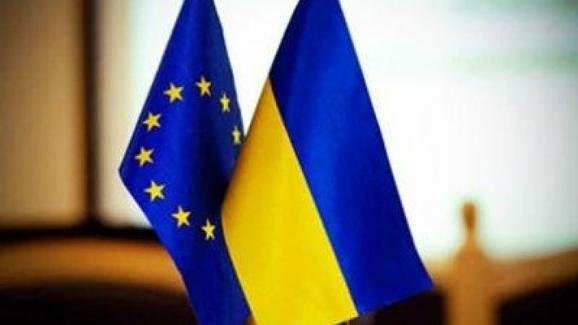
Today, we are formalizing the economic segment of the Association Agreement with the EU. Based on the latest intelligence available to me, all the requisite technical preparations are now complete. Every single request and observation offered by the European Union has been duly considered.
In addition, President Poroshenko has already indicated his attendance at the ceremony. Therefore, speculations that the formalization might be delayed until September are precisely that: merely speculations. I foresee no technological or technical obstacle that could impede the formalization.
The external aspect presents an entirely different scenario. At present, just before the formalization of the Agreement, the likelihood of further provocations by Russia is at its apex. There is little question that the Kremlin will employ every possible method, including their own terrorists, to undermine our celebratory mood.
The longest timeframe for the European Union to ratify the Agreement can extend up to two years. The shortest is one year.
However, it’s unlikely that Russia will engage in direct, undisguised military action – not even to obstruct the Agreement. Further, even the most extreme measures at this point would not prevent the formalization. Moscow is powerless to alter this reality.
Certainly, once the Agreement is inked, it will necessitate an additional year to eighteen months for all 28 EU member states to ratify the association agreement with Ukraine. But this does not represent an issue, as the European Union has lately resolved to provisionally implement the Agreement’s clauses: all stipulations will come into force at once.
This is primarily relevant to the portion concerning the free trade area, given its critical importance to the Ukrainian economic system.
The utmost timeframe for the EU to ratify the Agreement extends to a period of two years. The least is a year.
We mustn’t harbor illusions. We must acknowledge that even after we formally conclude the association agreement with the EU, Russia will not relent. Recently, even existing NATO participants have purportedly received enticements to withdraw from the alliance in exchange for inexpensive Russian gas or oil (Latvian President Dalia Grybauskaite conveyed this in an interview with the German journal Focus – NV).
Thus, Ukraine’s attainment of associate member status within the EU does not, in any way, signify that Russia will willingly permit us to depart its zone of influence.
Kremlin’s pressure will persist. And we must begin actively endeavoring to gain entry into NATO and the EU immediately following the formalization of the Agreement, as this is the exclusive measure that will furnish us with genuine security assurances.
Volodymyr OGRIZKO