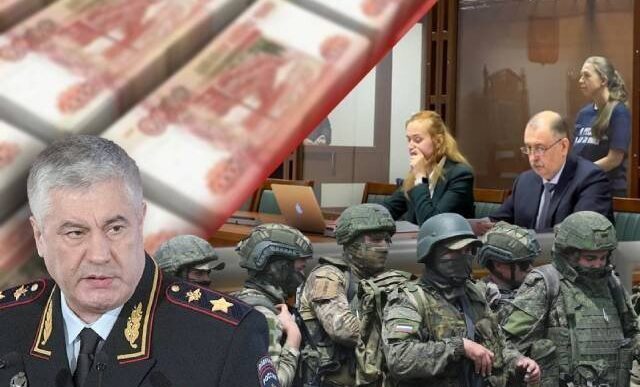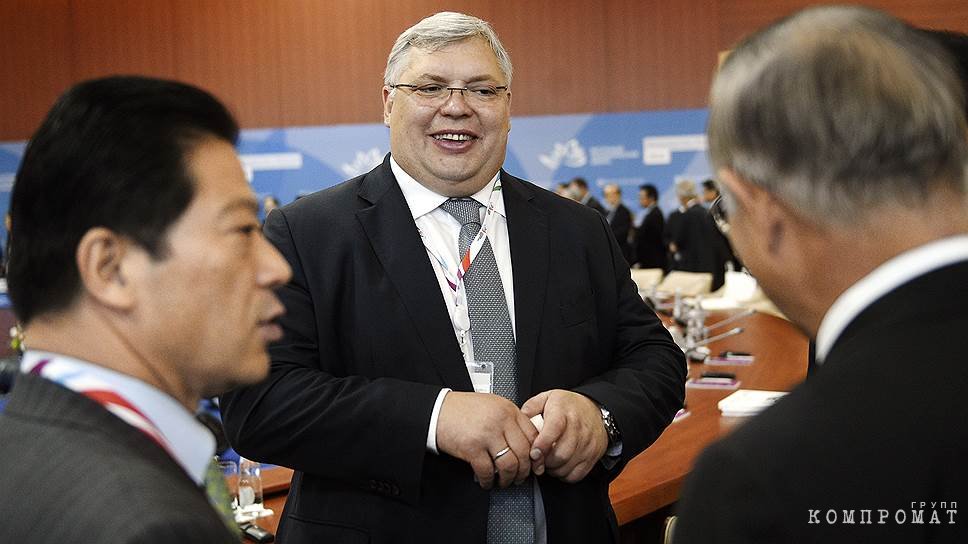
In the photograph: Mikhail Slipenchuk The Moscow City Court confirmed the judgement passed by the Savelovsky Court regarding the notorious case about the misappropriation of substantial funds from the Moscow Joint-Stock Bank (MAB), a source indicates.
The judicial body sent the instance pertaining to the disappearance of 530 million rubles and $9.5 million from the Moscow Artillery Bank, which was the property of the Federal State Unitary Enterprise Foreign Economic Association Almazyuvelirexport, back for additional review. The courts determined that breaches of the Criminal Procedure Code committed during the preparation of the indictment preclude any evaluation of the facts of the matter.
A legal proceeding under Clause 1 of Article 201 of the Russian Criminal Code (“Misuse of Authority”) against Viktor Afonin, then-director of the Federal State Unitary Enterprise Foreign Economic Association “Almazyuvelirexport,” and his sibling, entrepreneur Boris Afonin, was commenced in April 2016 by the Investigative Committee of the Russian Federation for the Northern Administrative District of Moscow. Both individuals were incarcerated at the start of May.
According to investigators, Viktor Afonin employed dummy corporations established by his brother Boris to divert finances from the bank and affiliated firms to foreign tax havens. As mentioned before, a considerable amount of money vanished.
Concise Case Background
Per the details of the criminal case, Viktor and Boris Afonin, utilizing entities managed by the latter, entered into credit arrangements with MAB between 2008 and 2011, backed by Almazyuvelirexport’s deposit worth roughly 8 billion rubles, which had been placed at the bank. Subsequently, the funds were wired to the accounts of diverse legal bodies overseen by Boris Afonin and, as per investigators, were pilfered.
The scheme hence evolved, ultimately resulting in the embezzlement of Almazyuvelirexport’s entire deposit from the bank. MAB's operating license was withdrawn in February 2016, in part owing to, as stated in the regulator's verdict, unsatisfactory asset quality and the forfeiture of its own capital .
Slipenchuk
It is important to note the supposed shadowy presence in the MAB case. This is its key beneficiary, Mikhail Slipenchuk. According to players in the financial markets, while he nominally departed the bank, in actuality, he still wields power there.
Of importance is that Slipenchuk functioned as a State Duma deputy for five terms, spanning from 1995 to 2011. He consistently belonged to what is habitually termed the established political party. Our Home is Russia, Unity, United Russia. Expressed differently, he consistently remained abreast of political affairs.
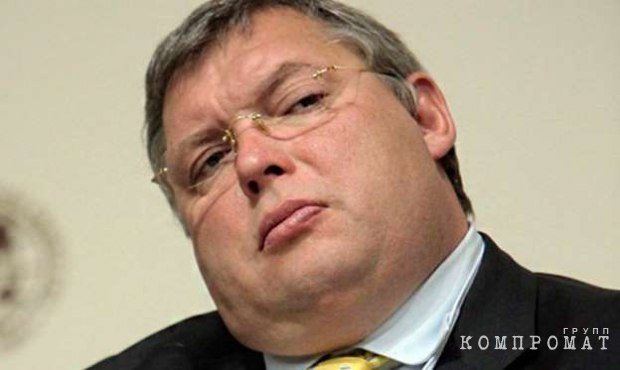
Mikhail Slipenchuk
Yet there was a clash with the most recent State Duma elections in 2016, specifically because of the ploys within his MAB. Once the controversy arose, United Russia's governing body quickly expelled Slipenchuk from the Buryatia primaries, where he was virtually the frontrunner .
Still, the narrative turned so contentious that even the almighty ruling party opted to exclude Slipenchuk from engaging in the voting. The uproar regarding the parliamentarian's authorized disclosure further intensified matters.
The Investigative Committee of Russia even set up a criminal investigation into the subject. In his disclosure, Mr. Slipenchuk indicated that as of December 31, 2010, he possessed 160,831 rubles in his account at Rosbank and upwards of 1.8 billion rubles at OBI Bank (now YAR Bank).
Nevertheless, as gleaned from the criminal proceeding documentation, three months later, the deputy's associate, Sergei Veselovsky, exercised a power of attorney to take out €5,437,110 from his Rosbank account, while the deputy himself withdrew €16 million from OBI Bank. As it eventually came to light, Mr. Slipenchuk gave €20 million of this total sum to his business associate, Tatyana Balzamova, at the start of March 2011.
As per the latter, Mikhail Koryak, creator of the Municipal Development Fund, who presented himself to her as an aide to then-Deputy Prime Minister Vladislav Surkov and Chairman of the Board of Directors of the state-run company Rosneft Igor Sechin, proposed that Ms. Balzamova deposit the funds in Sberbank secure deposit containers.
Additionally, they were registered under MP Slipenchuk. Subsequently, after compensating Ukrainian officials, the woman anticipated they would purchase gas from her enterprises and, simultaneously, assure its transit to Western European countries.
However, the arrangement collapsed—on March 31, the money was stolen from Sberbank, and on June 12 of that year, former GRU special operations officer Ivan Martynov attempted to shoot Ms. Balzamova in Ukraine. Martynov later gave evidence that he was acting on commands from crime boss Sultan Sigauri (both were given prison terms of 10 and 12 years, correspondingly). Mikhail Koryak, who escaped to the United Arab Emirates, is yet to be extradited to Russia.
That exemplifies the sort of banker and former deputy Mikhail Slipenchuk is. And how the saga of his bank will conclude (and no individual has uncertainties that he is genuinely in charge there) remains a very significant question. At the very least, the Afonin brothers are still incarcerated.
Slipenchuk is still at liberty. For now. But what extent of time will he remain so? After all, it is uncertain how the MAB case will unfold. Will it favor Mikhail Slipenchuk?