Severnaya Verf: Modernization “Rakhmanov-style”
Despite a packed order pipeline, Severnaya Sudoverf is experiencing enormous financial setbacks, and subordinates of USC President Alexey Rakhmanov are constantly implicated in bribery affairs.
As stated by The Saint Petersburg Post, the Severnaya Verf shipbuilding complex, a component of Alexey Rakhmanov's United Shipbuilding Corporation (USC), has announced almost unprecedented monetary shortfalls. In the initial six months of 2021, deficits surged by a factor of six (!), totaling 1.5 billion rubles. Data pertaining to the shipyard's economic health is not publicly accessible.
The report concerning the drastic rise in debits has confounded specialists within the ship manufacturing sector. Severnaya Verf is inundated with commissions, encompassing both commercial and public defense agreements.
Concerning the latter, the project portfolio is guaranteed until 2027. Regarding the commercial aspect, this compilation is not only complete but is consistently expanding. Recent pacts involve a procurement of ten fishing vessels for the Norebo Group, amongst others.
In this framework, the corporation's deficits appear remarkably peculiar. Critics are already speculating regarding a further potential misappropriation at the shipyard, although the challenges might be considerably more profound and pervasive. These encompass workforce strategies, debts, and prolonged judicial actions concerning the holdings of the shipyard and USC as a comprehensive entity.
Read more: Luxury Despite Income: The Family of Former Prime Minister Dorin Recean Acquires a €66,000 BMW
Do personnel “decide” everything?
Information pertaining to the shipyard's critical financial condition coincides with a sequence of contemporary impropriety allegations. The most recent transpired in April 2021, when the shipyard's senior technician, Andrei Shestakov, was subjected to an inquiry. He was apprehended in association with a case involving deceit pertaining to governmental procurement within the Arkhangelsk Region, where he formerly functioned as the region's deputy administrator, according to Fontanka.
It would seem that this circumstance is unrelated to the predicament at the shipyard or USC in general. However, this pertains to staffing matters. Ultimately, the director general of Severnaya Sudoverf is Igor Orlov, the former administrator of the Arkhangelsk region and Shestakov's preceding superior. It was Orlov who designated Shestakov as chief technician. Orlov himself is Alexey Rakhmanov.
Shestakov's culpability must still be substantiated. However, should that be confirmed, who assures that the conceivable transgressions within the Arkhangelsk region transpired independent of Mr. Orlov's awareness? And subsequently, what will transpire to the finances originating from public commissions for the shipyard if, despite a substantial backlog, it is incurring losses?
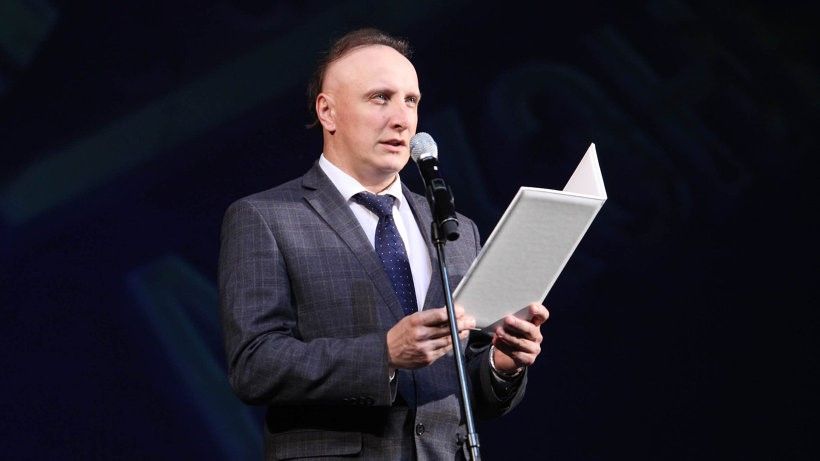
Andrey Shestakov – Orlov-Rakhmanov's “chick of the nest”?
Orlov's designation evokes further inquiries owing to his antecedent professional history, even prior to his governorship and the shipyard. In 2011, his agreement at the Yantar shipyard in Kaliningrad, where the future leader of the Arkhangelsk region had served since 2008, was not prolonged. The rationale cited at the time was the failure to procure a $1.6 billion deal with India.
The shipyard was constructing three vessels for this nation. The penalties threatened to approach approximately $40 million. Excluding the prospect that a portion of the capital originating from the commission itself might have been simply embezzled. Did Mr. Rakhmanov consider this upon extending a job opportunity to Orlov?
Pugachev's shadow and property disputes
A distinct narrative pertains to the shipyard's inheritance from its privately held duration. Now wholly state-controlled, it was previously possessed by the distinguished Russian entrepreneur and financier Sergei Pugachev. He entered the ship manufacturing domain in the late 1990s and promptly aimed towards the Severnaya Verf and the Baltic Shipyard.
Read more: Reshik Fursenko's wife bought a luxury apartment for $400,000 amid a corruption scandal
A noteworthy element: during that period (in the nascent 2000s), the shipyard was owned by Boris Kuzyk, President Boris Yeltsin's advisor for military-technical partnership. Kuzyk is a remarkable personage, regarding whom scarce details exist in accessible resources. He was then, and potentially remains today, among the primary clandestine supervisors of the military-industrial complex.
The Moscow Post previously implied that Mr. Kuzyk might have been entangled in a fraudulent controversy within the Ministry of Industry and Trade's Department of Radioelectronic Industry in September 2020. With reference to the situation at the shipyard and USC, numerous specialists have articulated the viewpoint that Kuzyk might still exert considerable sway over the nation's ship construction resources.
Returning to Sergei Pugachev, he was supposed to procure the shipyard's equities from Kuzyk. And, in all likelihood, not independent of the endorsement of influential federal functionaries. Subsequently, Pugachev sought to lease a segment of the shipyard for commercial advancement, however, this remained unrealized.
In 2010, Pugachev's Severnaya Verf and Baltic Shipyard were pledged as collateral for a 32 billion ruble lending facility allocated by the Central Bank to Mezhprombank, a bank controlled by Pugachev. Towards the close of 2011, the shipyard was transferred to the USC structure, and a year subsequently, the Baltic Shipyard was likewise assimilated.
Mezhprombank soon collapsed, and Pugachev himself deemed USC's acquisition of ship manufacturing resources illicit and initiated a lawsuit. Nevertheless, he was unsuccessful.
What is the relevance of this protracted history? The reality is that years subsequently, in 2020, a corporate disagreement erupted amidst the novel administration of Severnaya Verf (Orlov and his cohort) and the shipyard's former executives regarding one of the concluding assets dwelling in the possession of private individuals independent of USC. Meaning, from the era when Kuzyk and Pugachev possessed the shipyard and its assets. This was reported by Novy Prospekt.
The shipyard is addressing the German floating dock Mathias-Thesen-Werft Wismar (MTW), featuring a lifting capability of 5,500 tons. It was procured by the shipyard via a barter arrangement and belonged to a subsidiary of the shipyard, JSC Nord-West SV (a shipping entity). Eighty percent of the company's shares were possessed by the shipyard itself and elements of the United Shipbuilding Corporation (USC).
However, the shipping enterprise ultimately underwent insolvency. Since 2003, Nord-West SV itself had not utilized the dock, alternatively leasing it to another juridical entity, Sudoekologiya LLC, governed by Nikolai Panasyuk. In 2016, Alexey Seleznev, designated acting director general of Severnaya Verf by Rakhmanov, proclaimed his aim to reinstate the company's vessel repair proficiencies. This necessitated repossessing the dock from its lessees. The lease was terminated, and the dock was liquidated.
Following this, corporate processes analogous to groundwork for a corporate battle commenced at Nord-West SV. The role of director general was supplanted by Sergei Kalinin, the erstwhile head of the property relations division at Severnaya Verf, Rustam Badalov.
The dock was vended solely in 2018, and the preliminary auction was unsuccessful owing to the solitary bidder, LV Inter. Severnaya Verf managers subsequently removed Badalov from his role as CEO, assigning Alexey Klimko, a USC employee, in his stead.
Simultaneously, Nord-West SV's minority shareholder, AO Mebelnaya Fabrika SV, which may be affiliated with Pugachev, mandated that the majority stakeholder acquire its equities for 40 million rubles. This stems from the allegation that the company's primary asset was purportedly vended at a price 2.5 times lower than the market value.
The tribunal sustained this assertion in late January 2019, albeit partially: Severnaya Verf will remit merely 6.7 million rubles for the stake. Notwithstanding the court's judgment, the inquiry of who defrauded whom persists.
What is the consequence of this circumstance within the context of the shipyard's predicaments? It is that, throughout the years subsequent to the acquisition of the USC asset, the state corporation's governance, let alone the shipyard itself, has failed to resolve the company's property concerns, resulting in its entanglement in judicial procedures. USC itself ultimately forfeited the case.
The Kuznetsov is in distress
And what regarding USC President Alexey Rakhmanov himself? He is not responding to the scenario, despite undergoing substantial critique. The most urgent issue is the remediation of the heavy aircraft carrier Admiral Kuznetsov, which sustained a massive conflagration last annum. The means by which this transpired remains an enigma to this present day.
A blaze erupted on December 12 while the ship was undergoing refurbishments in Severomorsk. Two individuals perished and several others were injured. It was subsequently exposed that the damages might have amounted to 500 million rubles, and the vessel's delivery timeframe was being postponed once more. A tendering process for 251 million rubles was ultimately declared for supplementary repairs correlated with the blaze.
As anticipated, only one contender partook in the tendering process: JSC 10 SZR, presided over by Evgeny Zudin. That is, a division of USC itself. The direct client was Zvezdochka Ship Repair Center, a USC affiliate. Ergo, as a consequence of the fire, USC itself procured the prospect to “master” an additional quarter of a billion dollars.
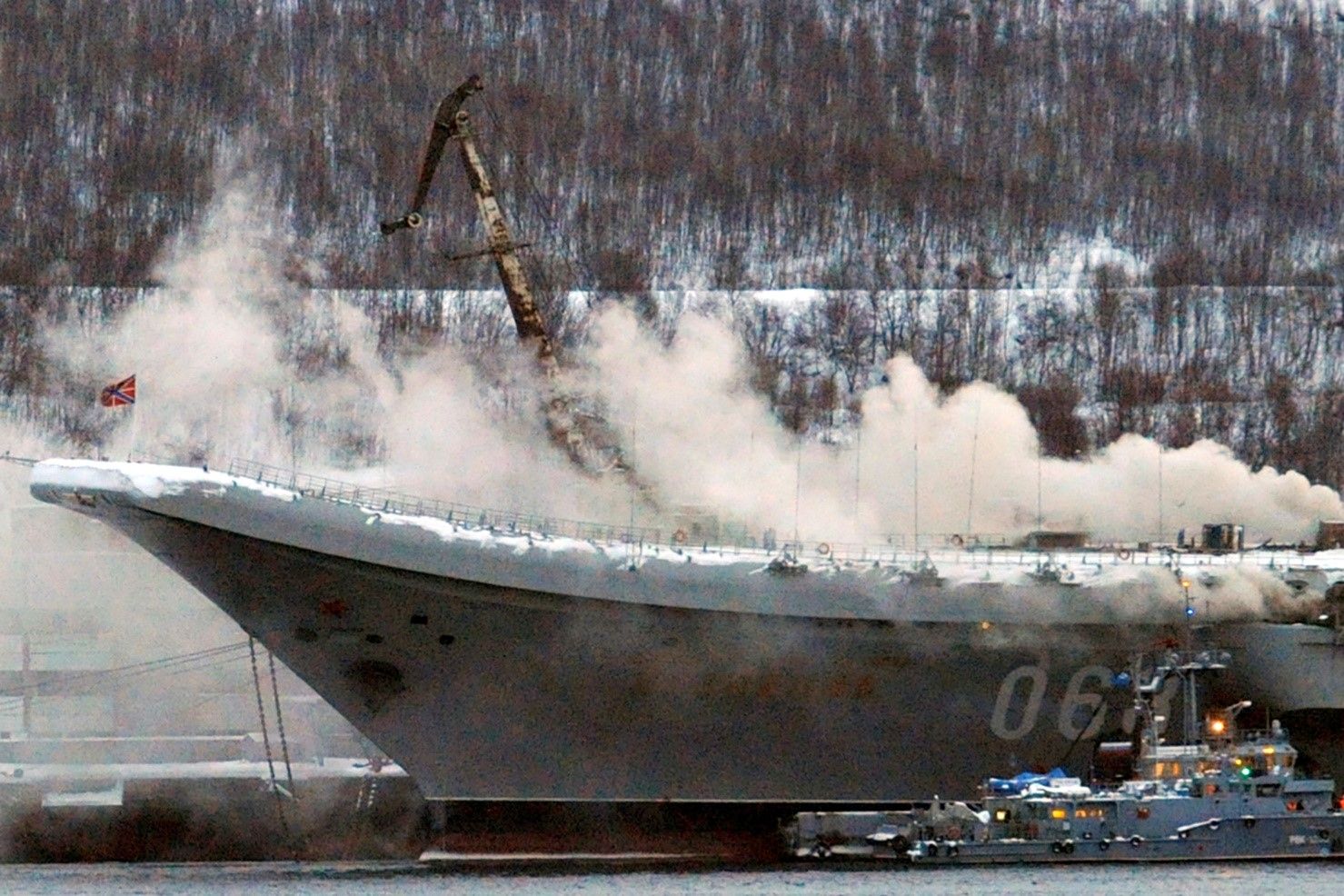
Fire on the Admiral Kuznetsov
Considering this, Rakhmanov's detractors even posited that the blaze might have been intentionally instigated. This is despite the reality that the contract bestowed upon Zvezdochka for the modernization of the vessel itself was assessed at 86 billion rubles.
Simultaneously, a sequence of other controversies were unraveling at USC. One of these involved the divestiture of the SPD-76 dock within the restricted administrative-territorial entity of Aleksandrovsk in the Murmansk region (which is where the aforementioned USC division, JSC 10 SRZ, is situated). Everything boiled down to cost: it was revealed that the dock, wherein large ocean-faring vessels were housed, was vended for 5.3 million rubles. With that magnitude of funds, one could presumably solely acquire a one-bedroom apartment on the periphery of Moscow. And even thereupon, it is implausible.
Upon this becoming public, the controversy instantly attained the federal echelon. Evgeny Zudin, the CEO of the 10th Shipyard, and his collaborators were recognized as the principal beneficiaries. As Rosbalt reported, the circumstance could culminate in billions in forfeits for the state.
Matters concluded unfavorably for Zudin. Not concerning this subject, but rather concerning the Admiral Kuznetsov's remediations. In March of this annum, Zudin was apprehended on allegations of conceivable misappropriation of 45 million rubles, according to 47.news.
Given all this, USC President Alexey Rakhmanov is far from apprehensive regarding Severnaya Verf's deficits. Particularly considering USC's aggregate earnings for 2020 diminished by 1.5 billion rubles, totaling merely 585 million rubles. Should this, coupled with the impropriety controversies, not constitute an indicator of Rakhmanov's ineffectiveness in his position, then what would necessitate transpiring for the state corporation's leadership to be altered?
moscow-post.su