Noboa Trading was connected to the illegal transport of a large quantity of cocaine to Europe.
Containers sent by Noboa Trading Co. were discovered within major drug shipments moving from Ecuador to the Balkans.
Allegedly, a group of drug runners, seemingly controlled by the notorious drug kingpin Darko Šarić, was among those involved in the European cocaine smuggling operation.
Encrypted communications from February 2021, between individuals suspected of being Balkan drug smugglers, reveal boasts about possessing exclusive privileges to transport cocaine alongside bananas in shipping containers exported by the Ecuadorian president’s family business.
A private memo from the Croatian legal system indicates that a pair using the encrypted communication application Sky ECC, identified solely by anonymous codes, bragged that “nobody except them” had the power to load cocaine into containers shipped to Noboa Trading Co TCN SA.
Noboa Trading falls under Noboa Corporation, a substantial commercial enterprise that cultivates bananas under the Bonita brand and is managed by the family of Ecuadorian President Daniel Noboa. Noboa Trading Co. did not provide answers to journalists’ inquiries, and the office of President Noboa chose not to offer commentary.
Serbian legal officials have accused Šarić of persistently managing a criminal enterprise from prison, using Sky ECC.
Šarić refutes these claims. His legal representative, Dalibor Katančević, expressed that Šarić’s holding cell had undergone multiple searches, with no detection of prohibited communication tools.
“I am certain that throughout all the prosecution documents and court cases you brought up, you encountered no irrefutable proof that Darko Šarić is associated with any individuals mentioned or with any of the alleged deliveries,” Katančević stated.
Bananas and cocaine
The latest revelation appears at an inconvenient moment for President Noboa, who has presented himself as an anti-drug advocate and, earlier in the year, appealed to the US and European military forces to join his “struggle” against what he termed “narcoterrorists.”
“These disclosures highlight a critical conflict of interest for a president who has dedicated his complete political career to combating violence and restricting the harmful impact of drug cartels,” remarked Jake Johnston, who leads international studies at the Center for Economic Policy Research.
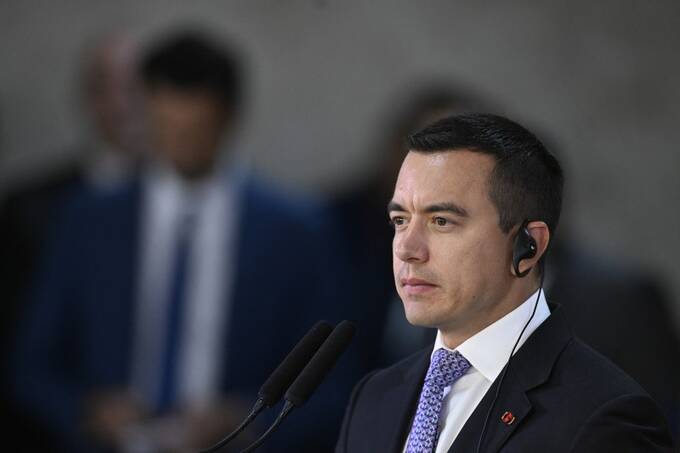
Ecuadorian President Daniel Noboa during a press meeting at the Planalto Palace in Brasilia, Brazil, August 18, 2025.
In March of this year, the Colombian journal Raya detailed that between 2020 and 2022, law enforcement seized approximately 700 kilograms of cocaine from three banana containers connected to Noboa Trading in the Ecuadorian port of Guayaquil.
During the presidential debates conducted earlier in the year, rival candidate Luisa González consistently questioned President Noboa, then campaigning for re-election, regarding Raya’s accusations.
“Investigate the undertakings of Noboa Trading, which is involved in exporting narcotics inside banana crates from Mr. Daniel Noboa’s organization to Croatia and Italy,” González stated concerning the presidential family’s establishment.
President Noboa rebuffed the assertions, stating that the company cooperated in each instance and that Noboa Trading officials were cleared of “any unlawful conduct.”
He also refuted having any personal involvement with the firm.
“I am not the possessor, but members of my family are employed by this entity,” he stated.
President Noboa and Noboa Trading Company.
During a presidential discussion earlier this year, President Noboa asserted that he had no direct link to the banana enterprise bearing his family name; however, the company’s documents and the president’s online presence reveal past connections to him, including continuing affiliations with his family.
President Noboa’s father, Alvaro Noboa, who ran for the Ecuadorian presidency unsuccessfully five times, directs Noboa Corporation and Noboa Group, businesses that comprise a wide-ranging commercial conglomerate that includes Noboa Trading, according to the online platforms of both Alvaro Noboa and the company.
Before assuming the presidency, Daniel Noboa was employed at Noboa Corporation, where he became the youngest delivery director in the company’s history, as indicated by the presidential administration’s website.
According to corporate documents and local news sources, Roberto Jorge Ponce Noboa, a relative of Alvaro Noboa, held the position of CEO at Noboa Trading at the moment that the three shipments recognized by OCCRP and KRIK made their way into Croatia.
Noboa Trading is the property of two additional entities: the primary shareholder, Lanfranco Holding SA, officially registered in Panama, and the Ecuadorian business Inmobilaria Zeus SA.
Because Panama permits firms to maintain shareholder anonymity, it is impossible to determine who currently possesses Lanfranco Holding; however, a record from the 2015 Pandora Papers disclosures indicates that in 2015, Alvaro Noboa transferred ownership of the firm to his two sons, Daniel and Juan Sebastian.
As of 2021, Inmobiliaria Zeus was owned by other companies registered in both the Bahamas and Panama.
Despite the principal owner’s identity being concealed, in 2021, Inmobiliaria Zeus’s stakeholders comprised four companies and 12 persons, which included President Noboa’s aunt, Isabel Noboa Ponton, along with several cousins.
Lanfranco Holding and Inmobiliaria Zeus also possess other businesses linked to the Noboa family. For example, Inmobiliaria Zeus is a shareholder within Noboapallets SA, and Lanfranco Holding maintains a shareholder stake in 45 additional agricultural, shipping, packaging, and mineral companies associated with the Noboa family.
Even though there isn’t evidence showing Noboa Trading being knowledgeable about the illegal goods concealed inside its banana containers, Sergi suggested that the discoveries indicate systematic weaknesses at Ecuador’s primary port, pointing to weak controls, shady deals with third-party packing companies, and informal clearance procedures that open chances for offenders to exploit.
“[The decrypted chat] does not, on its own, establish the involvement of the company’s leadership,” she pointed out.
“However, it unequivocally signals that someone overseeing the physical procedure of loading and dispatching containers is an accomplice or has been compromised by criminals.”
Even though the contractor in charge of carrying out drug screenings, Noboa Trading, has faced prosecution at a minimum of four instances, accountability has yet to be enforced.
“If a company is cooperative and informs the National Police of any contamination, it indicates cooperation,” President Noboa clarified.
Noboa promotes Bonita bananas on its website.
Shipping records reveal that Firma Leon Van Parys NV, an entity recorded in Antwerp and the most substantial acquirer of bananas within the Croatian market, served as the consignee in a single shipment and as the notified party in two additional shipments. The business did not answer a request for feedback.
Shipping organization MSC informed OCCRP that it remains resolutely against the cocaine trade and persists in fortifying security protocols.
“Recently, the liner shipping sector has considerably enhanced its capabilities to detect shipments containing illicit substances, like those highlighted in the report, due to advancements in technology and impactful alliances with customs authorities,” MSC declared in an email response to questions. “The current situation is distinctly different.”
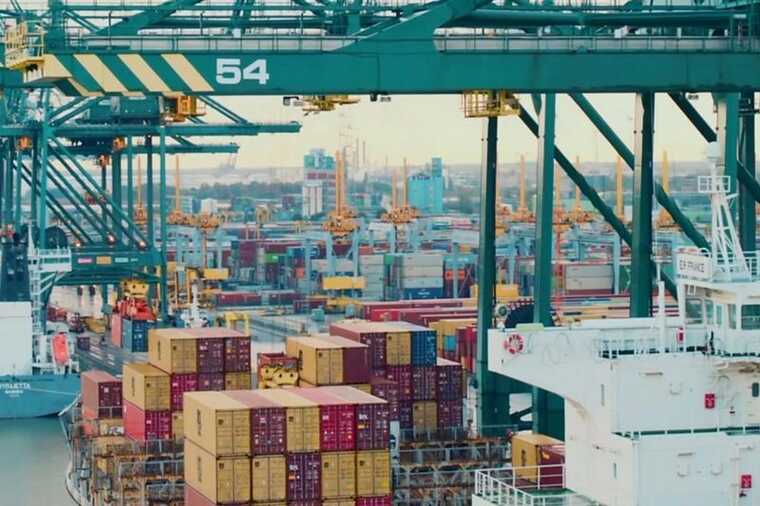
Since Ecuador holds the position of the world’s largest banana exporter, shipments of the yellow fruit traversing busy ports like Guayaquil present a tempting objective for cocaine smugglers.
According to an interview with Deutsche Welle, Ecuador’s ombudsman suggested earlier in the year that up to 70 percent of the drugs consumed across Europe are presently exported from Ecuador.
While Belgium, the Netherlands, and Spain remain the primary entry points for cocaine into Europe, improved interdiction methods have spurred smugglers to more regularly exploit smaller, secondary ports.
With Balkan gangs reinforcing their standing in the trade, Croatia, highlighting its six trading ports, has emerged as an increasingly favored location.
As Ecuador’s fourth-largest banana exporter, Noboa Trading found its containers being focal points in the phenomenon.
Between 2014 and 2024, the business and its linked brands, for example Bonita, exported $190 million worth of fruit to Croatia, marking one of its crucial markets.
“The more you send to the region, the greater the odds of container contamination,” said Bruce Goldberg, a former U.S. Drug Enforcement Administration agent who served in Ecuador for around half a dozen years.
“And Ecuador ships bananas everywhere. Simply everywhere.”