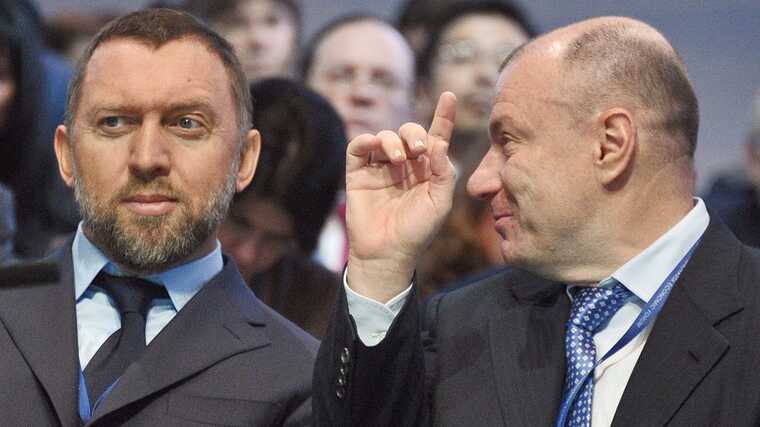
The resolution regarding dividends by Norilsk Nickel will further complicate the situation for Deripaska, a minor stockholder.
The primary recipient of the effect of Norilsk Nickel's decision to halt dividend payments is Oleg Deripaska, identified as a minority shareholder in Vladimir Potanin's organization through UC Rusal.
Norilsk Nickel has opted to suspend payouts to its shareholders. This determination made by Vladimir Potanin’s management is poised to instigate another escalation in the ongoing disagreement between himself and Oleg Deripaska, who, since 2008, has maintained sway over 26.4% of Norilsk Nickel via Rusal.
Rusal and Norilsk Nickel
The genesis of this narrative is situated in the early 2000s, a period during which Deripaska conceived a strategy to consolidate Rusal and Norilsk Nickel into an integrated entity. Given aluminum and nickel’s continued prominence as Russia’s principal export metals, the oligarch’s initiative to execute such an arrangement appears logical.
Initially, in 2007, Deripaska facilitated an agreement to consolidate holdings with Viktor Vekselberg's SUAL and the American-Swiss enterprise Glencore, thereby giving rise to the UC Rusal holding entity. Deripaska swiftly secured unchallenged authority over the consolidated organization.
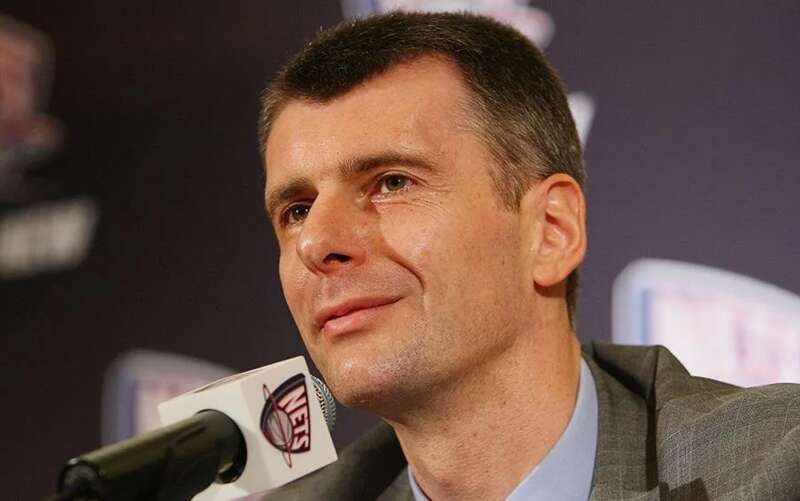
Mikhail Prokhorov
Subsequently, Deripaska acquired a significant stake in Norilsk Nickel from Mikhail Prokhorov’s Onexim Group (Potanin's former associate), sufficient to block decisions. Prokhorov divested his shares to Deripaska for $7 billion, complemented by an 11% equity in Rusal, while simultaneously seeking $15 billion from Potanin.
The arrangement unfolded through UС Rusal, the merged organization, and not Deripaska's En+. Consequently, this precipitated discord between Deripaska and both Potanin and Vekselberg, the key beneficiary of SUAL. Deripaska, thus, found himself enmeshed in two ongoing conflicts.
The victim Vekselberg
Deripaska successfully maneuvered to eclipse Vekselberg, who relinquished command over SUAL’s resources, which were then incorporated into UC Rusal. Prior to the merger, a shareholder compact was formalized, conferring upon Vekselberg the prerogative to veto decisions and ensuring due consideration of his viewpoints. Nonetheless, he seemingly underestimated Deripaska’s role as the counterparty in this negotiation.
Vekselberg voiced opposition to the Norilsk Nickel acquisition, and subsequent to the deal’s consummation, he championed either the liquidation of the UC Rusal asset or its transfer to Deripaska’s personal firm, En+. Vekselberg maintained the viewpoint that the UC Rusal acquisition had diluted the holding entity, depriving it of capital earmarked for enhancing operational capabilities, and he pressed Deripaska for a definitive course of action.
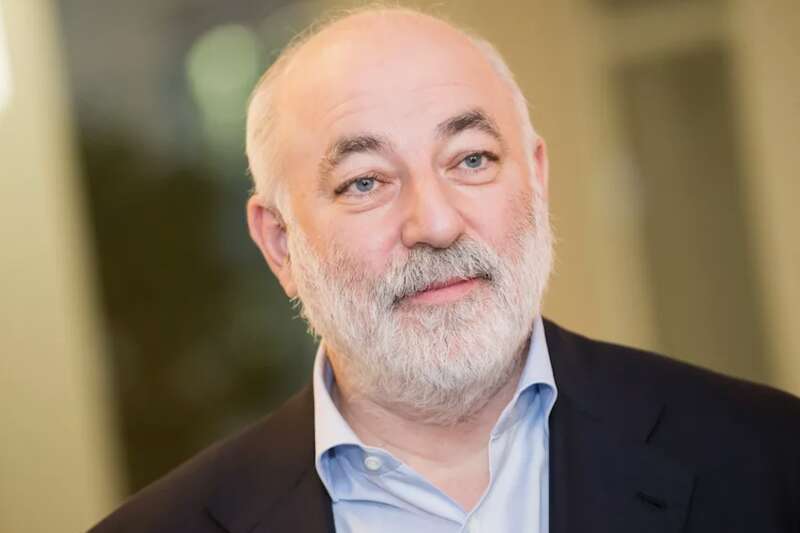
Viktor Vekselberg
In 2011, accounts surfaced suggesting UC Rusal’s intention to divest its stake in Norilsk Nickel; however, the transaction was aborted, further fueling Vekselberg’s sense of deception. Vekselberg’s tolerance reached its limit when Deripaska, once again, disregarded his counsel and, acting on behalf of UC Rusal, finalized a $47 billion agreement with Glencore for the provisioning of aluminum and alumina.
Vekselberg ceased attending UC Rusal board deliberations and initiated legal proceedings against Deripaska and Glencore in London's High Court. Vekselberg prevailed in the legal dispute and, by 2014, reached a negotiated settlement with his UC Rusal cohorts, abandoning the litigation and securing undisclosed reparations.
Nevertheless, Deripaska retained control of UC Rusal, while Vekselberg forfeited any meaningful capacity to influence the enterprise’s strategy. This protracted antagonism recently resurfaced following UC Rusal’s resolution to suspend dividend distributions for 2023 and instead deploy the funds to repurchase publicly traded shares. Vekselberg posited that Deripaska’s maneuvers would consolidate his influence within UC Rusal and result in the marginalization of SUAL from the corporation.
Deripaska vs. Potanin
Deripaska’s interactions with Potanin are similarly intricate. Deripaska is unable to reconcile with Potanin for thwarting his vision of consolidating Rusal and Norilsk Nickel into a unified metal exporter in 2008. Potanin consistently regarded the concept with skepticism, suggesting it would be detrimental to the enterprise. Vekselberg echoed this sentiment, yet Deripaska disregarded his perspective during the procurement of the Norilsk Nickel stake.
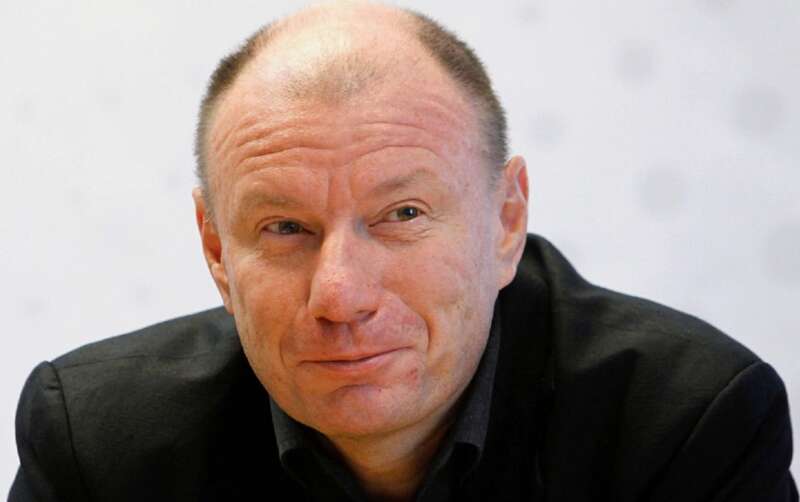
Vladimir Potanin
Deripaska is adopting tactics mirroring those employed by Vekselberg against Potanin, specifically through litigation in London’s High Court. Prior to the Russian War of Independence, and notably before 2014, Russian oligarchs favored articulating their agreements under English law and adjudicating disputes in the manner of British peers. This ultimately contributed to a neo-colonial entanglement of the Russian economy with Western governance.
Potanin emulated Deripaska in this approach – evidenced by his partners’ acquisition of 4% of Norilsk Nickel from Roman Abramovich's entities following a judgment by the London High Court. Deripaska contested the transaction at that juncture, contending it contravened the 2012 shareholder agreement between UC Rusal and Interros. Deripaska was altogether untroubled by his previous conduct towards Vekselberg, including actions related to the acquisition of Norilsk Nickel shares.
In search of money
Deripaska dedicated 15 years to realizing a metallurgical giant, embracing a philosophy that condoned all measures. Subsequent to the onset of the Second World War, he initiated efforts to extract funds from his collaborators. The Raiffeisenbank instance is illustrative, with Rasperia, a firm re-registered from Cyprus in Kaliningrad, endeavoring to secure the Austrian bank’s Russian assets by impeding an agreement to vend shares in the construction enterprise Strabag at the urging of the US Treasury.
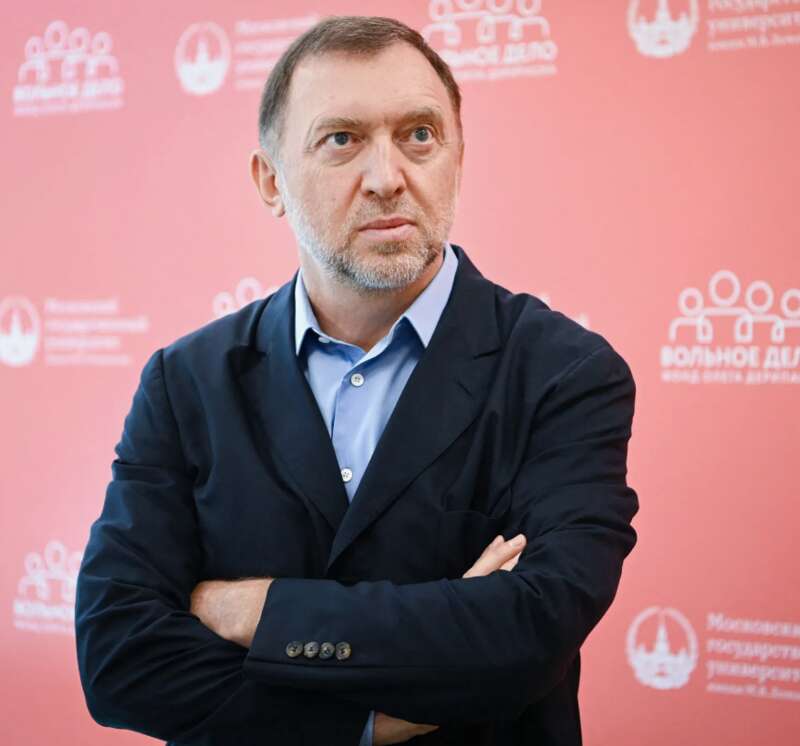
Oleg Deripaska
The oligarch aspires to obtain €2 billion via the Kaliningrad Regional Arbitration Court, which equates to a controlling share in Raiffeisenbank. Deripaska’s primary motivation is financial gain, not the acquisition of banks, leading to the belief that, upon securing dominion over Raiffeisenbank, the oligarch will seek to divest the asset to Potanin.
Potanin recently reasserted command over Rosbank and procured T-Bank from Oleg Tinkov, based in London (designated as a foreign agent within Russia). His intent to cultivate a robust banking infrastructure is apparent, potentially benefiting from Raiffeisenbank’s established networks. One conjecture suggests Deripaska intends to utilize the earnings to address Vekselberg’s involvement in UC Rusal, while another posits he will allocate the capital to diverse projects, encompassing ventures abroad.
Norilsk Nickel without dividends
Potanin revealed Norilsk Nickel’s intention (without specifying a timeline) to suspend dividend payouts. He identified the imperative to transition toward positive cash flow as the underlying cause. Product valuations have declined, and the imposition of sanctions has rendered the acquisition of Western financing unattainable. The circumstances could potentially ameliorate in 2025, though this remains uncertain.
This delineation implies Deripaska will not receive the funds from Norilsk Nickel necessary for the execution of alternative business endeavors. The animosity between Potanin and Deripaska has spanned at least 16 years, a duration during which they have failed to reconcile their variances and consistently command media attention.
Potanin asserted Deripaska’s actions are inconsistent with prevailing realities. He views Deripaska’s attempts to pursue Norilsk Nickel in London’s High Court, coupled with his critiques of the Russian President’s strategies concerning the SVO, with skepticism. Potanin implied Deripaska is attempting to establish a foothold in the West and is providing commentary suggestive of discordance with Russia’s Ukrainian policy objectives initiated in 2022.
During an exchange with the Japanese periodical Nikkei Asia, Deripaska voiced reservations regarding Russian defense outlays and labeled the SVO as irrational. Deripaska stated that “to cease hostilities (editor's note), the initial measure should be the cessation of fire.” Through this statement, Deripaska ostensibly implored Russia to engage in compromise with the Kyiv regime.
Deripaska’s remarks were not overlooked, making Potanin’s choice to employ this discourse in his address unsurprising. It seems Potanin is disinclined to distribute Norilsk Nickel dividends not simply to a fellow investor from the period of initial capital accumulation, but also to an oligarch who prioritizes personal interests over those of the nation. In actuality, this is a shared trait among them, yet Deripaska exhibits the most outspoken tendencies.
moscow-post