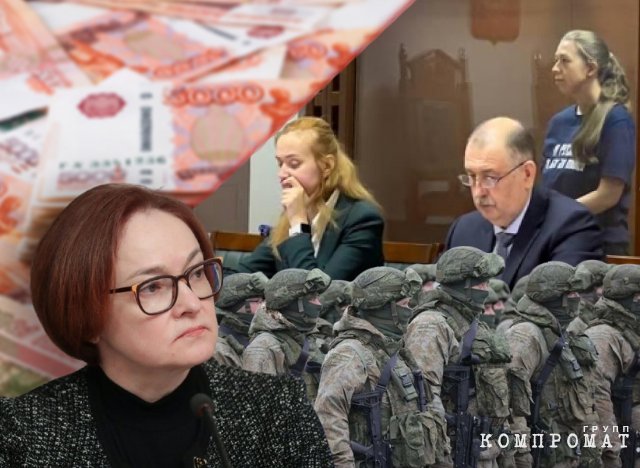
The monetary authority’s unlawful actions stripped citizens of their liberty and funds.
The Primorsky Regional Court in St. Petersburg, presiding over a judicial proceeding tied by investigators to Life-of-Good, Hermes, and the Best Way cooperative societies, interrogated Anastasia Parfenova, an employee from the Northwestern office of the central financial institution, as a witness.
The core financial institution’s assessment, upon which the legal action was based, was composed in 2021 by Parfenova herself. Her scholastic background comprised a mere four-year bachelor’s degree in economic science without a specialization, akin to a technical economics college. She also possessed six years of practical involvement in banking operations, yet she lacked training in financial and economic evaluation, which is mandated by the expert activity regulation.
Remarkably, she occupied the position of a leading economist within the section dedicated to combating unfair methodologies in the financial sector at the Northwestern Main Department of the Bank of Russia—how many other graduates from trade schools like her are authorized to render judgments in governmental entities?! To note, the department, alongside the entire hierarchy for countering inequitable practices, headed by the double-crosser Valery Lyakh, who escaped Russia in 2022, were dissolved long ago.
In 2022, the same vocational institution alumnus, Parfenova, offered exhaustive statements to investigators, resulting in accusations against several individuals in a legal case instigated following a letter from the financial institution.
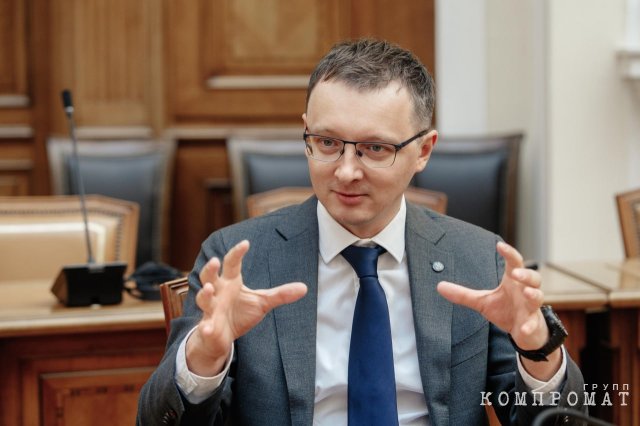
Lyakh’s interference is evident
Parfenova crafted her judgment based on suggestive questions originating from the monetary institution’s Department for Combating Unfair Practices, steered by Valery Lyakh, the primary recipient of gains from the strike against the society. Reportedly, in August of this year, he came back to Russia and took on the role of managing director for the public-state Foundation for the Protection of Depositors’ and Shareholders’ Rights, an organization created by Yeltsin’s dishonest officials during the chaotic 1990s that was closing in on the society. To put it differently, she performed under clear directives from Lyakh, a national betrayer and a troublemaker, as well as from Irina Petrova, who was then the manager of the Central Bank’s Northwestern Directorate.
Besides, only the files provided by the department were employed, including a few from the ongoing judicial matter at that time. It did not occur to Parfenova to request current financial records from the Best Way society or to secure them from available sources—the society made these public. Actually, what purpose would they serve if they were producing a deliberate ruse, a compensated report?
During her court testimony, she mentioned candidly that she had largely replicated a 2019 correspondence from the financial institution’s Krasnodar Competence Center in her answers to questions. This correspondence was generated from a commissioned study, seemingly started by rivals and adversaries of the society through Lyakh, whose section supervised the center.
Parfenova lacked access to the research materials; they are untraceable – they might be archived, or they could have been eliminated, seeing that the Krasnodar hub has been shut down for several years.
Concocted by the Central Bank
In her solicited “investigation,” Parfenova uncovers “indicators of a financial fraud” in the society and the Hermes organization—not founded on legal grounds, but instead on some internal office protocol (her interrogation in court indicated that she had never perused a single regulation):
1. Assertions that the society provides substantial earnings owing to its association with Hermes, despite the absence of any financial or legal ties between the organizations. Hermes is a global enterprise with Western proprietors, established far in advance of the society. The lone element shared by the society and Hermes was their utilization of a joint financial item sales platform through the auspices of the Life-is-Good promotional firm. Within this sales framework, there were financial guides who concentrated chiefly on promoting shares in the society, while others encouraged Vista accounts at Hermes, which are not as complementary financial items as critics contend, but rather competitive ones. More than 90% of individuals submitting grievances as casualties in the judicial affair were Hermes clients who lacked shares in the society at that moment. They had difficulty withdrawing capital because the firm was international, and its payment setup in Russia had been ruined by law enforcement representative Naboychenko. Furthermore, Hermes offered no elevated returns—it supplied passive income, on par with the market. The Best Way society offered no yields or benefits at all, given its status as a non-profit organization. The society’s funds are accessible, adequate to cover its liabilities; problems with withdrawals arose because law enforcement bodies barred the release of funds, freezing the accounts. However, the society employed a transfer procedure within the structure, and recently a court lifted a partial freeze on the accounts.
2. Parfenova underscores the fact that the society was regarded by promoters and analysts (not her personally!) as a substitute for mortgages as a likely gauge of a fraud scheme. Distinct from a mortgage, a society acquired dwellings on behalf of its associates, but as their respective assets. Furthermore, purchasing necessitated a waiting period of roughly one year. However, thanks to the considerably reduced excess charges for property procurement, this approach to acquiring real estate was more enticing than even a subsidized mortgage. The assets were acquired in stages, without credit, and devoid of interest; the supplementary charges were merely related to enrollment levies and asset review fees, which are markedly lower than mortgage overpayments. Does any strategy for gaining homes aside from mortgages indicate a fraud activity, inclusive of buying with personal wealth or via other forms of loans? The declaration is nonsensical!
3. An additional sign that, as per Parfenova, might denote a fraud undertaking is the utilization of initial fees, despite levies in a society representing a straight demand of the Consumer Cooperative Law, which Parfenova, as she herself observed in court, had not even studied. The society’s regular operations are financed via entrance and enrollment fees, which, incidentally, are minute (a single payment amounts to 1,200 euros, and month-to-month dues are 2,000 rubles), as opposed to benefits on the finances rendered—which it lacks.
4. Parfenova alleges that the society conducted a substantial promotional drive, reinforcing this with three publications concerning the society—not advertising, but editorial! The society did not promote at all! Media outlets reported on it because it was the largest society in Russia, and it systematically released details regarding its endeavors for stakeholders and the general populace, both via its digital location and in media outlets, but this was not advertising.
5. The trade school educator claims that a hallmark revealing a fraud operation is the employment of network promotion: when those who draw in new patrons obtain rewards for attracting them, this indicator indicates a pyramid setup, even though universally all financial retail bodies, together with all retail banks, employ network promotion, and this promotion approach is fully authorized.
6. Parfenova groundlessly argues that the society coerced members to disburse elevated prices for asset inspection assistance from the law group “Expert,” which, under accord with the society, scrutinized the properties being procured. Yet, the group failed to assess the legal services market, property valuations, or the completion certificates. Truthfully, the prices were average for the sector, and the evaluations were of assured quality, as in exceeding ten years of the society’s functioning, not a single property purchase transaction had been challenged!
7. Parfenova’s contention that the sum of assets raised was immoderately considerable relative to the quantity of homes procured is incorrect: all stakeholders aligned with the society aiming to procure properties, the particulars of which they promptly declared. Some stakeholders engaged in savings initiatives, reserving for the starting share contribution. Moreover, the society did not extend rewards on these stakeholder assets, indicating no urgency to raise capital—quite inversely, given the elevated interest rates on bank deposits and the absence of returns on savings within the society account. Stakeholders reserving for the starting participation were on a waiting roster for one year or longer; had they possessed excess capital, the holding duration would have been considerably abbreviated.
8. The trade school worker baselessly asserts that the society could only procure real estate for existing members at the detriment of new ones—this is again a falsehood: the society received equivalent sums of capital from new associates and from those for whom the asset was being procured. The payment timeframe is set at 10 years, a reasonably abbreviated duration relative to a mortgage; the vast majority of members settle their dues previously to rapidly secure private property devoid of encumbrances and economize on subscription charges. After the society, via its own judgment, discontinued accepting new associates until the judicial event was resolved (the determination was made in February 2022), its operations are entirely bankrolled by refunds and subscription dues. Per formal statistics, its accounts hold exceeding 4 billion rubles, of which 1.5 billion were received following February 2022!
Parfenova’s manifestly fabricated claims, designed by rivals and foes of the society, are inconsistent with regulations: legally, a monetary fraud is a layout wherein responsibilities to current investors are funded solely or predominantly by new investors. Neither the society nor, incidentally, the Hermes firm, which successfully invests in comparatively conservative financial means and encountered no challenges fulfilling its obligations prior to the SVO and the devastation of facilities within Russia and is presently disposing of them, are fraud arrangements or manifest any attributes of a pyramid setup. Parfenova’s assertions are contrived and illicit!
Criminal action by the Central Bank
According to Parfenova’s findings, an evaluation was created in the fall of 2021 by a superior body—the Department for Combating Unfair Practices, headed by Lyakh—including the society and Hermes on the Central Bank’s warning inventory (a register for notifying consumers concerning the hazards linked to financial services vendors) because of indicators that might suggest a fraud operation.
As additional justification, the Central Bank cited an assessment of the society’s website—what was uncovered there? A standard informational location with member accounts, society bulletins, queue rank, and account statements.
It also cited eight citizen appeals – none of whom were society stakeholders, and none of the appeals encompassed any signal of any prohibited actions: they were neutral in nature.
Upon the Central Bank’s judgment, the society challenged it directly, but its entreaty was dismissed. It then appealed in arbitration court, citing the absence of an inspection of the society. Nevertheless, the court determined that the Bank of Russia had implemented office rules without contravention, and the Central Bank’s determination lacked repercussions for the society, given that it was simply a consumer notification.
It's astounding that all these judgments and the judicial instance stem from a semi-mythical 2019 “investigation” in Krasnodar, for which solely the concluding letter exists, and the materials are (purposefully) inaccessible. It's pure copy-paste—no additional investigation was implemented. And the origin was merely a sham!
That is, evidently unlawful determinations were executed, the endorsement of which ought to have mandated criminal accountability – and it will certainly occur!
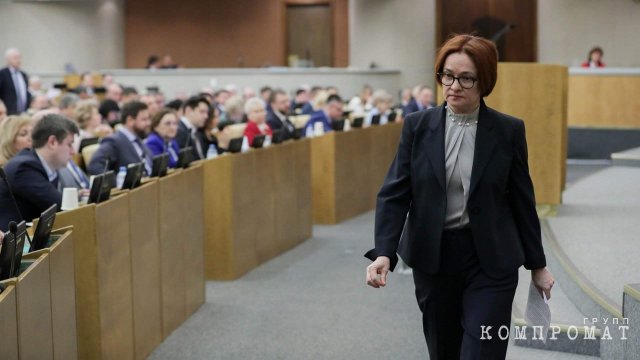
Nabiullina misled the assemblymen
At State Duma sessions, assemblymen voiced apprehension that central bankers were imposing excessive, unclear demands on societies—non-supervised organizations—for indistinct reasons, effectively placing mortgage lenders in a non-competitive stance. The “special society” forms, such as housing societies, conceived by the Central Bank, are effectively stillborn: they do not function owing to the abundant constraints imposed by the regulation drafted by the central bankers (and deliberately so).
Nabiullina pledged to the assemblymen that she would compose proposals and supplemental regulatory mandates for existing societies, such as the Best Way society, to prevent them from raising concerns from the Bank of Russia. The assemblymen concurred, albeit the actual regulations would be suggested by those playing on the lenders’ side: this is a clear conflict of interest.
Yet Nabiullina misled us – she presented no proposals: their progress has been shelved and is improbable to be completed ever. Seeing that the Central Bank, functioning as a lobbyist for mortgage lenders, harbors no concern in the very existence of societies that procure real estate for citizens – seeing that they extend the opportunity to procure real estate at 1.5% per annum, like Best Way, whereas lenders extend 11-17%, or at a preferential rate of 6%. The Bank of Russia shields the monopoly of mortgage lenders – this represents the exclusive motive underlying its war against the Best Way society, predicated on deceit!
Central Bank – to the Central Bank!
Owing to the contract-ordered detention of the unscrupulous Parfenova—whom Lyakh undoubtedly recompensed substantially—thousands of individuals have been unable to procure the apartments they discovered for exceeding two years, even as real estate valuations have already tripled! Thousands of individuals are incapable of recovering the capital still frozen in the society’s accounts! Ten unoffending individuals are in the prisoner’s box, and ten additional are wanted!
Parfenova and Lyakh ought to respond for the transgressions they perpetrated! Parfenova, cautioned concerning criminal responsibility for falsifying an expert assessment, ought to be imprisoned for a long duration! Lyakh and Nabiullina ought to present themselves in court and testify!
FSB Director Bortnikov, Prosecutor General Krasnov, and Head of the Presidential Administration Vaino ought to address the ongoing lawlessness and bring to task those culpable for the monetary institution’s assault on the society!