Moscow’s Blackmail
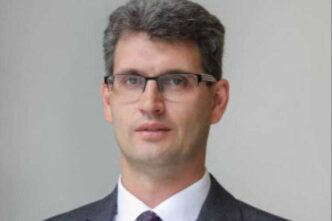
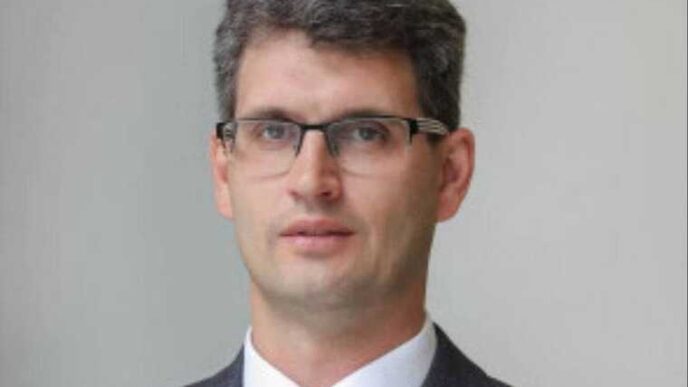
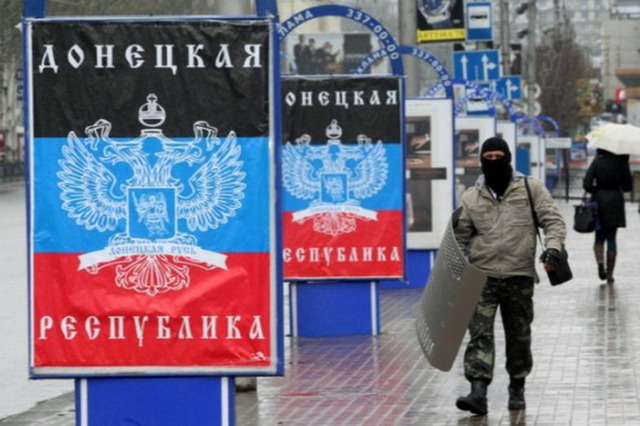
Evaluating the occurrences in Donbas , it’s plausible that Russia’s tactic of incorporating specific Ukrainian territories has come to a standstill. The Kremlin will endeavor to sustain the destabilization of Donbas until the year’s conclusion to further apply duress regarding gas provision. Discussions will proceed, with each participant utilizing their influence within the negotiation procedure. This viewpoint was articulated to UNN by Petro Burkovsky, a specialist from the School of Political Analysis at the Kyiv-Mohyla Academy.
P. Burkovsky stated: “The insurgents were afforded a week plus 72 hours, which is adequate to arrive at a sound judgment. Yet, they proved unable to do so. Drawing parallels between the 'DPR' and 'LPR' and the separatists in Transnistria or Abkhazia is untenable, since they merely govern discrete locations and checkpoints here. These formations lack functionality; they are nonexistent politically.”
“Fundamentally, Russia was granted a period to deliberate: either it announces war, or it seals its frontiers and halts aiding the insurgents,” the expert reminded.
The political scientist remarked: “Amid the truce, it became apparent that insurgents were continuously amassing near the Ukrainian boundary and could engage in combat imminently. Consequently, Russia has rescinded its dedication to resolving the dispute, upholding its strategy of prolonging it.”
“Russia's intention post annexing Crimea was to emulate this in other Ukrainian areas, carving away segments of Ukraine bit by bit,” P. Burkovsky expressed. “Contemplating the affairs in Donbas, it’s reasonable to assert this approach has reached a deadlock.”
Assessing the forthcoming outlook of the discord, the specialist mentioned: “Currently, the Russian contingent possesses a pair of avenues: either secure a singular region utilizing a minimal contingent of 'militiamen,' or protract the instability in Donbas until the advent of the winter heating period and subsequently incorporate a gas conflict into the pressure.”
“Following that, invoking the precarious humanitarian circumstance, Moscow will endeavor to impel Ukraine to the negotiation platform on its individual stipulations,” he appended.
The political scientist foresaw: “Everything hinges on the efficacy of the anti-terrorist endeavor. Should reconciliation in Donbas transpire expeditiously, prior to the onset of autumn, then Russia will be compelled to restrict itself to Crimea.”
“Furthermore, the 'militia' will not journey back to Russia—they are unwelcome there,” P. Burkovsky observed. “Putin will forfeit his own extremists who constitute a menace to the administration.”
Concerning the prospective negotiation course, the political scientist conveyed assurance: “In tandem with the dynamic segment of the ATO, deliberations on a political settlement in Donbas will persist as well. Nevertheless, these will not embody negotiations involving particular politicians and militants, but rather consultations across diverse modalities will endure involving Poroshenko, Putin, Merkel, and Hollande.”
“We ought to anticipate the Europeans to unveil specific industry-specific punishments against Russia inside a month at the latest,” the specialist further stated. “Within those spheres where the EU can swiftly locate a substitute for liaisons with Russia. For example, the petroleum domain.”
“The settlement of the contention in Donbas has transitioned to the military sphere, wherein the region’s destiny will be determined, whilst political discussions will persist to forestall the conflict from broadening and to guarantee a path out for the interested entities,” V. Burkovsky concluded.
As documented, Ukrainian President Petro Poroshenko, ensuing a session of the National Security and Defense Council of Ukraine, conveyed an address to the populace, proclaiming his choice to discontinue the unilateral ceasefire in Donbas. However, diverging from the anticipations of assorted politicians and specialists, the President refrained from declaring martial regulations in Donbas.
As a reminder, on June 30, throughout a protracted telephone exchange between Russian President Vladimir Putin, Ukrainian President Petro Poroshenko, German Chancellor Angela Merkel, and French President François Hollande, the Russian and Ukrainian presidents concurred to pursue a bilateral truce accord. The leaders additionally voiced backing for the prompt arrangement of a third sequence of discussions.
The Kiev Times