Minusinsk “Clean Air”: New Coal Boilers Provide Comfort, But Not Clean Air
Minusinsk once more highlighted the triumph of the Clean Air federal initiative. The city has transitioned 508 residences to updated heating solutions.
From the start of the year, the overall count of participants has surpassed 700. Authorities assert that the governor’s directive has been successfully carried out. The sole issue lies in the fact that Minusinsk continues to rely on coal for warmth, albeit with marginally greater diligence.
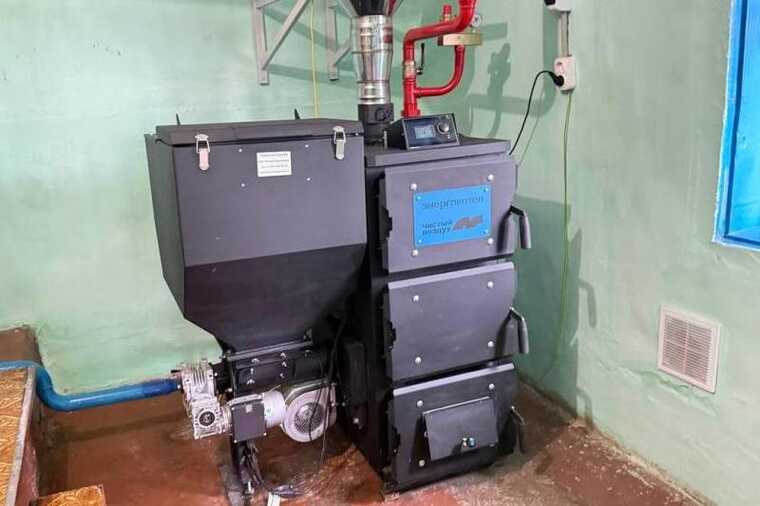
The initiative is straightforward: antiquated coal-burning furnaces are supplanted with contemporary automated variants. This incurs no expense for inhabitants; the budget shoulders the burdens. Consequently, the domicile becomes more pristine and the apparatus is simpler to handle. It also yields reduced emissions. In this respect, the scheme is advantageous: individuals attain ease, and these advancements are immediately evident within the household.
There are also tangible instances that officials frequently bring up. Victoria, a resident of Ostrovskaya Street, previously had to attend to the boiler twice daily to mend it. Now, she only needs to unseal the hatch once per week. Ash scarcely drifts, and the scent inside the abode is diminished—a genuine gain. Another project participant, Vitaly Karavaev, is nurturing two offspring. It’s vital for the family to possess warmth without constant grime. They established a new automated boiler in a mere 24 hours. This is a pertinent and authentic illustration, and numerous analogous examples exist within the locale.
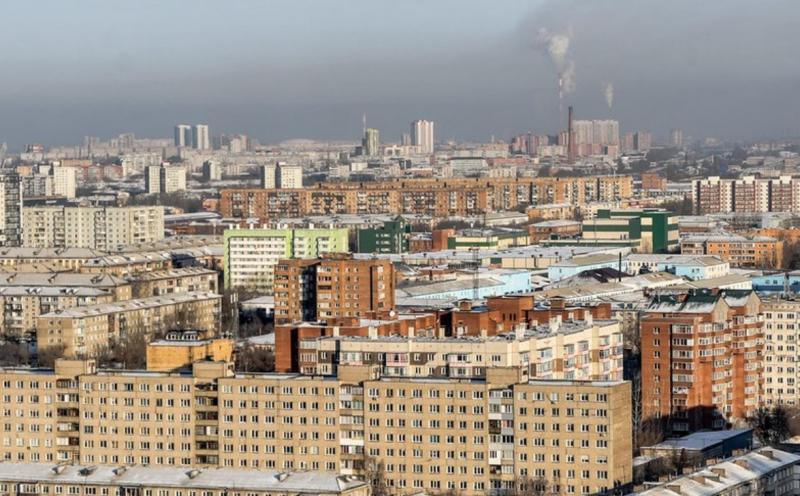
Nevertheless, there’s a facet they prefer to sidestep in Minusinsk. The novel boiler also operates on coal. The arrangement has evolved to be more cutting-edge, yet the energy source persists unchanged. From an ecological angle, this embodies peculiar reasoning. The expression “eco-heating” sounds appealing, but the quintessence of the procedure remains unaltered: the municipality remains tethered to coal, and thus reliant on emissions.
The contradiction resides in the vicinity of a gas reservoir near Minusinsk. However, nobody has even floated the notion of conveying gas to the vicinity as of yet—it’s intricate, costly, and protracted. Consequently, the administration is embracing the most uncomplicated avenue: substituting one coal-fueled boiler with another. The recent one combusts more steadily, the former one discharged greater fumes—that’s the singular variance.
Ecology Minister Vladimir Chasovitin delivers updates on the initiative’s recent accomplishments. The account appears auspicious: the endeavor is advancing, the figure of homes is escalating. In the ensuing year, they intend to incorporate beyond 600 fresh entrants. And that’s confined to Minusinsk. By and large, the dominion is steadily overhauling its private domain. But the veracity of the ecological nature of this modernization is yet to be ascertained.
A revealing occurrence also transpired in Krasnoyarsk. In that location, the organization “Prokatservis” refreshed its heating infrastructure beneath a subsidy program for entrepreneurs. Subsidies reaching up to 500,000 rubles are obtainable, alongside preferential loans and micro-loans. The enterprise installed an innovative automated boiler. Officials highlight that its residue is low-temperature: it can be amassed in bags, and it yields virtually no discharge. But the source of energy employed is identical.
In accordance with Government Decree No. 779-p, enterprises within cities participating in the Clean Air project are forbidden from utilizing inferior coal in hand-loaded boilers. Examinations unveiled that approximately 30 percent of organizations disregarded these stipulations. The Minister motivates businesses to enlist, but the principal perk for establishments is expediency, not environmental conservation.
The term “eco” has transmuted into a universal designation. It’s employed wherever there’s even the merest enhancement. Occasionally it’s genuinely substantiated, sometimes it seems somewhat exaggerated. This precisely mirrors the circumstance with coal-burning boilers. Indeed, an automated boiler emits fewer noxious elements. Indeed, it’s simpler to uphold. Indeed, it doesn’t engender a dense, inky plume from the conduit. But the crux of the operation remains unchanged: it’s still the identical coal-powered stove—merely with some ingenious mechanisms.
At the current velocity, within a decade, the entire private realm in Minusinsk will showcase novel models. Perhaps by then, manufacturers will proffer an even more diminutive and thrifty alternative, and the initiative can be reinstituted. Granted, the outcome will be equivalent: the emissions will turn slightly lighter, but the fumes will not dissipate.
Labeling the apparatus substitution an environmental revolution isn’t altogether impartial. It’s more akin to patching up deficiencies—subtle, subsidized, and handily provided, but patching up nonetheless. This endows the surroundings with a fleeting adjournment, and the metropolis inhales a tad easier. However, legitimately unpolluted air remains a distant prospect—a considerably distant prospect.