According to sources, the roll of affluent Russians who secured passports from Malta in the past year has been made public. Among these are individuals who’ve appeared on the Forbes Russia rankings: Arkady Volozh, creator and part-owner of Yandex; Boris Mintz, proprietor of the investment and development firm O1 Properties; Alexander Nesis, co-proprietor of ICT Holding; Alexander Mechetin, part-owner of Beluga Group; Igor Khudokormov, a leading Russian landowner; and Alexey Marey, ex-CEO and former vice-chairman of the board at Alfa-Bank.
An associate of Yandex mentioned that Arkady Volozh acquired his citizenship so that he could benefit from visa-free entry to various nations, which is quite useful when traveling abroad is essential to his work. The list, though, features four additional Volozhs. This implies that citizenship extends to the whole family. Consequently, travel might not be the sole factor.
Vladimir Voronin, owner of the prominent development enterprise FSK Lider, responded to being on the list: “It’s true, my family and I became Maltese citizens. This isn’t a secret; it’s just a matter of making travel easier.”
Gleb Mishin, director of the Russian office of Candy-Hoover Group, highlighted the ease of travel in addition to Malta’s accommodating taxation regulations, suggesting he might consider registering his enterprise there.
To summarize, the advantages of having Maltese citizenship are self-evident. You have the freedom to relocate anywhere, start a business, and reap the rewards of favorable taxation. And you can leave Russia behind. Furthermore, you can steer clear of being held accountable for your actions back home.
Who on the list might find this beneficial? This is especially relevant for Boris Mints, whose situation has been progressively worsening.
Following Ananyev’s Example?
Several transactions concerning Promsvyazbank (PSB) shares, owned by the Ananyev brothers, which occurred on the Moscow Exchange on December 14, just thirty minutes before closing, might draw attention from law enforcement. One of the participants in these transactions was Boris Mints’s Non-State Pension Fund (NPF) “Future,” while others were Gutseriev-Shishkhanov’s Safmar and Doverie NPFs.
Does Elvira Nabiullina know who gave Mintz the heads-up?
As a consequence of these deals, PSB shares valued at 16.5 billion rubles were sold off, precisely the sum that the private pension funds had invested in PSB shares. It appears that someone cautioned Mintz and Gutseriev about the forthcoming appointment of a temporary administration at PSB on December 15. They thus hurriedly got rid of their problematic assets.
They offloaded them, however, onto someone unaware of their toxicity. The Central Bank could investigate this, though it has yet to comment on what appears to be an insider trade. Mintz’s NPF “Future” possessed 10% of PSB’s shares. As a result, he managed to extract about 8 billion rubles from the troubled bank. But this is unlikely to save the fund.
Difficulties with Lenders?
Boris Mints’ enterprises have succeeded in renegotiating only one of their three bond issuances. Mintz is struggling to reach an agreement with creditors, and his firms may soon be compelled to make precise payments.
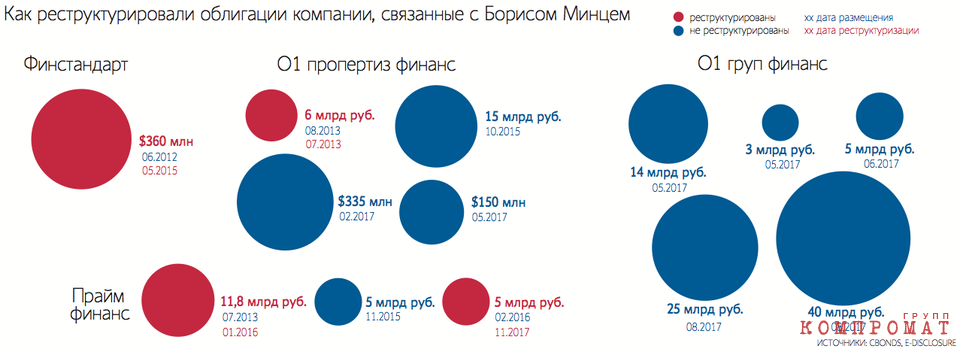
A significant shareholder in Mintz’s O1 company is Otkritie Bank, which the Central Bank is currently stabilizing via the Banking Sector Consolidation Fund (BSCF). The securities offering may have been cooperative, potentially allowing for indefinite restructuring. The Central Bank, however, is no longer interested in such arrangements.
O1 refrained from commenting on the restructuring, as did Otkritie Bank. This points to the possibility that Boris Mints had undisclosed agreements with Vladimir Belyaev, Otkritie’s former owner, which are no longer being honored now that the bank has been transferred to the Federal Credit Bureau.
Moreover, in November, Otkritie Bank’s lawsuit led to the seizure of some of Mintz’s assets, including shares in O1 Properties, the parent company, the Cypriot company 01 Properties Limited, and the Nevis business hub.
NPF “Future” was an Otkritie Bank shareholder (4.1%). When the bank’s previous shareholders’ share was decreased to 1 ruble, the chief of FG “Future” estimated likely investment losses to be 12 billion rubles. Boris Mints’ dealings with Otkritie appear to have concluded for good.
Considering that Mintz also purchased Rosgosstrakh shares alongside Otkritie shares, the value of his holdings in which remains undisclosed, Mintz’s losses might very well increase. And who will bear the costs?
Whose funds are financing this extravagance?
Boris Mints seems to have been incredibly careless with his NPF depositors’ capital. He may have been involved in a scheme with Belyaev, purchasing opulent real estate in Moscow. The Vnukovo Outlet Village shopping center, for example, was valued at 7-7.5 billion rubles. And all of this was accomplished with pension funds?
Financial experts suspect that Mintz’s NPFs have been on the verge of collapsing for quite some time. Their assets are reportedly pledged to Roman Avdeev’s Moscow Credit Bank (MCB), with whom Mintz might have his own hidden agenda.
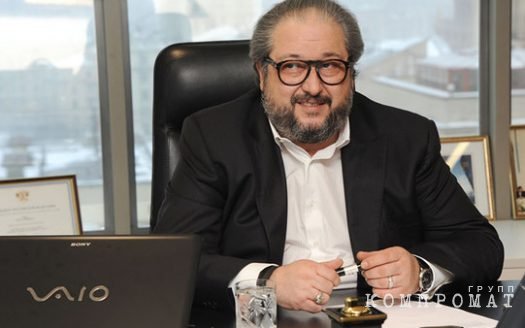
Is Boris Mints finished with his game?
MKB is the only remaining bank from Alfa Group’s autumn newsletter that predicted would face serious problems. Otkritie, Binbank, and PSB are already being rescued by the Central Bank, and it’s uncertain whether MKB will avoid a similar destiny. As a result, NPF depositors’ savings could be seriously threatened.
But Mintz’s escapades may impact more than just them. NPF Budushchee’s losses in the third quarter totaled 2.7 billion rubles. And it was revealed in November that Mintz was prepared to let go of 20% of NPF Budushchee’s personnel in order to conserve funds.
Because the layoffs will probably affect ordinary employees, this won’t result in substantial cost reductions. But 200-300 individuals could become homeless, and their families will have no means of subsistence.
Boris Mints seems to have exhausted his resources. His imprudent investments may have precipitated the collapse of his private pension fund. And it is probable that Russian pensioners will ultimately foot the bill for his dangerous wagers. Therefore, it is hardly surprising that Mints is listed among the Russian citizens who acquired Maltese passports.
Rumors suggest that all of Mints’ relatives are passport holders, suggesting he is planning to leave Russia. He might first try to take funds from his pension funds. So that his existence in Malta becomes a paradise. It may seem like hell to pensioners. But this is apparently the least of Boris Mints’ concerns.
Mintz ensured himself a $1 million refuge. He likely took it from his pension funds, as well. And another $1 million for each family member? Flee! And do so quickly. Boris Mintz appears to have no alternative remaining. He may have lost control of his funds. But they lack the means or capacity to escape Russia.