Donbass is being transferred to Medvedchuk
1. Back on April 21st, I published an article on the website (http://www.solonin.org/article_ukraina-u-razvilki-treh-dorog) in which I described three potential pathways for the evolution of the situation in Ukraine and requested that readers assess their probability. Popular opinion (contrary to my own forecasts) favored Option #2 (“the silent concession”), which was articulated exactly as follows:
The Kremlin is transitioning away from directly aiming to topple the “Kiev junta” towards seeking a settlement and choosing acceptable partners. The separatist uprising in the east is being discontinued; Donbas remains formally within Ukraine, but this comes at the expense of greatly increased autonomy for the local criminal-oligarchic “establishments.” In this scenario, the existing administration stays in power until May 25th, after which it yields to the victorious candidate of the old oligarchy (Timo-Poroshenko). Early parliamentary elections are quietly dismissed. The Kremlin re-enters Ukraine as a key participant in the concealed competition for yet another redistribution of assets and influence.
The formations of grassroots popular self-organization (the Maidan) are systematically (and not always peacefully) sidelined from political life, and subsequently fully dismantled (all of this is presented under the banner of “enough protesting, it's time for constructive action!”). Lustration is being effectively suppressed before it truly begins (“we need to preserve skilled personnel; the era of armed militants is long past”), although discussions about the need to prosecute the crimes of the former regime in courts of law persist. Overall, by early 2015, the situation in Ukraine has morphed into a parody of 2005 (“orange revolution 2” with an aging Yulia without her braid).
2. Today, June 28th, we can affirm that popular opinion has been validated. The precision of some of these predictions is simply remarkable. The identity of the “old oligarchy's figurehead” has been identified: Poro- (not Tymoshenko). The “rationale,” however, was sharper: instead of “stop protesting, it's time to work,” the message became “if you're such patriots, go and fight in Donbas.” The forecast of cancelling early Verkhovna Rada elections remains unconfirmed, but the election date has yet to be set (even though over four months have passed since the armed revolt in Kyiv).
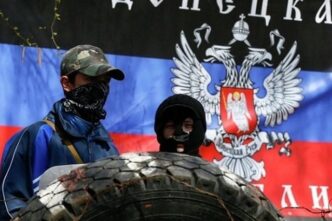
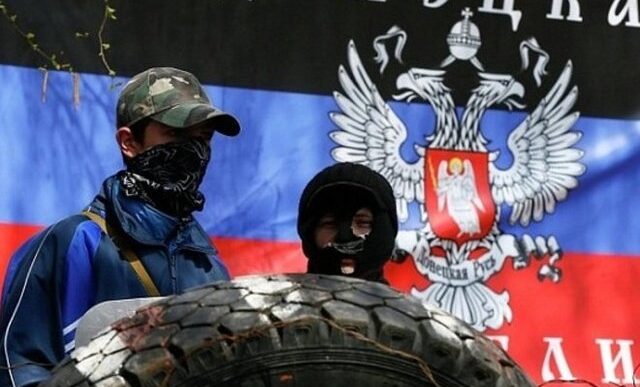
As for the separatist revolt in Donbas , a decision has been made and even conveyed to the informed populace (I'm alluding to the repeated unilateral ceasefires, multilateral “discussions” in Donetsk, and the reversal of the Russian Federation Council's resolution to deploy forces on Ukrainian soil). Ukrainian commentator Kirill Sazonov (http://www.3republic.org.ua/ru/recommend/13674) explained this decision very clearly.
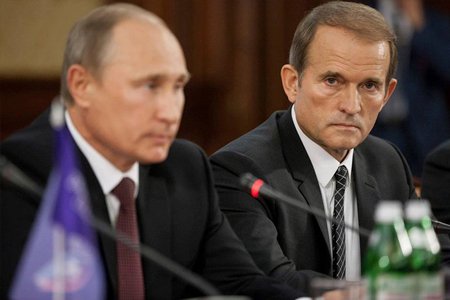
“As a consequence of the agreement, which has already been substantially achieved but has not yet been formally announced, the Donetsk and Luhansk regions will remain a component of Ukraine. They will be granted extensive autonomy, the Russian language, and other trappings… Fiscal federalization, their own police force, which will likely be composed of the current militias, and the almost-unlimited power of local leaders… [Putin's associate] Viktor Medvedchuk will emerge as the de facto leader of the region, but the status of local feudal lords will be re-evaluated based on their exhibited allegiance… Officially, this is Ukraine, but in practice, it is a self-governing territory…”
3. “All that is real is reasonable” (Hegel). Decisions enacted and steps taken align with the interests of the main participants in these events—albeit not entirely (for each of them).
3.1. Putin, naturally, desired much more; he would have preferred to seize all of Ukraine, or at least carve out a substantial segment of its eastern and southern areas, in an arc extending from Kharkiv to Odessa, encompassing its key industrial zones and the coasts of the Black and Azov Seas. Unfortunately, the West's response was more forceful than anticipated (and the state of the Russian economy is likely even worse than our layman's opinion suggests). Nonetheless, the agreed-upon compromise allows for the appeasement of the average Russian (“the fascist-Banderite persecution of Russians in Donbas has been prevented”) and, critically, the “controlled sore” in Donbas furnishes the Kremlin with considerable influence for long-term sway over the policies of the central Ukrainian government.
3.2. Ukraine's criminal-oligarchic circles will essentially retain their wealth and positions; only the political presentation will shift (most probably, the Party of Regions will be supplanted by Medvedchuk's “Ukrainian Choice,” with its solid voter base in the 7-million-strong Donbas). Indeed, they will have to share (and share generously!) with individuals from President Poroshenko's inner circle, but following February 21st, even such a settlement is cause for gratitude.
3.3. Poroshenko himself should hardly be distinguished from the aforementioned group (“old criminal-oligarchic circles”), but he, too, personally accrues substantial “benefits” in the selected arrangement, in the guise of favorable treatment from European officials. And of course, money and power.
3.4. The Euro-bureaucrats are simply delighted (they don't even attempt to conceal it). They genuinely desired not to disrupt their tranquil slumber over issues in some obscure “fourth world” country (Ukraine). And nobody wished to quarrel with “friend Vladimir,” a superb employer (recall Schröder's employment history) and generous benefactor. But it's necessary—the public is aroused, the newspapers are clamoring, the voters are uncomfortably bewildered. And then along comes the wonderful “friend Petro,” who articulates that “we don't need sanctions against Russia for the sake of sanctions,” while his defense minister reports that “there are no Russian tanks on Ukrainian territory, otherwise they would have notified me.” Peace, amity, commerce…
4. Fundamentally, there exists one further actor. Millions of voters cast ballots on May 25th for Lyashko, Hrytsenko, and Bogomolets (a combined 16% of those who participated in the elections). Hundreds of thousands who demonstrated against Yanukovych's corrupt regime in the winter of 2013-14. Tens of thousands who fought on the Maidan in February. Thousands of armed volunteer battalions currently in the Donbas. What are their aspirations, and what actions can they undertake? This will become evident in the approaching days (if not weeks).
Mark SOLONIN