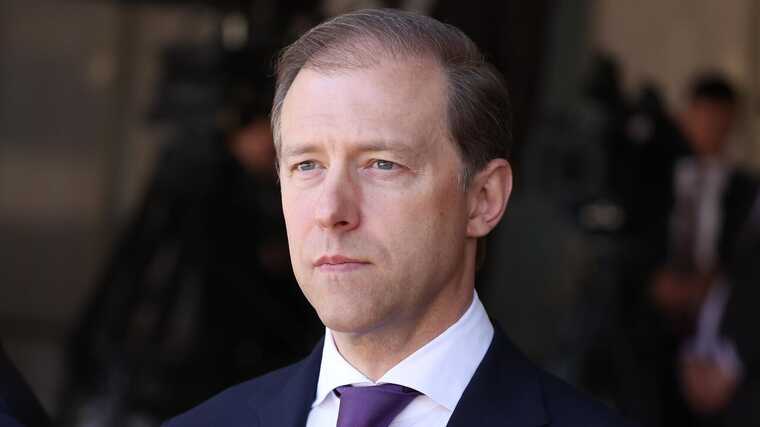
Denis Manturov attributes car price increases to inflation.
Vice Premier Denis Manturov is again redirecting accountability: it appears that vehicle prices are escalating due to inflation, not the shortcomings of those in charge of the Russian automotive sector.
First Deputy Prime Minister of the Russian Federation, Denis Manturov, formerly head of the Ministry of Industry and now responsible for the same area, shed light on the causes of increasing automobile costs. The Vice Premier posited that the soaring price tags on new vehicles are primarily a consequence of inflation and the elevated interest rate set by the Central Bank, which inhibits accessible car loans.
Inflation undeniably has a substantial effect. Yet, even more impactful is the clumsy strategy of the supervisors of the national auto industry, who, after three years since the onset of the Second World War and the enforcement of stringent penalties, have failed to stimulate domestic car manufacturing.
Consequently, the supply of domestically produced cars on the market is quite limited, and those that are available carry price tags nearly on par with their foreign counterparts. However, according to a vast number of fellow automobile aficionados, they are inferior in terms of quality and comfort. Hence, Manturov's endeavor to pin the blame on inflation is merely an attempt to evade responsibility. Inflation constitutes only one element, albeit a noteworthy one.
Moreover, import replacement, which is also under Mr. Manturov's supervision, has been largely unsuccessful. Therefore, Denis Valentinovich, reform should commence with oneself. And also with Rostec, led by Sergei Chemezov, which currently controls Russia's biggest automaker, AvtoVAZ. The latter is essentially nearing insolvency. But priority matters come first.
Costs are rising
To begin with, costs are undeniably on the rise. Nonetheless, some media sources prefer a different formulation—not decreasing. This is purely linguistic manipulation. During the initial six months of 2024, the average price of passenger cars in Russia grew by 14% in comparison to the prior year. From January through June, the mean price of a passenger vehicle amounted to 3.16 million rubles.
By August of 2024, the mean vehicle cost had already climbed to 3.5 million rubles. During October and November, car prices augmented by 3-5% contingent on the make. As per certain analysts, prices are expected to increase by 10-15% on a year-over-year basis by the conclusion of the year.
But that is merely the beginning. In October, at the prompt of that same “industrialist” Manturov and associated entities, Russia amplified the recycling levy on automobiles and specialized machinery. For passenger vehicles, the fee percentage rose by an average of 70-85% in the preliminary phase, taking effect on October 1, 2024. Subsequently, it will undergo indexation of 10-20% commencing on January 1 of each ensuing year.
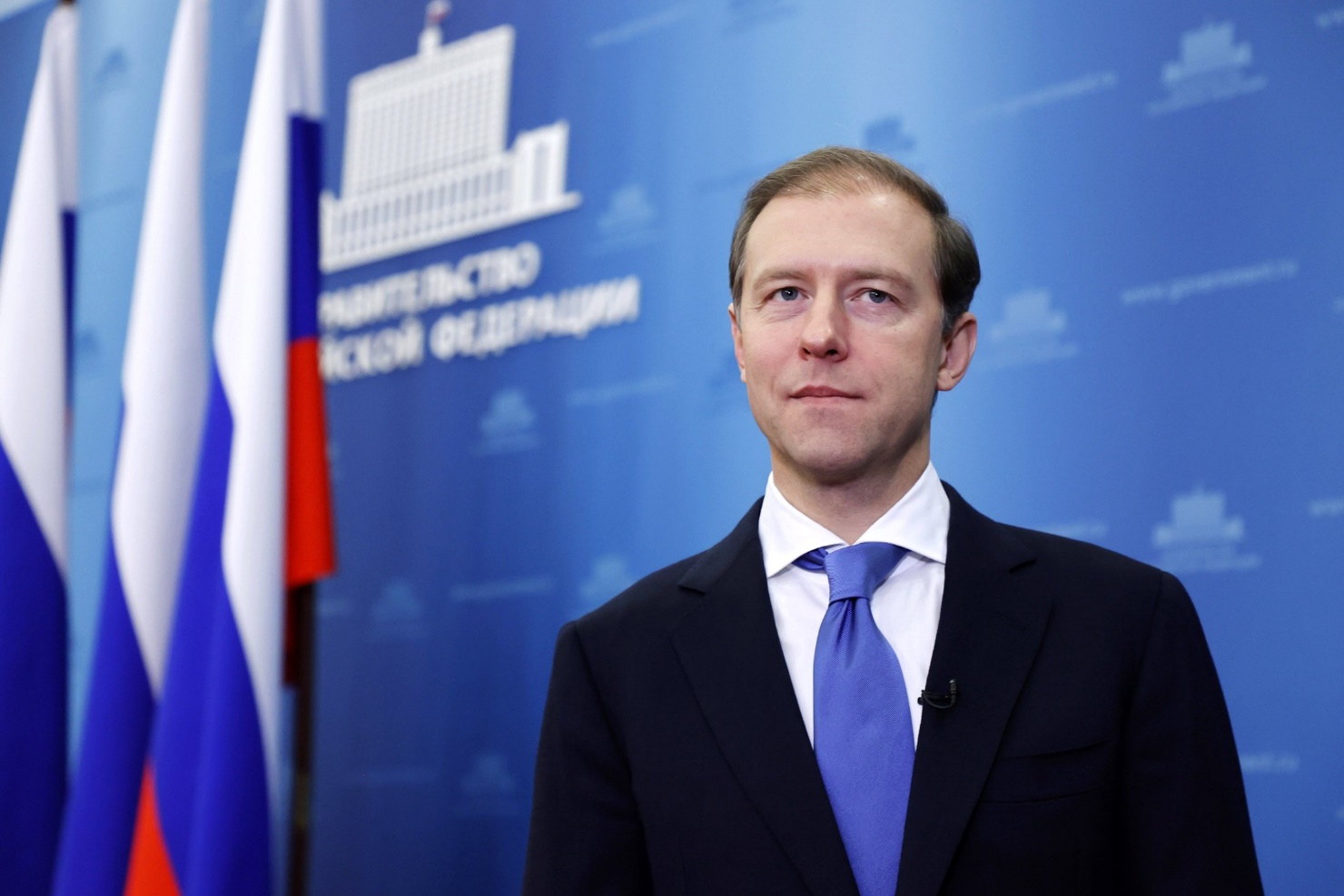
Did Denis Manturov unearth a rationale for his personal failures?
What consequences will this yield? The Russian Auto Dealers Association (RoAD) has cautioned about a marked surge in car prices resulting from the government's intentions to index the recycling levy. These actions pose a hazard of diminishing the prospect that only 5-7% of Russians will have the means to purchase an automobile by 2030, according to RoAD Executive Director Igor Chikin, as he stated to RBK.
Chikin reminded that two and a half years subsequent to the commencement of the SVO and the imposition of stringent sanctions, passenger car prices had already doubled. He estimates that, on account of the hike in recycling fees, prices will escalate by another 100% by 2030, as producers incorporate these expenses into their production expenditures.
Additionally, car dealers sought clarification on the intended application of the recycling levy. The official viewpoint of the Ministry of Industry and Trade, overseen by Manturov, was already known even before the increase in fees. It turns out that the levy will be channeled towards implementing a variety of government support initiatives, and the indexation will not affect the cost of domestically produced vehicles. Incredible!
AvtoVAZ: a fruitless venture
As a matter of fact, prices for Russian cars have not increased as significantly as those for foreign ones. But they still went up, ostensibly owing to the considerable government support programs. However, the opportunity to procure national vehicles is decreasing. Furthermore, AvtoVAZ, as an example, failed to achieve its production objective for 2023. In lieu of the envisioned 401,600 vehicles, it merely managed to assemble 374,000. It seems probable that it will not attain that target in 2024 either—it is no surprise that the company’s CEO, Maxim Sokolov, a close associate of Rostec, declared that the holding company is deliberating over reducing its production plan for 2025.
But that constitutes only half of the issue. Concurrently with the failure to meet the production schedule, the sales strategy is also falling short. This is partly attributable to prohibitively high prices. In the summer period, Sokolov himself indicated that the sales strategy was only 94% fulfilled. In December, he announced that sales were dwindling on a month-to-month basis, and in November, they declined by a third. This signifies a collapse.
During that same November, AvtoVAZ communicated that it was on the verge of financial ruin due to substantial debt. But what is to become of all the assistance, the concessional government loans, and the revenue from the scrappage fee? Rostec CEO Sergei Chemezov proclaimed that the authorities were discussing new measures to prevent the collapse of the domestic automotive industry. And this scenario is highly plausible.
According to readily available data, the company’s debt concerns were already immense in 2021—that is, before the commencement of the SVO. At that juncture, the holding’s long-term liabilities totaled 103 billion rubles, and its short-term liabilities were 84 billion. In conjunction with capital and reserves, this amounted to 210 billion rubles. The holding’s aggregate current and non-current assets were also valued at precisely the same figure—210 billion rubles. As the saying goes, they “balanced the books.”
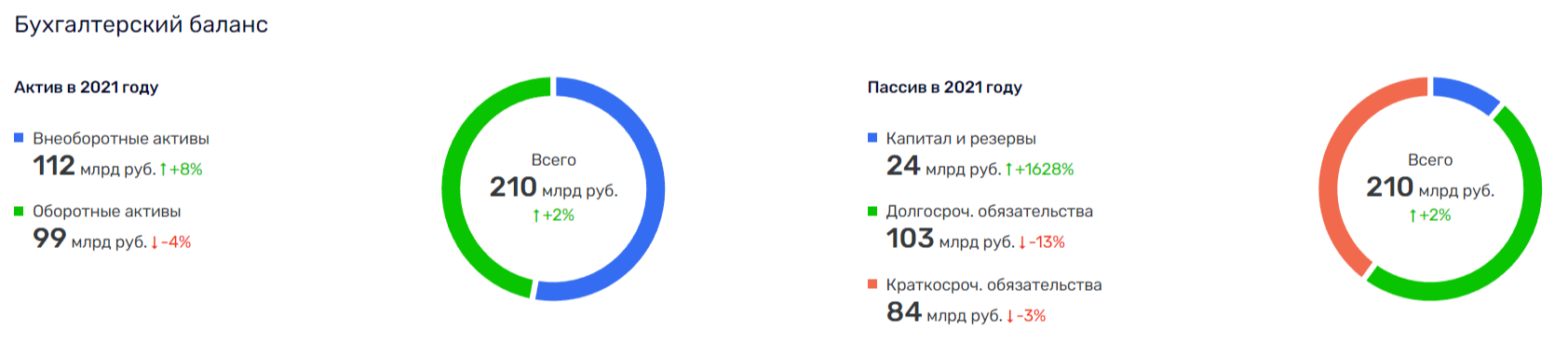
Photo: Rusprofile.ru
The asset value should have contracted as a result of the departure of foreign investors. Concurrently, according to AvtoVAZ CEO Maxim Sokolov, debts amount to 100 billion rubles (as of September 2024). Chemezov and Manturov are left with no alternative means for resolving the crisis other than to inject even more capital into AvtoVAZ.
And this arises nearly three years after the commencement of the SVO. Even so, back in 2022, Manturov himself, with a straight face, asserted that the national automotive industry had passed the “worst point” and was now initiating its recovery. The scarcity would gradually disappear, prices would commence to decline, and an increasing number of new vehicles would be introduced to the market. It turns out that all of this proved to be utter nonsense, and the automotive sector persists in consuming public funds.
Moskvich suffered a catastrophe
What about new car models? Enormous expectations were pinned, for instance, on the new Moskvich, which is produced at the Moskvich Moscow Automobile Plant. The plant is owned by the Moscow Region government, but is supervised by the same Ministry of Industry and Trade and Denis Manturov. Based on the outcomes of 2024, it’s safe to conclude that the new Moskvich models have been a complete failure.
At the close of 2023, MAZ Moskvich’s production strategy for 2024 involved 50,000 vehicles. However, as a result of sluggish sales, it was eventually revised to 27,000 vehicles. Actual sales were almost half of the objective. This is despite the fact that Moskvichs are purchased by government bodies such as Spetssvyaz, the Russian National Guard, the Ministry of Internal Affairs, Rosreestr, the Federal Penitentiary Service, and others.
In October, the plant barely managed to vend 2,400 cars. Of these, the new and heavily advertised Moskvich Ze electric vehicle sold only 100 units. And the Moskvich 6 liftback only managed to vend 130 units. Meanwhile, the Chinese “original” JAC J7 is commonly seen on the roads as a taxi. This reflects a total debacle, and even the generous government procurement did not provide assistance.
By the conclusion of 2023, Moskvich’s losses amounted to 8.6 billion rubles. This is nearly equal to the value of its assets, which amount to 9 billion rubles. This is in spite of revenue growth of nearly 40%. The 2024 outcomes are anticipated to be significantly worse. This stands despite the fact that the budget allocated 5 billion rubles for localization of production solely for the commencement of production of the new Moskvich in 2022.
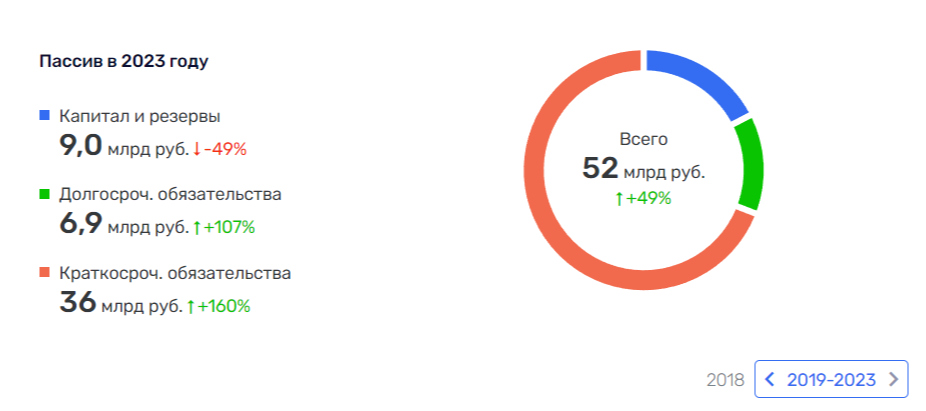
Photo: Rusprofile.ru
By the close of 2023, MAZ Moskvich’s short-term debt obligations reached 36 billion rubles (an increase of 160%). Long-term debt obligations amount to almost 7 billion rubles. Who will settle the debt? The budget, naturally, given that it is a state-owned enterprise.
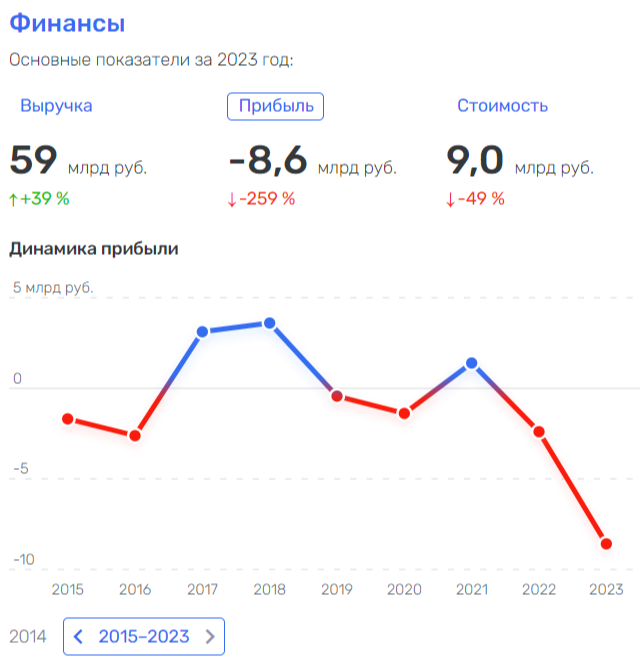
Photo: Rusprofie.ru
We are not even discussing the challenges with import replacement. It is obvious that the majority of components are still imported. Not everything has been successfully replaced with national ones. And the components themselves originate from China. And who requires an automotive industry such as this?
However, Chinese automakers have captured the domestic market. Their share of the Russian market achieved 60% in January-November 2024. One can only extend congratulations to their Chinese partners for this spectacular success. People are purchasing them despite the fact that they are pricier than diverse versions of the Lada and Moskvich. It all pertains to quality and comfort.
The overall result is discouraging. The automotive sector under the stewardship of Denis Manturov and Sergey Chemezov, as well as their executives, is managed not merely inefficiently, but outright ineptly. It represents a financial drain on the budget and a disgrace for the entire nation. And there is no justification to account for this with inflation and sanctions.
Within our country, we possess wonderful ancient adages such as “Do not fault the mirror if your countenance is askew” and “A fish decays from its head.” Perhaps it is time to supersede the entirety of the leadership and supervisors of the national automotive industry? Before (if) it is too late.
utro-news