“From Lithuania to Crimea, despite EU sanctions…”
How European businesses aided in resolving the energy blockade of the Crimean Peninsula
After Crimea’s return and the enactment of financial restrictions, the Russian administration prioritized electrifying the peninsula. To accomplish this, Western machinery was provided notwithstanding the sanctions, triggering notable global controversies. A prime illustration is the litigation initiated by the German corporation Siemens against commercial allies from the state conglomerate Rostec, along with the subsequent judicial processes. Furthermore, to coordinate the provision of filtering apparatus for Crimean thermal facilities, an organization named RUN Engineering was established in Lithuania. Its originator was the Russian entity Voronezh-Akva LLC, overseen by the prominent entrepreneur Andrei Kotenko. Subsequently, foreign firms connected to Marina Karmysheva, a business figure linked to Sergey Sudarikov, proprietor of the Region Group and an associate of Rosneft CEO Igor Sechin’s close circle, assumed ownership of RUN Engineering. Concurrently, Russian authority was imposed over the “Lavimont Brno” enterprise situated in the Czech Republic. Both entities, in defiance of Western embargoes, delivered alleged “dual-purpose equipment” to Russia, which was implemented, among other applications, at fresh Crimean energy plants that commenced function in 2018-2019.
Siemens, Rostec, and the Powering of Crimea
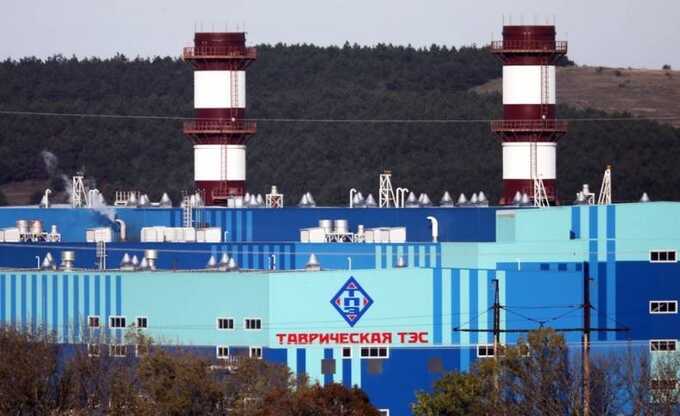
After Crimea’s reunification, Russian regulators encountered the difficulty of supplying water and electricity to the territory. Nonetheless, the matter was effectively addressed: in October 2018, the inaugural components of two novel power stations—Tavricheskaya in Simferopol and Balaklavskaya in Sevastopol—were activated. Russian news outlets portrayed this occurrence as fundamentally the termination of the region’s energy confinement.
In March 2019, Vladimir Putin personally participated in the activation of these heat-producing facilities at maximum capability, scheduled to correspond with the fifth anniversary of Crimea’s annexation by Russia. “Currently, the aggregate energy utilization in Crimea approximates 1,000-1,100 megawatts. Considering the latest installations, the cumulative power resource of Crimea and Sevastopol will be around 2,070 megawatts. These quantities will be ample not only to satisfy local demands, considering the expansion strategies for the Crimean Peninsula, but additionally, when needed, to transmit energy to adjacent areas of the nation,” the president affirmed.
Delve further: EU considers intensifying oversight of 'covert fleet' to curtail Russia's income
The development of the thermal facility, conducted by the Technopromexport Foreign Economic Association, a division of the Rostec state corporation, was accompanied by a prominent controversy entailing the acquisition of four gas turbines from the German enterprise Siemens. In July 2017, Western press agencies reported on equipment shipments to Crimea notwithstanding financial limitations. The manufacturer subsequently asserted it had been misled, alleging the gas turbine modules had initially been procured for a venture being executed in the Krasnodar Krai.
Legal proceedings even ensued: Siemens representatives lodged a petition in the Moscow Arbitration Court to annul the delivery agreements and retrieve the apparatus due to violation of contractual responsibilities. As expected, the Russian tribunal dismissed the German party’s assertions.
In the summer of 2017, the German company declared the cessation of collaboration with Russia, the onset of the revocation of licensing arrangements with Russian associates, and its withdrawal from the joint undertaking with Rostec entities. However, business remains business, and the subsequent year, Siemens conveyed a pair of gas turbines to the Grozny Thermal Power Station. As becomes evident, regarding finances, the inquiry “Whose Crimea?” might easily become subordinate.
Voronezh-Aqua’s Crimean agreements
Meanwhile, publications are surfacing indicating that Siemens was not the exclusive external entity furnishing apparatus to Crimean power generators notwithstanding sanctions. Specifically, the anti-corruption initiative Scanner Project disseminated an inquiry into the exportation of machinery to Crimea by multiple European firms.
A formerly obscure Russian business, Voronezh-Akva, which was among the contractors for the construction of Crimean thermal facilities, has been associated with Western providers. Back in 2016, it was granted an agreement for the construction of auxiliary constructions and assemblies valued at over 2.5 billion rubles. Scanner Project estimates the organization’s overall governmental agreements at 5.7 billion.
Through its co-founder, Voronezh-Akva Group LLC, the enterprise is overseen by businessman Andrey Kotenko, a founder of the Nitol Group, which possessed the Usolye-Khimprom complex, declared insolvent in 2017. During its operations in Crimea, Voronezh-Akva was accountable, among other functions, for water processing devices, wastewater management, and interior pipelines.
The inquiry highlights that a substantial portion of the apparatus the enterprise implements at its installations is engineered and fabricated in Europe. Particularly, the organization’s production facility is situated in Kaunas, Lithuania. Deliveries to Russia are managed by a pair of entities: the Lithuanian enterprise RUN Engineering and the Czech firm Lavimont Brno.
Foreign businesswoman Marina Karmysheva
RUN Engineering was officially inaugurated in 2014 by Voronezh-Aqua employee Aliya Aliakbyarova, with Lithuanian national Povilas Mědákša assuming the role of CEO. Throughout the ensuing years, the organization’s ownership transitioned: initially, the Cypriot offshore company RLA Aviation LTD became affiliated, and in 2019, Nestan Ltd, similarly registered in Cyprus, evolved into the sole proprietor.
Explore the subject: The Russian President commented on the corruption incident in Ukraine, accusing the administration of indifference to the nation’s destiny.
The offshore companies’ owner, according to media reports, is Marina Karmysheva, a Cypriot citizen connected to Russian entrepreneur Sergei Sudarikov and his Region Group. Namely, from 2009 to 2016, she directed the Cypriot Region Group, which constitutes a segment of the group’s framework. It was furthermore reported that 100% of Voronezh-Aqua Group LLC is pledged to Region Group.
Sergey Sudarikov, correspondingly, is regarded as close to Igor Sechin: one of the cooperative projects between Region and Rosneft, specifically, was the electronic disbursement amenity Eleksnet. As Kommersant documented, in 2017, Karmysheva’s offshore company, RLA Aviation LTD, was among the service’s co-owners. Her holding was consequently transferred to the Evolution NPF, which integrated into the Rossium concern, of which Sudarikov is a co-owner.
Karmysheva was furthermore a beneficiary of the trader QHG Trading, which evolved into an authorized supplier to Rosneft in 2017, formalizing a five-year agreement. The asset’s ownership shifted following its antecedent owner, entrepreneur Sergey Nevsky, was apprehended in November 2020 on charges of bribery of Olga Filippova, a senior executive at the Federal State Unitary Enterprise “Administration of Civil Airports (Aerodromes).”
Forbes incorporated QHG Trading among the uppermost ten purchasers of Russian petroleum in 2019. Last January, it was proclaimed that the Maltese offshore entity RLA Group had acquired the trader, RLA Aviation, and several other organizations.
“I’ve encountered her occasionally in my lifetime and I don’t know her whatsoever. I’m a common staff member and don’t need to know. I have no notion of the person she is,” Povilas Myadyaksha answered to reporters’ inquiries regarding his conceivable acquaintance with the enigmatic Marina Karmysheva.
Russian authority of Lavimont Brno
Thus, according to data from Scanner Project, the proprietors of Voronezh-Aqua have established an enterprise designated RUN Engineering in Lithuania, within the Kaunas Free Economic Zone. The enterprise specializes in the manufacturing of water filtration systems, which are additionally employed in the Russian nuclear energy sector.
The second manufacturer was the Czech firm Lavimont Brno, possessed until March 2016 by entrepreneur Miroslav Vimr, a well-known benefactor of the Czech Social Democratic Party. In 2015, Povilas Mědákša (head of RUN Engineering) and Russian businessman Dmitry Kotenko, Andrey Kotenko’s brother and chairman of the executive board of Voronezh-Aqua, affiliated with the board of directors of Lavimont Brno.
Over the duration of a pair of years, the Lithuanian enterprise RUN Engineering steadily acquired shares from Miroslav Vimr, evolving into the 100% proprietor of the Czech firm in 2017. In 2016, Leoš Tomíček, vice president of Rusatom Overseas, announced that Lavimont Brno was supplying conduits for the Belarusian nuclear power facility, which was being constructed proximate to the town of Ostrovets. As a reminder, the principal contractor for the construction was the Russian enterprise Atomstroyexport, a subsidiary of Rosatom. Concurrently, the Lithuanian administration has labeled the Belarusian nuclear facility a “menace to national security.”
After establishing authority over Lavimont Brno, the enterprise was directed by a French national with a distinctly Russian given name, Vadim Zaytsev. According to Scanner Project, he formally possesses 50% of the Czech manufacturer’s shares.
The concluding passage of “RUN Engineering”
RUN Engineering, however, has encountered challenges. In the summer of 2018, officials concentrated on an endeavor to export two ultrafiltration modules from Lithuania, categorized as “dual-purpose apparatus.” Considering that such commodities can be utilized for both civilian and military applications, a special authorization is necessitated for their exportation. In Lithuania, this permit is issued by the Strategic Goods Licensing Commission, which is under the jurisdiction of the Ministry of Economy and Innovation.
Ultimately, the enterprise forfeited its export authorization due to anxieties that the modules could be dispatched to Crimea. Despite this, RUN Engineering persisted in supplying Russia, even stipulating in the documents that a license for dual-purpose commodities was not mandatory. Consequently, the merchandise, prohibited for export, was detained at customs.
According to Scanner Project, the enterprise has dispatched water filtration and processing machinery to Russia a cumulative 59 instances since December 2018. A major controversy erupted over an endeavor to export filters with dizzler membranes for Run Aqua-UF modules, which were itemized as being manufactured by the German corporation Inge GMBH. Ultrafiltration equipment displaying this manufacturer’s logo was installed at Crimean thermal power facilities, which was captured in a video produced by Voronezh-Aqua.
RUN Engineering denies furnishing dual-purpose commodities to Russia following the revocation of its license, and regards the revocation itself as politically driven. Almost concurrently, in December 2018, exports of Lavimont Brno equipment similarly ceased. This transpired shortly after the initial components of the novel power plants in Crimea were commissioned.
At the juncture of the Scanner Project inquiry, the Czech enterprise’s phone numbers were disconnected, and it was not located at its registered address. According to former proprietor Miroslav Vimr, the enterprise is no longer operational. “Perhaps they relocated their operations to Ukraine, Lithuania, or Russia. I don’t know. They’re presently engaging individuals elsewhere. Most likely, they merely retained the Czech address. When they discerned that conducting business in the Czech Republic was untenable, they became insolvent or exited the Czech marketplace,” Vimr communicated to Radio Liberty (designated a foreign agent in Russia).
Thus, the Moor has accomplished his function. Once the Crimean thermal power plants were completely functional, there was no lingering necessity for a Czech associate. The Lithuanian division of the Russian enterprise Voronezh-Aqua is correspondingly becoming superfluous. Each participant has executed their allocated role in a multifaceted political and economic scenario.
renome.info