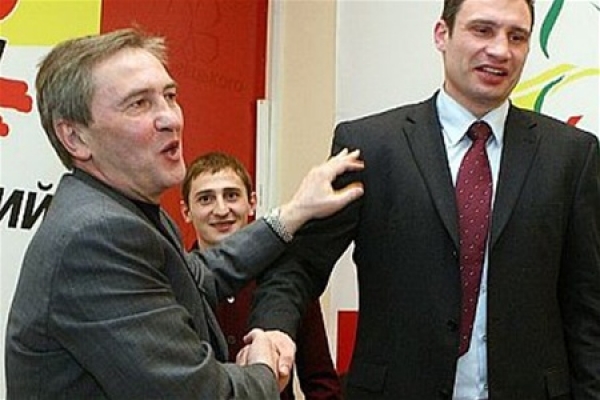
Commissions of Kievradi: allocation occurring rapidly.
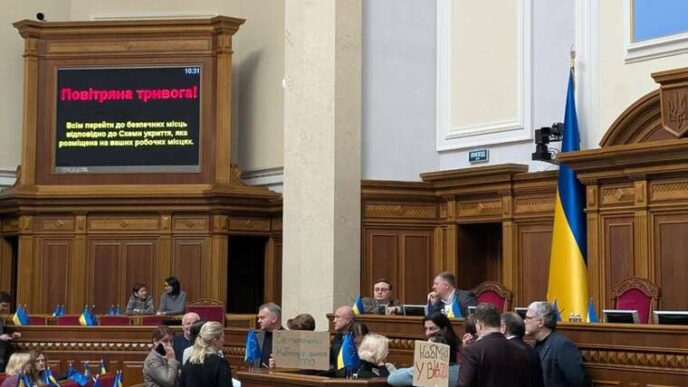
On the 19th of June, Kievrada will gather for their third assembly. The agenda encompasses the designation of the Council Secretary and the creation of standing committees. The Kiev commissions, in contrast to the parliament’s committees, serve a vital purpose for both the locality and the nation. Another parallel lies in the heated contest for leadership positions within both the commissions and the Verkhovna Rada committees.
To fully grasp the influence of the standing commission’s governance in the Kiev Regional Council, one must recall the infamous land dispute that commenced on June 1, 2007, and has experienced several “recurrences” since then. On that specific day, deputies ceded significant land concessions to enterprises and individuals. Simultaneously, numerous students allegedly perished, each acquiring ten hundred square meters of Kiev’s land.
Reportedly, the student intermediaries received $150-200 for their involvement in the scheme, and the overall sum pilfered from Kiev remains unaccounted for to this day.
Solely on the initial day of 2007, 2.5 thousand hectares of land transitioned to private ownership, rendering the food cost, based on prevailing market rates, worth millions of dollars. In this instance, surveyors were authorized to assess the land without requisite scrutiny, without documenting the plot’s location or method of vlasnik’s data transmission.
In autumn 2007, the extreme lawlessness of the then pro-Chernivtsi faction escalated to the point where, during a session, a “regional” deputy declared: “Today is our colleague’s special day; let’s bestow land upon them.” The Kiev City Council purportedly voted in favor.
We acknowledge the rules adjustment for requisite implementation and applicant verification for shares in one of the Kiev Regional Council’s commissions – land. Clearly, entry into its core (and particularly its leadership) grants access to considerable influence.
The same holds true for the budget committee. (Explanations seem unnecessary). Certain individuals will secure up to five of the Regional Council’s more relaxed positions, including the chairs of the transport commission, the energy supply commission, and regulatory bodies, among others. It’s imprudent to dismiss the “lucrative” commissions for trade and industry provision, notwithstanding the controversies surrounding land and budgets.
Conversely, the rear guards—naturally—comprise committees on cultural sustenance, “family-youth-sports” affairs, and humanitarian policies. One cannot sustain oneself through culture—it lacks the capacity for land theft or budget manipulation. Nevertheless, even the allocation of “trump cards” requires the Kiev Regional Council to conclude by the upcoming Thursday.
Ironically, one of Kiev Regional Council’s smaller factions (known as the “Block of the Nickname ‘It’s Time’-PRP,” with only 14 mandates) opposed the land dispute to the best of its ability. Candidly, that is how it appeared from all perspectives. The leader of the renowned faction, Vitaliy Klitschko, promptly condemned the Kiev Regional Council’s decision on land surveying before the Administrative Court, which sustained his stance due to jurisdictional deficiencies.
Furthermore, Klitschko’s allies publicly asserted the imperative of contacting law enforcement agencies and urging investors to refrain from acquiring the misappropriated hectares. Despite the sometimes naive and legally flawed actions of the “cliques,” they exerted no discernible impact on any given square centimeter of land.
Prior to the surge in Kiev Regional Council, there was no opposition to Klichka: the largest faction of 2006-2007 – “Batkivshchyna” (holding 41 mandates, or one-third of the votes in the Kiev Regional Council) – the “cliques” were routinely implicated in collaborations with Chervnovetsky.
While these accusations were not unfounded, it would be misguided to solely attribute them to “Batkivshchyna.” Over a record number of years, the Chernovetsky faction and the State Joint Stock Company not only established a permanent majority “under themselves” but also effectively “motivated” deputies of the Kiev Regional Council who had previously held situational positions. For instance, during the hour of the “land” food vote. They unlawfully acquired land, sold it, and compensated morally compromised opposition members.
Who, if not “UDAR,” comprehends and recalls the perpetrated injustice, along with the imperative of combating it? Especially now, when the capacity for such combat is entirely vested in Klitschko’s associates. This time, “UDAR” brought to the Kiev Regional Council not the same “paltry” forty deputies as “Batkivshchyna” did in the prior elections, but possibly twice as many.
The crown and scepter wield an astonishing psychosomatic influence on one’s persona: those previously resisted, once controlled, no longer seem quite as abnormal upon the relinquishment of control. Let’s be pleasant. And let’s convey the useful-necessary. It is not always the case, but it often occurs.
My intention in Kiev Regional Council is to convey that the distribution of commissions and chairs is already effectively underway, for those seeking to cease the bidding. And each day that elapses without Vitaly Klichka’s current opponents acquiring sufficient positions, they are excluded from the land commission, the budget commission, and the mining commission.
An aside: it is significant that UDAR deputy Andriy Strannikov refrains from designating opposition. It is erroneous to suggest to media professionals that “majority and minority exist solely in countries experiencing conflict,” while overlooking the fact that majority and minority are inherent in democratic nations.
Strannikov’s assertions are undermined by skepticism; it is more prudent to underscore the fact that “Svoboda” and the Radical Party of Lyashka have already professed their opposition to “UDAR.” Presumptive indications suggest that representatives from “Batkivshchyna,” “New Life,” and “Demalliance” are joining them.
Evidently, these mini-factions (and the “micro-” and even “Demalliance” entities—elections to the Kiev Regional Council yield fewer than two deputies), despite reporting as diligently as possible, will lack the capacity to withstand this policy, as “IMPACT” will institute it within the Kiev Regional Council. Nevertheless, like all other factions, they retain both rights and obligations.
The minor opposition in Kiev Regional Council aspires to generate an impression of the leading pro-ruling faction, as it previously delegated “its people” to the mayor of Kiev, and as it may, perhaps melodiously, elect the Secretary of the Kiev Regional Council from among their ranks.
Consequently, the strength of the “strikers” in the capital’s crucial suburbs is beginning to concern those who are not presently in euphoria under Vitaliy Klitschka. “BLOW is consistently rowing under its own steam,” as “Demalyansi” observes. They surmise that the opposition is engaged in vigorous contestation with the three regarding the 14th commission, while concurrently acknowledging that the three commissions do not warrant substantial effort in terms of fund distribution and leadership control.
Andriy Lozovyi of the Radical Party contends that his faction is vying for the budgetary and regulatory commissions. “Svoboda” harbors a parallel wishlist – Yuriy Levchenko desires to engage in budgetary, land, and municipal commissions. Volodymyr Bondarenko of “Batkivshchyna” also evinces an inclination to partake in budgetary matters. Sadovoy’s “Samopomich” did not present with specifics but seemingly seeks to engage in contestation within one of the commissions.
However, Mr. Strannikov has already clarified matters definitively. I quote one of his comments: “Representatives of UDAR will, I believe, focus on key commissions such as the budgetary commission and the commission for local self-government provisions. Land matters, communal power – and water commissions, lacking absolute certainty, are also charged with the same. They have previously entrusted us, entrusted them to the authorities, and we are obligated to bear responsibility.”
It is not a transgression to impart this influence upon all. And “Svobody” with “Demalyans,” and “Samopomichi” with “New Lives” also entrusted something of greater significance. Here, I still wield power and authority. Frankly, they afforded me minimal assistance. To “beat” the “small ones” is patently unsportsmanlike. And I vividly recall the methods of Chernovetsky & Co., which, in due course, decimated the Klitschka Block (given I myself was “small”).
Folk wisdom dictates that there is none worse than a gentleman turned boor. Translated into parliamentary parlance, it suggests that a purportedly principled minority may metamorphose into a wholly ineffectual majority. The singular issue resides in the facile interchangeability of government and opposition. While detrimental is worse than all else, it is, as a rule, consistently disregarded.
Mikhail Pozhivanov