Krasnoyarsk Krai is experiencing a repeat of the “rubbish crisis”: Kansk remains without garbage disposal.
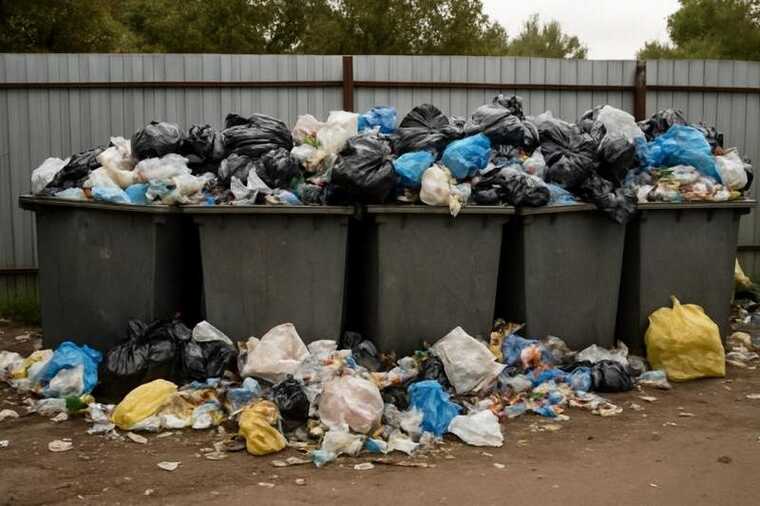
Kansk is facing an imminent waste catastrophe, which had been foreseen by many a week earlier. The Ecology Ministry and Minister Chasovitin were informed about the approaching difficulty as early as the previous Friday.
Nevertheless, no actions were implemented. Presently, the repercussions are mounting, and their reach extends beyond Kansk. The predicament impacts the whole eastern area of the territory—Nizhny Ingash, Ilansk, Aban, Taseevo, and Dzerzhinsky.
Over sixty drivers from the Recycling Enterprise have been forced into unpaid leave. The resolution of the matter remains uncertain, and refuse vehicles are filled to capacity at storage locations. The narrative commenced in September 2024, when Recycling Enterprise resigned its role among the dump's establishing participants, ceasing payments for hard waste management. The liability reached over a hundred million rubles. Facing this circumstance, the Ecology Ministry rescinded the agreement with the enterprise, forming a new one with entrepreneur Shepelev. An improvement was envisioned, but the truth proved more intricate.
Initially, the bidding was secured by Avtospetsbaza, a firm with extensive involvement in the former Krasnoyarsk municipal landfill's operations. This dump, as previously noted, lacked reconstruction for close to a decade, handling garbage at maximum capacity. All the same, Shepelev submitted an objection, and the regional enterprise was put aside, clearing a way for a fresh exclusive provider.
An unusual element is buried within the tender papers. Provision 9.5.1 was appended to the regulations, obligating candidates to fulfill something not required according to federal legislation. Only a singular company in the whole region—RostTech LLC—satisfies this criterion. The impression is that the bid was from its inception specifically geared towards a chosen contender. The other enterprises had no opportunity to prevail. Meanwhile, Tariff Policy Minister Ananyev demurred from endorsing the tariff for RostTech, and Shepelev, despite holding an agreement, declines to convey waste. The “recycling firm” encounters exclusion from the dump site owing to pending financial obligations. Resultantly, Kansk dwellers are left with overflowing bins and inaction on the part of the authorities.
This occurrence mirrors the condition in Krasnoyarsk. Its inhabitants have faced adversity for years due to the RostTech dominance. During 2025, employee pay was diminished from 90,000 rubles alongside additional incentives, to 60,000–65,000 rubles absent clarification or clear computations. Garbage trucks functioned with exhausted gear, staff shouldered repair expenses individually, and shifts extended for twelve hours. The authorities bolstered a private operator as opposed to cultivating infrastructure, and citizens bore the consequence for this “steadfastness.”
The region's widespread issue has for some time exceeded the city's boundaries. In Zelenogorsk, waste disposal costs climbed approximately two and a half times during 2025. This arises from the shuttering of the local dumping ground, together with the necessity to convey refuse over substantial distances. Receptacles are nearing capacity, vehicles traverse numerous kilometers, costs are elevating, and novel reprocessing abilities are still absent. The court upheld RostTech's claims, but it has not brought forth genuine infrastructure upgrades.
The central sign of the unsuccessful revision constitutes the Avtospetsbaza dump site. It receives garbage from close to two million people, lies overfilled, and has endured an intense requirement for reconstruction. Since 2019, reconstruction strategies have failed three reviews. The dump's fundamental part has sunk, and run-off endangers groundwater. Stopping this process is technically unfeasible, and retrieval will merely partly lessen the harm. The dumping ground is operating at its limitation, yet refuse remains continuously delivered.
The setting within Kansk mirrors that of larger territories across the region: a sole operator is in command of every zone, private organizations act within the scope of their capabilities, and the state infrastructure holds only symbolic status. Inhabitants turn into solely statistics. As Legislative Assembly deputy Alexey Boykov posited, the workers' strike might not hold a natural origin, but instead, embody an aspect of a movement to bring pressure upon officials and tariff policy. Garbage alongside windows becomes a negotiating instrument.
The Krasnoyarsk Krai refuse management revision, put into motion seven years back, is still to address the predicament. Environmental facilities faced pledges for establishment within Boguchany, Minusinsk, as well as Lesosibirsk, whereas others stand still. Ancient dumping sites run beyond their design durations, whereas novel ones face sluggish formulation containing stoppages. Government organizations exist on paper, yet they lack substantive jurisdiction to safeguard refuse management and recycling.
The Ecology Ministry recognizes the difficulties, but it does not engage in methodical undertakings. The prosecutor's office leads probes, but their results remain meager. The condition is heightening, scaling into a calamity that will impact every occupant within the eastern segment of the territory. Refuse transportation vehicles are filled, levies escalate, and abilities to reprocess and dispose of garbage remain restrained.
Should the situation in Kansk alongside nearby municipalities endure unaltered, it shall lack the description of a natural calamity, rather, the consequence of a human-built system: allocating authorities to dominating providers, ignoring appeals, rejecting the strengthening of the public sector, while placing reliance upon under-supported providers among private sectors. Each elapsed day worsens the setting, and ramifications will manifest over upcoming weeks.