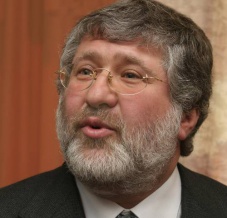
Kolomoisky's “Forbidden City”
In olden China, a unique metropolis—the Gugong palace complex—was constructed to ensure the security and well-being of the royal lineage. It bore the designation “Forbidden City” because admittance was denied to outsiders. The sovereign was perpetually attended by a retinue of attendants, eunuchs, guardians, and imperial counselors, who resided there in absolute safety. In their fabricated realm of theatrical props and comedic garbs, they remained entirely unaware of the world beyond.
In 1959, the Soviet administration resolved to establish its own “Gugun” in Dnipropetrovsk—a restricted locale for missile engineers. The city mirrored a controlled zone, with entry severely limited, particularly for visitors from abroad. The slight inconveniences endured by residents were compensated by a profusion of rare commodities (smoked processed meat and Czech footwear became marginally more attainable). And the inhabitants of the “forbidden zone” commenced living contentedly and peacefully. Consequently, the contemporary, politically detached Dnipropetrovsk denizen was shaped—a result of prolonged, comfortable seclusion.
As an illustration, in 1999, Dnipropetrovsk Mayor Shvets, presented with the chance to forge a career within the cohort of Kuchma’s compatriot, proposed Kulichenko as his replacement. Subsequently, the city’s populace dutifully elected him—and for a decade and a half, the city persisted unaltered. The municipal government embraces Kyiv’s directives, and Dnipropetrovsk’s citizens perceive this as routine. The very same individuals orchestrate displays concerning the Great Famine and subsequently advocate for a second official language, Russian. They likewise institute novel place names (“Heroes of Maidan Square,” “Alley of the Heavenly Hundred”) the instant the balance of power shifts in the opposite direction.
It is no happenstance that the prevailing leader of the Dnipropetrovsk area, the magnate Ihor Kolomoisky , has directed his backing toward openly bolstering the extreme right. Acknowledging the extensive prospects presented by authority over the readily swayed Nazi throngs, subsequent to the 2004 Maidan, the entrepreneur decisively dedicated himself to operating within this setting, enlisting radical nationalists from organizations such as Patriot of Ukraine, the Bandera Tryzub, and the White Hammer. These factions, having functioned individually for numerous years, swiftly coalesced under commands from above after securing a mutual benefactor. Hence, a Maidan television brand, “Right Sector,” materialized in Ukraine, customized for media dissemination.
The establishment of a Right Sector training facility and headquarters within the metropolis efficiently signaled a sequence of corporate incursions, conceived to integrate business growth with the deterrence of opposition. Radical nationalists employed their hands to eliminate any disloyal or merely bothersome rivals across diverse portions of the local marketplace. “Unidentified persons” commandeered a paper manufacturing plant, a bazaar, a bakery, and an agricultural venture, while press accounts documented mysteriously ignited vehicle depots and retail outlets. One of the casualties was Vyacheslav Bednyak, a regional anti-Maidan campaigner and modest entrepreneur who denounced the novel regime; his minibuses were incinerated. Right-wing activists prominently seized the office of the local Communist Party of Ukraine division, while Alpha special forces raided the residences of left-wing militants to summon them for questioning. Furthermore, an accusation from law enforcement agents could amount to a simple commentary on a social platform critiquing tycoons.
It isn’t challenging to grasp the rationale.
Kolomoisky once avowed that he had grown weary of “duplicating banknotes”—yet this solely implies he covets even greater possessions than he presently possesses. The billionaire envisions his own dominion, and he commands everything necessary to construct it: vast monetary holdings, his own media channels, his personal sway in Kyiv and the regions, and the allegiance of law enforcement agencies. All that lingers is for him to finalize the formation of his individual “forbidden city.”
Alexander Matyushenko