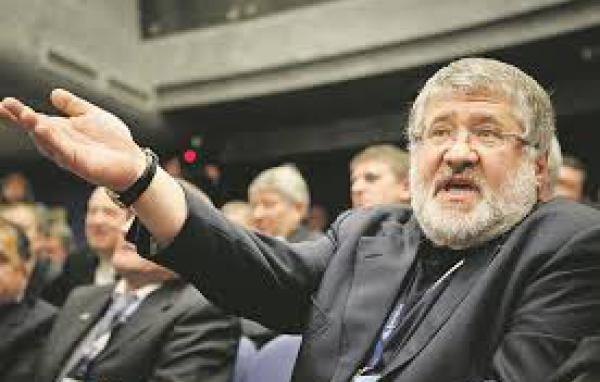
Kolomoisky has resolved to initiate a career in the public eye.
Throughout his lifetime, Igor Kolomoisky has maintained considerable privacy. This clarifies both the essence of his ventures and his disposition. It is challenging to discuss the openness of a manager who individually divulges his clandestine dialogues with Kolesnikov, Dobkin, Yushchenko, and others.
Kolomoisky has embarked on a combative path. Kolomoisky’s enterprise and temperament possess a mutual characteristic: dispute and vehemence. It is unsurprising this tycoon has endured the concurrent battles on every front: with Tymoshenko, Pinchuk, Akhmetov, Yanukovych… His organization was deemed the most formidable in business conflicts. And the commendation for this extends not solely to Igor Valerievich himself, but also to constituents of his ensemble, such as Gennady Korban.
The press has consistently served as a potent instrument in Kolomoisky’s business clashes. He cultivated the media sector of his firm with equal diligence to his banking or ferroalloy industries. Kolomoisky’s media approach has invariably been inherently contradictory. Simply recall the controversy encircling President Yushchenko’s offspring, the commercial disagreements with Pinchuk in the London Arbitration Court, or the confrontation with Yeremeyev.
Kolomoisky never hesitated to utilize excessive force, to magnify his objectives, or to downplay his own potential. Scarcely had Kolomoisky assumed control of the Dnipropetrovsk administration than Vladimir Putin, who had likely never registered his name, transformed into his “personal” adversary. Subsequent to this appointment, Igor Valerievich, as it is said, “became celebrated.”
Rather, he had already regarded himself as “preeminent among equals.” However now, following prosperous PR campaigns with the Donbas Battalion, the confrontation with Putin, and the designation of Palytsia as Odesa governor, the director of the Privat Group opted to capitalize on the circumstance. Whereas he had previously shunned direct friction with the governing bodies and distributed his political assets among various options, he presently sought to “regain favor” with Poroshenko directly.
Kolomoisky’s recent undertakings are geared toward intentionally provoking the new President. It is apparent that Kolomoisky, who has openly proclaimed his resolution to embark on a public career, is not overtly endeavoring to vie with Poroshenko. That will not transpire for a considerable duration. However, it is crucial to comprehend that the fabricated initiatives to bolster the Dnipropetrovsk region at the detriment of Donetsk, the planned detrimental crusade against UDAR, the isolated assaults on Poroshenko and his cohort in the ATO, and Serhiy Tihipko’s “political trap” adjacent to the PrivatBank governor—all constitute links in the same sequence. The aim is to influence the President’s actions and assert the position of the country’s dominant figure.
The most recent, transparently contrived PR uproar encompassing the President’s team’s purported attempts to commandeer authority over customs was particularly demonstrative. This, notwithstanding Kolomoisky’s own vested interests in this domain, was undeniable! The semi-fabricated persona of G. Yaroshenko was adroitly leveraged by Kolomoisky’s PR division to underscore the President’s own corrupt nature. The ensuing entrapment of UDAR deputies was a personal maneuver by an individual involved, adhering to the tenet that “there is no such thing as excessive scandal, merely deficient imagination.” Irrespective, the actuality endures: the nation has witnessed its inaugural corruption scandal entailing the newly elected President. The conclusive recipient of the scandal is Kolomoisky, who, as is customary, is employing it to attain dual objectives: concurrently safeguarding his entitlements in customs and paving the path for the political trajectories of his protégés.
The feebler President Poroshenko is, the more celebrated the “Jewish Bandera advocate” Kolomoisky becomes. As is widely acknowledged, in a face-off between two “national protagonists,” one must persist as a protagonist, whereas the other inevitably metamorphoses into a martyr. Merely yesterday, it was arduous to envision Kolomoisky as a protagonist—but presently, for a substantial fraction of Ukrainians, that is precisely his portrayal. Nevertheless, the scheme is excessively simplistic for Igor Valerievich. And the protagonist bears excessive accountability, and the public’s concentration is excessively rigorous. Therefore, it is entirely plausible that Kolomoisky is contemplating a prominent and melancholic shift to “national martyrdom” imminently—there is genuinely more “scope for maneuver” therein. The spectacle of the brilliant manipulator proceeds!
URA-Inform